

By KHUMBILO AgroEcology Media Services
The Zambian Government has stressed the need to embrace AgroEcology if the impacts of climate change were to be mitigated and ensure a more sustainable future.
Lundazi District Commissioner, Marjorie Banda said in a speech read for her by Lloyd Daka, the District Registrar, who is acting in her stead that there was need to farm with nature in order to reduce the effects of climate change and produce foods that were free from chemicals and less damaging to the environment.
Ms. Banda noted that climate change was posing significant challenges to the agricultural sector and called for practical techniques and innovations that farmers could implement to achieve sustainable yields.
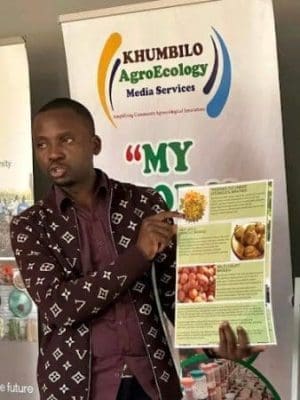
The district Commissioner said this during a 3 days Capacity Development Workshop on Sustainable Food System which was organized by the Zambia Alliance for AgroEcology and Biodiversity (ZAAB) in partnership with KHUMBILO AgroEcology Media Services in Lundazi, Zambia.
Ms. Banda reiterated the need to preserve the country’s cultural heritage and to encourage the consumption of nutritious and environmentally friendly indigenous foods.
The DC said that there was need to highlight the “My Food is African” campaign which she said celebrated and promoted the rich diversity of the country’s local foods.
She explained that ensuring food and nutrition security meant providing communities with reliable access to sufficient quantities of affordable, nutritious food, crucial in combating malnutrition and fostering over-all well-being.
The DC has since appealed to traditional leaders to provide insight on how to support and to maintain practice of seed diversity which she said was vital in ensuring crop resilience in the face of changing environmental conditions.
And KHUMBILO Executive Director, Misheck Nyirongo has called on the promotion of community seed banks which he said was critical in seed preservation.
Mr Nyirongo said there was need to preserve, grow, and take care of the seed adding that our lives and those of the future generation depended on seed.
Besides, on policy makers, the ZAAB’s Programme Officer, Omali Phiri said, the future of Zambia’s food systems lies in your hands. “We urge policy makers to enact policies that prioritize sustainable land use, promote agroecology, and support local food producers. By protecting our local food systems, we ensure a thriving agricultural sector, food security, and a sustainable future for our nation.”
Omali Phiri added, “The impacts of climate change on our food systems are undeniable. We urge our MPs to prioritize policies that promote climate-resilient agriculture, sustainable land use, and support small-scale farmers. By investing in resilient and localized food systems, we can mitigate climate change, ensure food security, and foster sustainable development.”
Meanwhile, Senior Agricultural Extension Officer at Kasisi Agricultural Training Centre, Austin Chilala has expressed concern at the effect of prolonged dry spells on the traditional seed gene.
Mr. Chilala explained that most seed gene was likely to be lost if no care is taken to ensure that the seed gene was preserved through the promotion of community seed banks.
He has since urged farmers to consider practicing seed multiplication even under irrigation schemes to ensure that the seed gene was not lost to effects of prolonged drought.

