

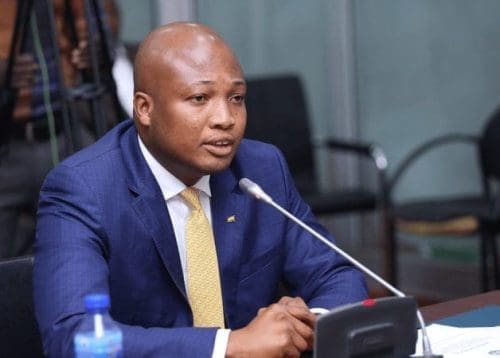
Ghana’s freshly appointed ambassadors will carry economic targets alongside their diplomatic credentials as the government introduces performance metrics tied directly to trade expansion.
Foreign Affairs Minister Samuel Okudzeto Ablakwa announced that envoys must achieve minimum annual trade increases of 10% with their host nations.
The performance framework marks a fundamental shift in how Ghana evaluates diplomatic success, moving beyond traditional relationship-building to quantifiable economic outcomes. Speaking at an orientation session, Ablakwa outlined country-specific targets that reflect Ghana’s strategic priorities in different markets.
“We have country-specific KPIs. And the minimum threshold we have set is that everybody must increase trade volumes by 10% annually,” the minister explained. Some ambassadors face even steeper challenges, with targets reaching 15%, 20%, and 25% depending on bilateral agreements and market potential.
Ghana’s envoy to India confronts the most demanding assignment, with a 25% annual growth requirement stemming from commitments made between President John Mahama and Prime Minister Narendra Modi. The leaders agreed during Modi’s state visit to double bilateral trade within four years, creating mathematical imperatives for diplomatic performance.
“Our colleague going to India, God help you, yours is 25%,” Ablakwa remarked with humor while acknowledging the challenge. The minister noted that achieving the presidential commitment requires consistent 25% growth rates, making the India posting particularly demanding.
The directive extends beyond raw trade statistics to encompass market development for Ghanaian enterprises and international promotion of local brands. Ambassadors must create concrete business opportunities while enhancing visibility for Made-in-Ghana products in their respective territories.
Ablakwa emphasized the need for balanced economic relationships that move beyond resource extraction. “It shouldn’t always be about people exploiting our resources. We also want to enter their markets with strong Ghanaian brands,” he stated.
This approach reflects growing frustration with traditional diplomatic metrics that struggled to demonstrate tangible benefits for Ghana’s economy. The new system creates direct accountability links between diplomatic activity and national economic performance.
Envoys will now operate as commercial agents alongside their political roles, actively seeking investment opportunities and trade partnerships. The framework requires ambassadors to understand market dynamics, identify business prospects, and facilitate connections between Ghanaian companies and international buyers.
The performance standards align with Ghana’s broader economic reset agenda under President Mahama’s administration. The government seeks to maximize returns on diplomatic investments while strengthening Ghana’s position in global markets.
Trade promotion responsibilities will require ambassadors to develop expertise in Ghana’s export sectors, from agriculture to manufacturing. They must understand product specifications, quality standards, and regulatory requirements in their host countries to effectively advocate for Ghanaian businesses.
The India target reflects the significant potential in Ghana-India economic relations, particularly in sectors like pharmaceuticals, information technology, and agricultural processing. Both nations have identified opportunities for expanded cooperation beyond traditional commodity trading.
Success under the new framework will depend heavily on ambassadors’ ability to build relationships with business communities, trade associations, and government commercial departments. Traditional diplomatic skills must now combine with commercial acumen and market intelligence gathering.
The orientation workshop equipped envoys with tools and strategies for achieving their targets, including guidance on leveraging Ghana’s diaspora communities for business connections. Cultural and historical ties will become economic assets in pursuing trade expansion goals.
Ghana’s diplomatic transformation mirrors global trends toward economic diplomacy, where ambassadors increasingly serve as country representatives in international business competition. The approach recognizes that diplomatic success increasingly depends on delivering economic benefits to citizens.

