

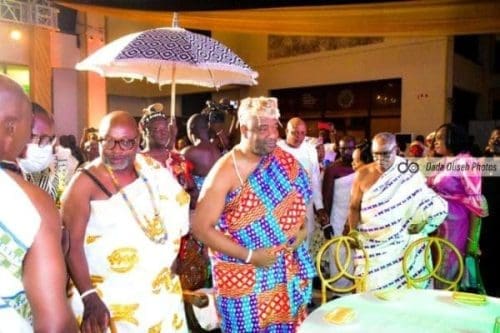
Ghana’s traditional leadership has joined calls for diplomatic transformation, with the Ga Mantse challenging the country’s ambassadors to abandon ceremonial approaches in favor of aggressive economic engagement that delivers measurable results.
King Tackie Teiko Tsuru II addressed foreign service chiefs at the Conference of Heads of Mission in Accra, emphasizing that diplomats must become active custodians of Ghana’s international reputation while pursuing concrete trade and investment outcomes.
The traditional ruler’s intervention comes as the Ministry of Foreign Affairs introduces Key Performance Indicators for ambassadors, marking a shift toward accountability-based diplomatic service. These benchmarks will evaluate envoys based on their success in attracting foreign investment, expanding export opportunities, and mobilizing diaspora communities.
“Your mission abroad is primarily to build bridges and elevate Ghana by engaging the diaspora and local communities,” the Ga Mantse declared during the conference themed “Harnessing the Dividends of Diplomacy for Ghana’s Reset Agenda.”
The performance framework represents a departure from traditional diplomatic evaluation methods, focusing instead on quantifiable contributions to national economic objectives. Ambassadors will be expected to demonstrate success in securing strategic partnerships that support Ghana’s development priorities.
King Tackie Teiko Tsuru II specifically called for enhanced promotion of Ghanaian textiles, food products, cultural symbols, and tourism destinations in foreign markets. He urged diplomatic missions to actively address trade barriers, particularly sanitary and phytosanitary restrictions that limit agricultural exports.
The traditional leader emphasized strengthening intra-African commerce and expanding reciprocal visa arrangements to facilitate regional integration. Cultural diplomacy emerged as a central theme, with the Ga Mantse advocating for traditional leaders’ involvement in international exchanges to boost tourism revenue.
Government-sponsored student programs abroad also drew attention, with concerns raised about tuition payment challenges that undermine Ghana’s educational objectives. The Ga Mantse pressed for administrative reforms to ensure these investments deliver expected returns.
The diplomatic conference aligns with the Mahama administration’s broader economic reset agenda, which seeks to recalibrate Ghana’s international engagement for maximum developmental impact. Foreign missions will be expected to demonstrate how their activities support this strategic realignment.
Ghana’s diplomatic corps faces increasing pressure to justify their overseas presence through concrete achievements rather than protocol activities. The performance-based approach reflects growing expectations that foreign service investments must produce tangible benefits for national development.
Traditional authorities have historically maintained limited involvement in foreign policy discussions, making the Ga Mantse’s prominent role significant. His participation signals broader consensus across Ghana’s leadership structures about diplomatic priorities.
The emphasis on diaspora engagement reflects recognition of Ghanaian communities abroad as untapped resources for development financing and market expansion. Ambassadors will be expected to build systematic relationships with these populations to support national objectives.
Cultural promotion emerged as both an economic opportunity and diplomatic tool, with traditional symbols and practices viewed as competitive advantages in international tourism and cultural industries. The Ga Mantse emphasized leveraging these assets for commercial gain.
Trade facilitation capabilities will become central to ambassadorial success under the new framework. Envoys must demonstrate expertise in removing barriers that prevent Ghanaian products from reaching international markets effectively.
The conference represents a pivotal moment for Ghana’s foreign service, with expectations set for measurable contributions to economic recovery and development acceleration. Diplomatic missions will operate under enhanced scrutiny as government seeks maximum returns on international engagement investments.
“This conference is not routine,” the Ga Mantse concluded. “It is a reaffirmation of Ghana’s place globally and a call to action to confront our challenges boldly so that Ghana’s diplomacy delivers lasting benefits for our people.”

