

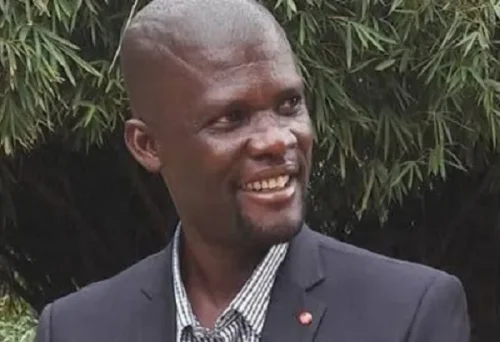
Former New Patriotic Party (NPP) Chairman for the Fomena Constituency, Kwasi Nti Asamoah, says the practice of sharing money and gifts during elections in Ghana is deeply entrenched and can never be completely eliminated.
Speaking on Angel FM in Kumasi on Tuesday, February 10, 2026, the former party chairman argued that all political actors engage in the practice, noting that differences in financial strength among candidates often determine how much they are able to give, not whether they participate at all.
We all pay, but sometimes some people have more money than others, he said. All the candidates paid, but the richest won.
Kwasi Nti Asamoah cited examples from both major political parties to support his claim, insisting that vote buying is not unique to any single election or candidate.
When John Mahama went to Sunyani, this happened, he stated. Even in the recent NPP primaries, the same thing occurred. Dr Bawumia paid 500 cedis, Kennedy Agyapong also paid 500 cedis, and some people even paid 700 cedis. In the end, one person won.
According to him, public criticism surrounding recent allegations of vote buying is unnecessary because the practice has always been part of Ghana’s electoral process.
This is something that is always done, so why are we making a fuss about the current one? he asked. It will never end. I am saying the truth. We are all guilty of this.
Despite acknowledging the widespread nature of money sharing during elections, the former chairman maintained that financial inducements do not necessarily influence voting decisions.
It is not always the highest bidder who wins, he explained. The money people take does not influence the decisions of the voters.
He concluded by stating that he does not see anything inherently wrong with the practice, describing it as a long standing reality rather than a decisive factor in determining electoral outcomes.
The comments come amid ongoing investigations by the Office of the Special Prosecutor (OSP) into alleged vote buying during both the NPP presidential primaries held on January 31, 2026, and the National Democratic Congress (NDC) parliamentary primary in Ayawaso East on February 7, 2026.
In a statement issued on Sunday, February 8, 2026, the OSP announced that the probe will examine claims of vote buying, vote selling, and the sources of funding for the alleged corrupt acts during both primaries.
The OSP reminded the public that the law prohibits corrupt acts in relation to public elections, stating that it is a serious offence to engage in vote buying, vote selling, intimidation, threats of violence, and acts of violence in relation to elections.
During the NPP presidential primary on January 31, 2026, Dr Mahamudu Bawumia emerged victorious, securing 68.15 percent of the total valid votes cast to become the party’s flagbearer for the 2028 presidential election.
Kennedy Agyapong placed second with 27.81 percent, while Kwabena Agyei Agyapong came third with 2.25 percent. Francis Addai Nimoh secured 1.52 percent, and Akwasi Afrifa obtained 0.27 percent.
In the NDC Ayawaso East parliamentary primary, Mohammed Baba Jamal, Ghana’s High Commissioner to Nigeria, polled 431 votes to win, defeating Hajia Amina Adam, widow of the late Member of Parliament for Ayawaso East, who secured 399 votes.
The OSP also announced that it has opened a separate investigation into allegations that Baba Jamal incited thugs to physically attack an officer of the OSP who was serving an investigative directive on him in relation to vote buying and vote selling during the primary.
The NDC’s Functional Executive Committee on Tuesday, February 10, 2026, decided to proceed with Baba Jamal as its candidate for the Ayawaso East by-election despite unresolved allegations of vote buying.
NDC General Secretary Fifi Kwetey explained that while an investigative committee concluded that inappropriate conduct was exhibited by virtually all the candidates, the party could not annul the election due to constitutional and time constraints.
Kwasi Nti Asamoah served as NPP Chairman for Fomena Constituency and was a prominent figure in party politics in the Ashanti Region before stepping down from the position.
In September 2024, he played a key role in reconciliation efforts between factions in Fomena when he handed over party office keys to current executives following intervention by Dr Matthew Opoku Prempeh, then NPP vice presidential candidate.
Electoral experts and civil society organisations have repeatedly warned that vote buying undermines democratic processes, distorts electoral outcomes, and perpetuates corruption in Ghana’s political system.
The Criminal Offences Act, 1960 (Act 29) and the Public Elections Regulations, 2020 (CI 127) prohibit the offering or receiving of money, gifts, or other inducements in exchange for votes.

