

Ghana is set to overhaul its cooperative legal framework for the first time in nearly six decades, with the 24-Hour Economy and Accelerated Export Development Programme Secretariat (24H+) constituting a joint committee to draft a Cooperative Legislation Bill for submission to Parliament.
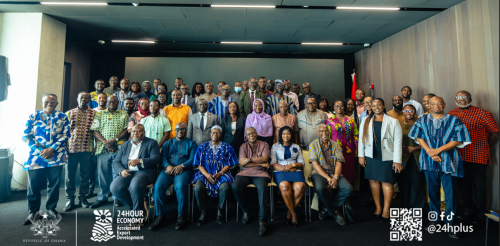
The initiative was announced at a National Stakeholder Forum on Cooperative Development organised by the Secretariat in Accra, held under the theme “Cooperatives as a Pathway to Sustainable and Inclusive Socio-Economic Development in Ghana.” The forum brought together representatives from cooperative associations, government ministries, and development partners to build consensus around a reform agenda the Secretariat describes as long overdue.
Speaking at the forum, Augustus Goosie Tanoh, Presidential Advisor on the 24-Hour Economy and Accelerated Export Development Programme, said the existing legal framework governing cooperatives is more than 58 years old and no longer reflects the country’s economic or institutional realities. He identified limited access to finance, weak institutional support, and the outdated law itself as the three structural barriers most consistently holding the sector back.
“Cooperatives that cannot access capital cannot grow,” he said, calling for immediate reforms to unlock what he described as the sector’s untapped potential as a vehicle for empowering women, youth, and small businesses.
The proposed Cooperative Legislation Bill, once drafted by the joint committee, will be submitted to Parliament for consideration and, upon approval, presented for assent by President John Dramani Mahama. The Secretariat is simultaneously working with cooperative associations to secure funding and technical assistance for the revival and modernisation of cooperative support systems nationwide.
Beyond the legal changes, the reform framework envisions a structural shift in how cooperatives participate in the economy. Under the proposed arrangements, cooperatives are expected to move beyond primary production into ownership and management of processing infrastructure, with more continuous production models designed to maximise asset utilisation and generate employment. Circular production systems would convert by-products into additional revenue streams, while a proposed Solidarity Fund would provide a buffer against production and market shocks.
The Secretariat said the combined reforms are intended to reposition farmers from primary producers into owners of agro-industrial enterprises, integrating them more deeply into value chains currently controlled by external parties.
Minister for Fisheries and Aquaculture Development, Emelia Arthur, highlighted the specific opportunity for cooperatives in aquaculture development, indicating the government’s interest in structured partnerships with cooperative groups across selected districts to drive job creation and export-oriented value addition.
The Chief Director of the Ministry of Labour, Jobs and Employment, Hamidu Adakruogu, reaffirmed his ministry’s commitment to promoting cooperatives as platforms for decent and structured employment, particularly for young Ghanaians.
The cooperative reform initiative adds a sector-specific dimension to the broader 24-Hour Economy agenda, which received legislative backing in February 2026 when President Mahama signed the 24-Hour Economy Authority Bill into law, establishing a statutory coordinating body to oversee the policy’s implementation across key productive sectors.

