

Ghana will establish two state-of-the-art forensic laboratories following August’s helicopter crash that killed Defence Minister Edward Omane Boamah, Environment Minister Ibrahim Murtala Muhammed, and six others, National Security Advisor Prosper Bani announced Tuesday.
The tragedy exposed critical gaps in Ghana’s forensic infrastructure, particularly in victim identification and evidence processing capabilities, according to Bani’s address at the inaugural Ghana Academy of Forensic Sciences congress in Accra. The August 6 crash of a Z-9 military helicopter en route from Accra to Obuasi killed all eight occupants, representing one of Ghana’s worst air disasters in over a decade.
Bani announced government proposals for two forensic laboratories backed by resource allocation, policy direction, and international partnerships to address investigative capacity shortfalls revealed during the crash response. The facilities will provide advanced capabilities in DNA analysis, digital forensics, toxicology, ballistics, and trace evidence processing.
Ghana currently operates only one national forensic laboratory through the Ghana Police Service in Accra, which Bani described as inadequate for a country facing increasingly complex crimes and emergencies. The new laboratories will be strategically located to expand access and improve response times nationwide.
The helicopter tragedy demonstrated Ghana’s dependency on international collaboration for complex forensic procedures. Among the victims were acting deputy national security coordinator Muniru Mohammed, NDC vice chairman Samuel Sarpong, former parliamentary candidate Samuel Aboagye, and three military crew members.
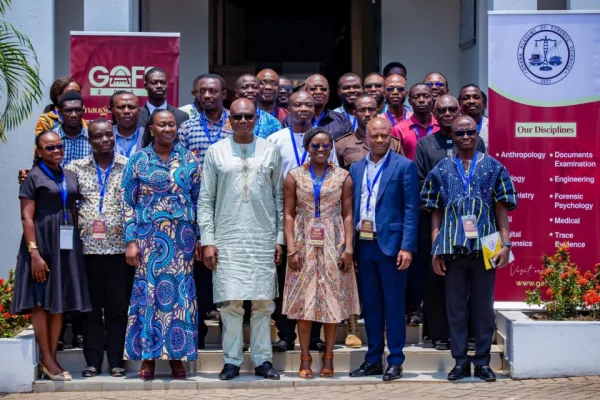
“We realised that we do not yet have the full capacity to undertake these processes swiftly and transparently without collaborating with our external partners,” Bani acknowledged during the forensic sciences congress themed “Modernising Crime Investigation in Ghana: Bridging Traditional Methods with Forensic Investigations through Capacity Building.”
The identification process following the Obuasi crash highlighted Ghana’s urgent need for stronger forensic systems and reinforced investment priorities in domestic infrastructure. The helicopter departed Accra shortly after 9:00 AM and crashed in the Adansi Akrofuom District of the Ashanti Region while heading to a mining area event.
Bani emphasized that forensic transformation requires both technological advancement and human capital development. He stressed that laboratories and equipment effectiveness depends entirely on operators’ knowledge, skills, and integrity, calling for greater collaboration with universities and international institutions.
The announcement reflects broader government commitment to strengthening Ghana’s investigative capabilities across law enforcement and disaster response agencies. President John Mahama has pledged full support for the forensic transformation agenda, according to Bani’s congressional address.
The August tragedy prompted national discussions about Ghana’s forensic and medical laboratory capabilities, with analysts highlighting the need for world-class facilities to support emergency response and criminal justice systems.
Ghana’s forensic infrastructure challenges extend beyond individual cases to systemic capacity limitations affecting justice delivery and emergency response effectiveness. The proposed laboratories address these structural deficiencies while supporting broader security sector modernization efforts.
International partnerships will provide technical assistance and knowledge transfer for laboratory establishment, reflecting Ghana’s commitment to building sustainable forensic science capabilities. These collaborations ensure access to best practices and advanced technologies essential for effective crime investigation.
The forensic transformation initiative aligns with Ghana Academy of Forensic Sciences objectives to advance professional standards and research capabilities. GAFS, established in 2012 within the Morbid Anatomy Department, represents growing recognition of forensic science importance in Ghana’s justice system.
Capacity building remains central to the transformation agenda, requiring comprehensive training programs and professional development initiatives. The government plans sustained investment in forensic education and international exchange programs to build domestic expertise.
The laboratory announcement demonstrates how tragic events can catalyze necessary infrastructure investments while honoring victims’ memories through systemic improvements. Success requires sustained commitment beyond initial announcements to implementation and operational excellence.
Bani leads President Mahama’s interim National Security Coordinating Team, which assumed responsibilities January 7, 2025, positioning him to oversee forensic infrastructure development as part of broader security sector reforms.
Ghana’s commitment to forensic advancement reflects recognition that effective justice systems require scientific foundation and technological capabilities matching contemporary challenges while maintaining public trust and professional integrity standards.

