

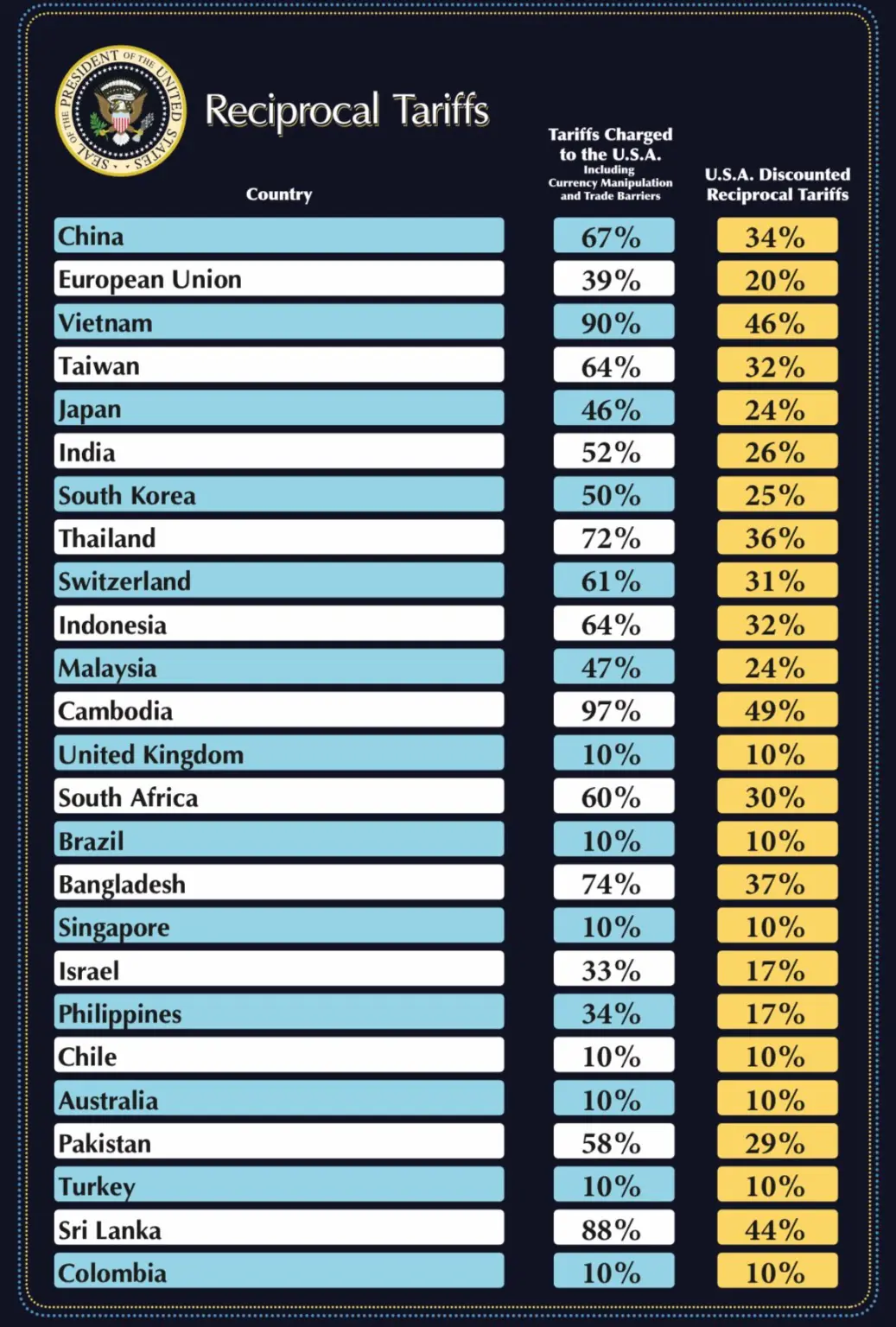
Ghanaian Foreign Minister Samuel Okudzeto Ablakwa will meet U.S. Ambassador Virginia Palmer on Monday to address Washington’s newly imposed 10% tariff on Ghanaian exports, a policy announced by President Donald Trump last week.
The levy, part of broader U.S. tariffs affecting over 100 countries, risks undermining Ghana’s access to a critical market for cocoa, textiles, and processed goods under the African Growth and Opportunity Act (AGOA).
Trump’s April 2 directive frames the tariffs as a safeguard for American industries and a tool to shrink the U.S. trade deficit, invoking national security provisions. The move has drawn swift backlash from trading partners, including the EU and UK, with Ghana now joining efforts to secure exemptions. “I’ve invited Ambassador Palmer to clarify the rationale behind this decision and explore pathways for relief,” Ablakwa said in a weekend statement.
The tariffs threaten immediate economic headwinds for Ghana, which exported $1.2 billion in goods to the U.S. in 2023. Analysts warn the levy could erode competitiveness for SMEs leveraging AGOA’s duty-free benefits, potentially destabilizing sectors supporting 500,000 jobs. Cocoa exports, which account for 30% of Ghana’s U.S. trade, face particular vulnerability amid already volatile global prices.
Ghana’s push for exemptions aligns with appeals from lawmakers like Kojo Oppong Nkrumah, ranking member of Parliament’s Economy Committee, who urged proactive diplomacy to avert “collateral damage” to bilateral relations. The U.S. remains a key partner, providing $500 million in development aid annually and 20% of Ghana’s foreign direct investment.
Monday’s talks come amid heightened global trade tensions. The EU has threatened retaliatory measures against U.S. tariffs, while African nations fear weakened AGOA utilization—a program set to expire in 2025. Ghana’s negotiations may hinge on demonstrating strategic alignment with U.S. interests, such as its recent anti-Russia stance at the UN and cooperation on regional security.
The tariff dispute underscores Africa’s precarious position in an increasingly polarized trade landscape. AGOA, which boosted sub-Saharan exports to the U.S. by 65% since 2000, now faces existential threats as Washington pivots toward protectionism. Ghana’s predicament mirrors challenges across the continent: Nigeria and Kenya similarly grapple with balancing Western partnerships against diversifying ties with China and the Global South.
Historical precedents offer limited optimism. In 2018, Trump’s steel tariffs disrupted South African exports despite diplomatic appeals, while Rwanda’s 2019 used clothing ban under AGOA triggered U.S. sanctions. Ghana’s advantage lies in its democratic stability and pro-Western tilt—factors that may earn leniency.
Yet long-term solutions require structural shifts. As University of Ghana economist William Asante notes, “Overreliance on raw material exports leaves us hostage to external shocks.” The government’s 2022 export diversification roadmap, aiming to boost manufactured goods to 50% of trade by 2030, remains underfunded. With global trade rules fragmenting, Accra’s ability to leverage diplomacy today could determine its economic resilience tomorrow.

