

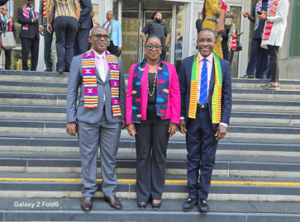
Ghana is prioritizing comprehensive aviation safety reforms as Transport Minister Joseph Bukari Nikpe leads a senior delegation to the 42nd International Civil Aviation Organization (ICAO) Assembly in Montreal, Canada.
The high-level delegation includes John M.K. Wumborti, Acting Commissioner of the Aircraft Accident and Incident Investigation and Prevention Bureau, Stephen Wilfred Arthur, Director-General of the Ghana Civil Aviation Authority (GCAA), and Yvonne Nana Afriyie Opare, Managing Director of Ghana Airports Company Limited (GACL).
The strategic composition of Ghana’s team signals coordinated efforts to address critical gaps in accident investigation capabilities, regulatory enforcement, and airport infrastructure modernization. The ten-day assembly, running from September 23 to October 3, brings together more than 2,000 participants to shape aviation policies through 2028.
Minister Nikpe emphasized Ghana’s commitment to international aviation standards during the opening proceedings. “Ghana remains committed to working with ICAO and the global aviation community to ensure that safety, security, and sustainability are at the heart of our aviation development”, he declared.
The delegation’s participation in the ICAO Innovation Fair demonstrates Ghana’s interest in leveraging technological solutions to enhance domestic aviation capabilities. This approach aligns with ongoing efforts to strengthen Kotoka International Airport’s position as a West African aviation hub.
Recent assessments show promise, with Kotoka International Airport passing its 2024 ICAO safety audit with 92% compliance, serving over 3 million passengers annually. However, challenges remain in fully implementing international best practices across Ghana’s aviation ecosystem.
The timing of Ghana’s focused engagement proves crucial as ICAO advances its “no country left behind” initiative, ensuring developing nations benefit from global aviation standards. This program addresses capacity-building needs that smaller aviation markets often struggle to meet independently.
Assembly priorities include establishing pathways to achieve net-zero emissions by 2050 and maintaining international aviation emissions at or below 2020 levels. For Ghana, aligning with these environmental standards while expanding aviation infrastructure presents both opportunities and challenges.
The delegation’s comprehensive representation across accident investigation, regulation, and airport management reflects lessons learned from regional aviation incidents and the need for coordinated safety oversight. Ghana’s proactive approach contrasts with reactive measures often seen following aviation emergencies.
Canada’s Transport Minister Steven MacKinnon emphasized cooperation, innovation, accessibility, and sustainability as core assembly themes. These priorities resonate with Ghana’s development goals as the country seeks to balance aviation growth with safety requirements and environmental commitments.
Ghana expects to use the assembly to deepen cooperation with other states, promote regional solidarity, and contribute to shaping global aviation policies on safety, sustainability, and technological innovation.
The Montreal discussions will establish regulatory frameworks and safety protocols that directly impact Ghana’s aviation sector development. Success in implementing assembly outcomes could enhance international confidence in Ghana’s aviation capabilities and support the country’s ambitions for Kotoka International Airport.
Ghana’s systematic approach to the ICAO Assembly reflects broader efforts to modernize transportation infrastructure and align with international standards. The outcomes will influence the country’s aviation development strategy and its competitiveness in the regional market.

