Supreme Court ruling warns buyers off unreleased State land

0

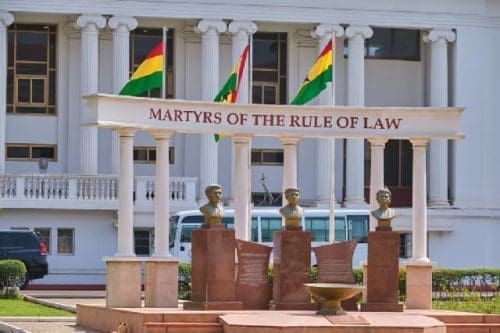
Land buyers who pay a stool or family for plots the State has compulsorily acquired, betting that the government will hand the land back, get nothing, the Supreme Court has ruled in a judgment now being enforced at Borteyman near Tema.

On 8 October 2026, Sino Africa Development Company Limited issued a public notice warning people not to buy, lease or accept grants of the disputed land from its opponents in the case. It asked anyone who acquired and built on the land before 3 June 2026 to contact the company or its solicitors within 30 days, with copies of their title documents, to clarify how the ruling affects them.

The notice follows the court’s 3-2 decision on 3 June in Sino Africa Development Co. Ltd v. Royal Bell Investments Ltd & Ors (Civil Appeal No. J4/44/2025). The judgment overturned a majority ruling of the Court of Appeal from 27 March 2025 and carries a warning for anyone dealing in land along Accra’s fast-growing eastern fringe.

How the dispute arose

The colonial government compulsorily acquired about 2,570 acres of Nungua Stool land at Borteyman, known as Nungua Farms, in 1940 for animal husbandry. That acquisition vested the land in the government and extinguished the stool’s interest.

Decades later, the government agreed to release part of it. A lease executed on 12 August 2010, with effect from 16 April 2009, returned about 974.53 acres to the Nungua Stool.

Before that release, between 1996 and 2000, the stool had already made grants of portions of the land. Sino Africa took two subleases from the stool on 16 August 2010, days after the release, with Lands Commission consent. The two disputed parcels cover about 328.877 acres.

What the court decided

Writing for the majority, Justice Bartels-Kodwo held that from 1940 until the release took effect in April 2009, the Nungua Stool had no title to the land and so could not grant it to anyone. The court applied the long-standing rule that a person cannot give what he does not have, and its earlier ruling in Memuna Moudy v. Antwi that compulsory acquisition destroys all competing interests in the land.

The grants made in that period were therefore invalid. The government’s later release did not cure them, and neither did any later government recognition of those deals. The court held that the State could not make lawful by recognition what the law had already treated as unlawful.

Why ‘feeding the estoppel’ failed

The earlier grantees argued for the doctrine of feeding the estoppel, under which a person who sells land he does not yet own may be bound to pass the title once he later acquires it.

The majority said the doctrine has limits. The original grant must clearly assert that the seller holds the title. It gives way to a later buyer who paid in good faith without notice of the earlier deal. And the person relying on it must have acted in good faith.

The earlier grants failed on all three counts, the court found. Some of the documents openly recorded that the government had not yet released the land and that the families approached the stool only because a release was expected. In the court’s view, the buyers knew the stool had no title and went ahead anyway, and equity will not protect someone in that position.

Justice Tanko Amadu, concurring, said parties cannot deal in State land before its release and then rely on equity to validate those transactions.

Sino Africa, by contrast, bought after the release and with Lands Commission consent. The court found no concrete evidence that it knew of the earlier grants and treated it as a buyer in good faith.

What the orders say

According to Sino Africa’s notice, the court declared title in the company’s favour except for the parcel claimed by Royal Bell Investments Limited and Terraform Development Limited, the first and second defendants. The company’s right to recover possession is also subject to those two firms’ possessory rights. The court imposed a perpetual injunction on the five other defendants and anyone claiming through them.

Anyone who now deals in the land through those parties does so with full notice of the judgment “entirely at his or her own risk”, the notice said.

The wider lesson

The principle reaches well beyond Borteyman. Large areas around Accra and Tema were compulsorily acquired decades ago and have been partly released, informally occupied or resold. The ruling means a grant made before an official release is worthless, however confident the parties were that the land would come back, and buyers who ignore that risk losing their plots to a later purchaser who waited for the release.

Sino Africa said a certified copy of the judgment and a site plan are available for inspection at its solicitors’ offices.

California law forces big firms to disclose slavery ties

0

Large companies in California must search their records for slavery-era transactions and swear to the results under a law Governor Gavin Newsom signed on 30 September 2026.

The Truth in Disclosure Act, Assembly Bill 2599, makes California the first US state to require such corporate disclosures, and the findings will be published in a public database. It does not create any compensation scheme for descendants of enslaved people.

The law covers companies doing business in the state with more than US$100 million in annual worldwide gross receipts that existed, or had a predecessor that existed, on or before 31 December 1964. They must search their own records and those of related entities for evidence that they bought or sold enslaved people, used them as collateral for loans, financed their purchase or insured them.

Where records turn up, companies must disclose the names of enslaved people and slaveholders they find, along with evidence of transactions that generated profit from slavery. Executives must file affidavits under penalty of perjury confirming the search was done. The state’s Civil Rights Department is to build the searchable platform where the affidavits and records will appear.

Nothing happens until the Legislature funds it. For companies doing business in California on 1 January 2028, the first affidavits fall due on 15 January 2029, or later if the platform is not ready.

Assembly member Isaac Bryan, a Culver City Democrat who wrote the bill, has argued that private corporations across the United States grew rich on the free labour of enslaved people. He told CalMatters he expects financial-sector firms to be among those filing.

Newsom, speaking in an interview with civil rights lawyer Bryan Stevenson cited by Fox News Digital, described records of insurance policies written on enslaved people and of human beings pledged as collateral. “Accountability, as Bryan said, starts with the truth,” he said.

The state’s Reparations Task Force, set up under a law Newsom signed in 2020, issued more than 100 recommendations in 2023 covering possible compensation as well as housing, education, policing and health. Its report pointed to JPMorgan Chase, which apologised in 2005 after research found two predecessor banks in Louisiana had accepted about 13,000 enslaved people as loan collateral and took ownership of about 1,250 when borrowers defaulted. Newsom has so far declined to back direct cash payments.

The insurance industry pushed back. Several insurer groups told the state Senate Judiciary Committee the bill largely duplicates a 2000 law that already required insurers to research and report slavery-era policies to the California Department of Insurance.

Republicans also criticised the measure. Republican National Committee Press Secretary Natalie Baldassarre told Fox News Digital that California should focus on affordability instead. The Alliance for Reparations, Reconciliation and Truth and the California chapter of the Council on American-Islamic Relations welcomed the law.

The state Senate passed AB 2599 on 27 August. Supporters say it is the 15th reparations-related bill passed since the task force reported.

Fire destroys shops at Kumasi Central Market near Aboabo

0

Fire destroyed several shops at the Kumasi Central Market near Aboabo Station on 9 October 2026, with residents fighting the flames before fire crews arrived.

Ghana National Fire Service (GNFS) personnel later took over at the scene, according to footage aired by Kumasi radio station Zuria FM and shared online. Videos show the fire tearing through a row of shops while traders carried out what goods they could reach.

The cause of the fire is not yet known. The fire service has not given a figure for the number of shops destroyed, the value of goods lost or whether anyone was hurt.

For traders, the timing is harsh. Many stock goods on credit, and a fire wipes out both their wares and their means of repaying suppliers.

The Kumasi Central Market, opened in 1924 and among the largest open-air markets in West Africa, has burned repeatedly. About 50 shops were destroyed on 30 July 2020, and more than 20 in April 2021, when the Ashanti Regional fire command blamed illegal and unprotected electrical wiring. Fire officers have also pointed to cooking with gas cylinders and stoves inside the market, and to the burning of rubbish, as recurring risks.

Kumasi has had other large market fires this year. In January 2026, more than 100 wooden and metal stalls burned at Anloga Market, the city’s second major fire in 24 hours. The fire service said congestion and poor stall layout had hampered firefighting there.

The GNFS is expected to begin investigating the cause once the fire is fully put out.

Teacher unions suspend strike on pledge of October arrears

0

Ghana’s three teacher unions suspended their nationwide strike on 9 October 2026 after the government promised to pay promotion arrears to 51,000 teachers by 16 October.

Teachers are expected back in public school classrooms on Monday, 12 October, ending a walkout that began on 25 September and kept pupils at home for about two weeks.

The Ghana National Association of Teachers (GNAT), the National Association of Graduate Teachers (NAGRAT) and the Pre-Tertiary Teachers Association of Ghana (PRETAG) called off the action after talks involving the Council of State and the Fair Wages and Salaries Commission (FWSC). The unions insist the dispute is not settled.

“Negotiations have not ended or concluded,” GNAT General Secretary Thomas Musah said on Citi TV’s Eyewitness News, adding that the unions would keep negotiating until every issue was resolved.

Under the commitments reached, the first batch of promotion arrears goes to 51,000 teachers by 16 October, with remaining payments due by the end of the month. A digital support allowance is to be paid in November and the continuous professional development allowance in December. The 20 per cent deprived-area allowance for teachers in rural postings is due to start in January 2027, with details to be agreed by November or December.

The unions have asked for copies of the agreements to be lodged with the Council of State, a step aimed at holding the government to its timetable. Promises that were not kept triggered the strike in the first place.

The Ministry of Education welcomed the suspension in a statement, describing it as a step towards resolving the outstanding concerns through dialogue in the interest of teachers and learners.

The unions walked out after a 24 September deadline passed without a settlement. They accused duty bearers, particularly the FWSC, of long delays and broken promises, and said the grievances had stirred anger among their members. Their demands included placing teachers who passed promotion examinations in December 2025 and February 2026 on their correct salary scales, payment of arrears dating from January 2026, the deprived-area allowance and a new Collective Agreement.

That agreement expired in June 2026. GNAT says it submitted proposals for its renewal in August 2025, but talks with the FWSC had made little progress. A NAGRAT official in the Western Region said earlier this month that of almost 60,000 teachers who received promotion letters, only a little over 6,000 had been placed on the right salary scale.

Education Minister Haruna Iddrisu and Finance Minister Dr Cassiel Ato Forson had urged the unions to return to class while talks continued. The unions refused, saying teachers wanted to see the money on their payslips rather than fresh assurances. Talks with the FWSC on 6 October ended without agreement, with the commission promising new grades for all promoted teachers on or before 30 October.

Negotiations on the new Collective Agreement are set to continue with the commission.

GRA plans backup Customs payments after airport receipt row

0

The Ghana Revenue Authority (GRA) will introduce backup payment procedures for system outages after a traveller left Accra International Airport without a receipt on 3 October.

The passenger, Gifty Osei Bonsu, paid GH¢800 towards Customs duty but departed before an official receipt could be issued, prompting allegations of extortion on social media. In a statement on 9 October, the GRA apologised to her, denied any wrongdoing by its officers and said it would change how Customs handles payments when its systems fail.

The case goes to the heart of a long-running complaint from travellers at Ghana’s main gateway: cash changing hands with no paper trail. GRA’s standing advice is that every duty payment should come with an official receipt, and this one did not.

According to the GRA, Bonsu arrived on an EgyptAir flight at 12:48 p.m. Her luggage was pulled for further checks after scanning, and officers found 20 pairs of new women’s shoes, nine new dresses, 18 new men’s shirts and four new wigs. They assessed duty of GH¢807.68 on the shoes.

The Integrated Customs Management System, which processes all Customs transactions, was down when the assessment was raised, the Authority said. Bonsu told officers she had a connecting flight, paid GH¢600, and a friend added GH¢200. She left before the system came back.

The officers covered the remaining GH¢7.68 from their own pockets, the GRA said, and the full GH¢807.68 was paid into its revenue account at Ecobank at about 4:57 p.m. the same day. A receipt was later generated in her name. The Authority said its preliminary investigation found the duty “was duly accounted for”.

The GRA nonetheless accepted that Bonsu had waited too long and said a system failure should not leave passengers facing uncertainty. It is also reviewing how Customs officers deal with travellers at entry points, with a focus on professional conduct, clear explanation of duty assessments and proper records of payments.

The Authority said it is preparing guidance on which goods attract duty, how charges are calculated, and how passengers can challenge an assessment or report an officer. Details of the new procedures and complaint channels will be published later. Until then, it urged travellers with dutiable goods to insist on an assessment notice, pay only through approved channels and collect an official receipt for every payment.

Bonsu’s public account of the encounter has not been independently reviewed by NewsGhana.

It is not the first time the GRA has had to answer extortion claims at the airport. In December 2025, it rejected allegations from a traveller charged GH¢12,690.63 on 18 undeclared mobile phones, saying the duty was assessed through the Customs system and an official receipt issued.

Mahama defends trotro preaching rule as clerics split over ban

0

President John Dramani Mahama has said Ghana has not banned preaching in vehicles, only in moving ones, as pastors split over a road traffic rule carrying jail terms.

The clarification came as Citi News reported that the government had suspended enforcement of the provision while it consults further following a public backlash. The government has not issued an official statement on the scope of the suspension or what happens next.

The dispute centres on Regulation 141 of the Road Traffic Regulations, 2026 (L.I. 2519), which Parliament passed in May. It makes it an offence to cause or permit a nuisance, including preaching and hawking, in a public or commercial vehicle while it is moving. Offenders face a fine of 10 to 50 penalty units, which comes to GH¢120 to GH¢600 at GH¢12 a unit, up to eight months in prison, or both.

The restriction itself is not new. Regulation 116 of the 2012 Road Traffic Regulations already banned preaching and hawking in moving commercial vehicles, with a maximum of 30 days in prison, but it was rarely enforced. The 2026 rules raise the penalties, and the Ministry of Transport has been running public education on them alongside other reforms, including automated enforcement and a demerit-point system for drivers. Preachers using megaphones at lorry stations and markets are not covered.

Mahama said the rule applies to everyone regardless of faith and exists to protect drivers and passengers from distraction. Preachers can still address passengers when a vehicle is parked, he said. “It is not true that we have banned preaching in vehicles,” he said.

Religious leaders have reacted sharply. Rev. Dr Kwadwo Boateng Bempah, Head Pastor of Holy Hill Chapel of the Assemblies of God, told his congregation in a sermon that circulated widely online that the restriction was an attempt to gag the church and would fail. He asked why preaching on buses should be singled out when others use loudspeakers in public early in the morning.

Prophetic Hill Chapel founder Nigel Gaisie said in a Facebook post on 8 October that he would soon preach on buses and lorries and dared the authorities to arrest him, GhanaWeb reported.

Prophet Telvin Sowah Adjei, speaking in an interview with broadcaster Nana Romeo, argued that a sermon was no more of a nuisance than passengers making phone calls, playing music or watching videos. He suggested the government’s real concern may be preaching that turns into arguments, which drivers may not want on board, according to GhanaWeb.

Prophet Kumchacha took the opposite view. He said pastors should obey the law and take their objections through proper channels rather than threaten defiance, arguing that the Bible teaches respect for the law, GhanaWeb reported.

Supporters of the rule say passengers should not be subjected to unwanted sermons during a journey and that a preacher standing in a moving bus aisle is a safety risk. Opponents say evangelism is a religious duty protected by freedom of worship.

The Central Charismatic Baptist Church has separately called for the provision to be reviewed.

In Togo, women turn to their hairdressers long before health professionals, new study finds

0

Bluemind Foundation’s Trust Study, conducted with 576 women, examines an overlooked part of mental health systems: trust.

When facing a difficulty, 30% of women surveyed in Togo say they first turn to their hairdresser. Fewer than 1% name a health professional.

The findings come from the Trust Study, released today by Bluemind Foundation ahead of World Mental Health Day on Oct. 10, which this year focuses on lived experience. The exploratory mixed-methods study involved 576 women (205 clients and 371 hairdressers) in Lomé, Kara, Sokodé and Dapaong between April and June 2026. It asks a question often missing from debates about the mental health treatment gap: what happens before someone reaches the health system, and whom do they trust enough to speak to first?

Manuela Siakou, Heal by Hair ambassador, Lomé, 2026.

Among the findings

  • 30% of clients surveyed turn first to their hairdresser, after family (41%) and ahead of friends (11%). Fewer than 1% turn first to a health professional.
  • 89% of clients interviewed in depth say they tell their hairdresser things they say nowhere else.
  • 100% of hairdressers interviewed say they have noticed a client was struggling before she put it into words.
  • 99% of clients surveyed would accept, or consider, a referral to professional support from their hairdresser (69% yes, 30% maybe).
Whom clients turn to first when facing a difficulty. Source: Bluemind Foundation, Trust Study 2026.

The study does not suggest that hairdressers should become therapists. It identifies what makes some everyday relationships matter for mental health: repeated contact over time, discretion, nonjudgment, and a degree of distance from family and close friends. Close, but not too close.

That relationship over time also makes change visible. A hairdresser may notice that a regular client is quieter, more withdrawn or different from usual, sometimes before she says anything.

“Women often already know who they trust enough to speak to first. The question for health systems is what happens next. Trust can make speaking possible, provide an initial form of support and, when more help is needed, open a path toward care. But a referral is only as useful as the care available at the other end.”
— MARIE-ALIX DE PUTTER, FOUNDER AND PRESIDENT OF BLUEMIND FOUNDATION

Trust already exists. Training changes what can be done with it.

Since 2021, Bluemind Foundation’s Heal by Hair program has trained hairdressers to listen without judgment, keep confidences, recognize signs of distress, respond safely to difficult disclosures, including violence, understand the limits of their role, and refer women to identified professionals.

The Trust Study does not measure the impact of Heal by Hair. It examines the relationship the program is built on. Heal by Hair does not create that relationship; it changes what hairdressers can do with it.

Marie-Alix de Putter, founder and president of Bluemind Foundation, with Heal by Hair ambassadors, Kara, 2026.

Beyond the salon

For health systems, the implications reach well beyond hair salons. Where does trust already exist in communities, and what role can those relationships play in making support, and when necessary formal care, easier to reach?

The question matters most where specialist care is scarce. Nearly 150 million people in Africa live with a mental health condition, and fewer than one in ten receive any form of support. Togo has fewer than ten psychiatrists for more than 9 million people, according to the World Health Organization.

Trust alone cannot close that gap. Bluemind Foundation argues that community-based pathways must be developed alongside investment in professional services, referral systems and the mental health workforce.

“The goal is not to medicalize everyday relationships. It is to understand the human infrastructure that already exists around people, and to connect it safely to stronger systems of care.”
— MARIE-ALIX DE PUTTER

Research from Africa, for a global question

Mental health research remains scarce in francophone Africa and underrepresented in the global literature. The Trust Study starts from the opposite direction: documenting a relationship observed in Togo, testing what can be learned from it, acknowledging what cannot be generalized, and asking whether similar mechanisms exist elsewhere.

The study is exploratory and descriptive. It does not measure therapeutic impact or establish causality. Its central proposition is one for further research: mental health systems may need to understand not only where care is delivered, but the human relationships through which people first become able to seek support.

Mental health is health.

When Insult Becomes the Medium: Reading Ghana’s Public Speech

Ghana’s public insults are not just bad manners. They are a signal of institutional stress — and a state that polices the language without hearing the grievance risks treating the symptom as the disease. The danger, then, is not simply that Ghanaians are insulting one another. It is that society may gradually lose the ability to disagree without destroying the possibility of living together.

Ghana’s communication environment is undergoing a significant shift in the character, function and political economy of public speech. What was once isolated abusive language in newspapers, radio phone-ins and political commentary has become an organising mechanism of public engagement.

I call this phenomenon the Insult Medium: a communicative environment in which insult, ridicule, profanity, humiliation and antagonistic speech no longer function merely as content carried by the media. They have become a medium in their own right — one through which political grievances, social identities, institutional distrust and struggles for visibility are negotiated.

The argument builds on my own media-monitoring work, which began in 2005. That July, research by the Centre for Media Analysis (CMA) challenged the tendency to blame the media for negative reportage, arguing that the media reflects the feelings and thinking of society. A 2006 CMA assessment went on to identify 368 insults across 47 newspaper columns in the first two quarters of that year alone. This essay returns to that early observation under radically changed technological conditions.

Drawing on Marshall McLuhan, Mikhail Bakhtin, bell hooks, Frantz Fanon, Jürgen Habermas, James C. Scott, Gloria Anzaldúa, Homi Bhabha, Shoshana Zuboff and Lauren Berlant, I propose five connected concepts: Public-Voice Weaponry (PVW), the Public-Truth Filter (PTF), Public-Expectations Deficiency (PED), Lingual-Desertification and the Digital Coyote.

My argument is that public insults in Ghana should be neither romanticised as democratic resistance nor dismissed as social indiscipline. They form a stratified phenomenon whose political meaning depends on the target, the truth content, the power relationship, the gendered character of the attack and its place in the economy of attention.

Understanding insults is not defending them

One boundary must be set before going further. This essay does not advocate insults. It supports President John Mahama’s call at a public forum in the USA , for the Ghana Journalists Association (GJA) and civil-society organisations to open a dialogue on the scale of insults in Ghana’s public space.

It does not defend personal abuse, defamation, harassment, threats, incitement or speech that creates a genuine national-security risk. Nor does it argue that citizens should be immune from the legal consequences of demonstrably harmful speech simply because that speech grows out of political frustration.

The argument is analytical, not celebratory. Asking why are people insulting? is a question of sociology, political communication and intelligence. Arguing that people should be allowed to insult without consequence is a question of law and public policy. Confusing the two is a serious analytical error.

The central proposition is therefore twofold:

  • An insult may be socially significant without being legally legitimate.
  • An insult being offensive does not automatically make it a security threat, or establish defamation.

The rest of the framework depends on that distinction.

Three kinds of insult: expression, defamation and threat

Ghana’s current debate on insults routinely collapses three different categories: insult as political and social expression, insult as defamation, and insult as a personal or national-security threat. They can overlap in a given case, but they should never be treated as the same thing.

Dimension Political / social expression Defamation Personal or national-security threat
Primary function Expression, protest, ridicule, anger Injury to reputation through an actionable falsehood Intimidation, coercion, violence or destabilisation
Main question What grievance is being expressed? Is a damaging factual claim false and legally actionable? Does the communication signal credible harm or serious security risk?
Typical target Public policy, institution, politician Individual or organisation Individual, institution, critical infrastructure or the state
Relevance of truth May carry a legitimate grievance Central to whether it is defamatory Bears on the credibility and seriousness of the threat
Public-interest dimension Often substantial May or may not exist Potentially substantial
Security significance Usually low on its own Not inherently a security issue Potentially very high
Appropriate response Engagement, verification, political accountability Legal remedy where applicable Threat assessment and a proportionate security response

The point of the table is simple: the same word can fall into entirely different categories depending on its context, target, factual content, intent and consequences.

  1. The medium is the malice

Tune into a Ghanaian morning radio show, join a political discussion online or scroll through social media, and one feature of the national conversation is hard to miss: the public insult has become a normal mode of engagement.

That deserves more attention than the usual explanation that Ghanaian public discourse has simply become “indisciplined”. The insult has been transformed. It is no longer only something communicated through the media. Increasingly, it is communicated as the media.

This is where Marshall McLuhan’s famous dictum, “the medium is the message”, becomes useful. The platforms still matter, but the deeper change lies in the logic of communication itself. Radio, television, Facebook, TikTok, X, YouTube and WhatsApp supply the infrastructure; antagonism, ridicule and insult increasingly supply the grammar. The result is the Insult Medium.

The Insult Medium is not the same as profanity, and not every harsh political statement is abuse. It describes an environment in which insult becomes the vehicle for attracting attention, challenging authority, venting frustration, humiliating opponents, mobilising political identities, generating algorithmic engagement, building celebrity, policing gender and forcing neglected grievances into view.

The phenomenon is older than the digital environment. In July 2005, the Centre for Media Analysis, which I then led, publicly challenged the tendency to blame the media for negative reportage, arguing that the media reflects the feelings and thinking of society. That reverses the direction of causality: the media does not simply manufacture social toxicity — it can also reveal it.

The Insult Medium therefore needs a double reading. It is both a producer of social toxicity and a diagnostic instrument for measuring accumulated frustration. The real question is not why are Ghanaians insulting one another? but what social, political, economic and technological conditions make insult an increasingly useful language of public participation?

  1. From negative media to the Insult Medium

This argument extends an earlier line of inquiry rather than announcing a new discovery. By 2005, the Centre for Media Analysis was already examining the relationship between negative media content and wider social attitudes. Its July 2005 report, Media Not to Blame, urged society and corporate institutions to stop blaming the media for negative reportage, because the media reflected what society felt and thought.

That was an important epistemological move. It positioned media content as a social mirror. The question was not only whether journalists were responsible for negativity, but what the prevalence of negativity revealed about the society being represented.

The data that followed reinforced the point. In October 2005, CMA research found that 82 percent of public comments in a sampled period were uncomplimentary. In 2006, a CMA study of private media recorded 368 insults across 47 newspaper columns in the first two quarters of the year.

These findings matter because they show that the phenomenon predates TikTok, Facebook and algorithmic culture. The technology has changed; the underlying social impulse has not gone away. What has changed is the velocity, scale, monetisation and visibility of antagonistic speech.

The 2005 question was: what does negative media content reveal about Ghanaian society? Today’s question is: what does the normalisation of insult reveal about the psychological, political and institutional condition of Ghanaian society? Part of the answer, I suggest, lies in eroding public expectations, declining institutional trust and a rupture in communicative restraint.

III. From obuo to talking back

Ghanaian public communication has long placed great cultural value on obuo: respect, deference and appropriate speech toward elders and people in authority. That order has real social value. It preserves cohesion, regulates relationships between generations and discourages needless humiliation.

But it also carries a political contradiction. The language of respect can become a language of unequal power when some citizens are always expected to speak respectfully to institutions that do not return that respect through effective governance. Today’s insult represents, in part, a movement from deference to defiance.

bell hooks’s idea of “talking back” is useful here. Speech becomes politically meaningful when people who were expected to stay silent refuse to. The Ghanaian citizen who says, in effect, I will not speak to power in the language power has prescribed for me, is performing a communicative rupture.

That rupture can be democratic. It can also be destructive. The ambiguity is the point: the Insult Medium is neither inherently liberating nor inherently pathological. It is a contested public sphere.

  1. Has the polite public sphere collapsed?

Ghana’s public sphere has not collapsed, but it has changed. Jürgen Habermas imagined the public sphere as a space where citizens engage one another through rational-critical debate. Ghana’s experience points to a messier reality: that ideal space was never equally open to everyone — not until technology diluted the power of the gatekeepers.

Citizens without formal education, political connections, institutional authority or elite linguistic fluency may hold perfectly legitimate grievances yet lack the vocabulary that earns those grievances a hearing. The Insult Medium changes that equation by lowering the linguistic threshold of entry. No policy terminology is needed to say this hospital has no medicine, or you broke your promise. No bureaucratic register is needed to voice anger over unemployment, galamsey, corruption, bad roads or the rising cost of living. The insult becomes an extreme form of political accessibility.

James C. Scott’s notion of the “hidden transcript” is relevant here. Private resentment that once lived in taxis, tro-tros, drinking spots, markets, homes, workplaces and informal political talk can now enter the visible public transcript. The digital environment has opened the backstage.

Yet this democratisation is deeply paradoxical. Everyone has entered the room, but the room is becoming uninhabitable. Now that citizens themselves hold the gate, the space can only be made liveable again through genuine social and political negotiation.

  1. Not all insults are equal

The common analytical mistake is to treat every insult as equivalent. The Insult Medium contains distinct layers of intention, power and truth. I identify four.

Stratum I: Systemic public interrogation

This is the accountability layer. The language may be aggressive, crude or culturally shocking, but its target is an identifiable public failure: galamsey, corruption, unemployment, poor healthcare, abandoned infrastructure, energy insecurity, failing schools, procurement abuses or economic hardship.

Here the insult works as what I call Public-Voice Weaponry (PVW). The vulgarity is the wrapper; the grievance is the payload. The right response is not necessarily censorship — it is investigation.

This is where the Public-Truth Filter (PTF) becomes essential for separating truth from falsehood and legitimate from illegitimate claims. The question to ask is: what share of this abusive statement contains a verifiable public grievance? A citizen can make a legitimate complaint in illegitimate language. When that happens, the state must be able to tell the two apart.

Stratum II: Partisan foot-soldiering

The second layer is partisan attack. Here the apparent anger of a citizen may in fact be organised political labour. Political actors and their supporters use insult to discredit opponents, shield party leaders, manufacture polarisation, suppress criticism, dominate online conversation and shape electoral perceptions. The danger is that genuine public anger gets captured by competing elites.

Stratum III: Metric-driven abuse

The third layer belongs to the attention economy, where outrage is a business model. The goal is not accountability but a chain: attention, engagement, followers, monetisation, visibility.

Shoshana Zuboff’s analysis of surveillance capitalism is instructive. Digital platforms turn human behaviour into measurable signals, and anger is exceptionally measurable: it drives comments, shares, reactions, watch time and repeat visits. Insult becomes economically productive. A creator may discover that being outrageous pays better than being accurate. At that point the insult is no longer just political speech; it is digital labour.

Stratum IV: Pure garbage and malicious fabrication

At the bottom of the hierarchy is speech with neither meaningful political criticism nor truth value: fabricated allegations, personal humiliation, malicious gossip, threats, sexualised attacks, targeted harassment and deliberate character destruction. Here the Public-Truth Filter finds virtually no accountability value. Degradation is the objective. This is where regulation, platform governance and civic education are most clearly justified.

  1. The feminisation of the target

The Insult Medium is not gender-neutral. Men and women may share the same digital space yet be attacked through very different linguistic mechanisms.

A male politician may be called corrupt, incompetent, stupid, wicked or a thief. A woman can be called all of those things while her body, sexuality, marriage, motherhood, reproductive status and appearance are also turned into weapons against her. The attack shifts from her political performance to her embodied identity. The insult becomes a form of patriarchal social regulation.

This exposes a central contradiction within the counter-public. The same linguistic environment that lets marginalised citizens talk back can reproduce the oppression of other marginalised citizens. The revolt can reproduce the very hierarchy it claims to overthrow.

VII. Bakhtin and the grotesque degradation of power

Mikhail Bakhtin’s concept of grotesque realism offers a productive reading of insults in Ghana’s public space.

Political elites tend to present what might be called the classical political body: polished, controlled, rational, dignified, institutionally protected and wrapped in ceremony. The ordinary citizen meets the opposite reality — polluted rivers, unemployment, overcrowded hospitals, inflation, inadequate infrastructure and insecurity.

The insult performs a symbolic reversal. It drags the elite body downward. The politician who seems untouchable in a convoy becomes, through vulgar speech, a biological human being subject to the same bodily realities as everyone else. The message of this grotesque degradation is: you are not above us.

That can be politically regenerative. But Bakhtin’s grotesque is ambivalent: the same degradation that punctures elite dignity can also become empty cultural pollution. Hence a distinction between two forms:

  • Regenerative grotesque: insult used to expose corruption, hypocrisy, institutional failure, inequality and political arrogance.
  • Degraded grotesque: insult used for clout, misogyny, homophobia, fabricated accusations, monetised outrage and personal destruction.

The first attacks power. The second reproduces toxicity. Perhaps President Mahama’s underlying concern is this: how far is Ghana willing to let the toxicity go?

VIII. Public-Expectations Deficiency and cruel optimism

The escalation of insult can also be read through Lauren Berlant’s concept of cruel optimism: people stay attached to an idealised promise even as the conditions needed to sustain it deteriorate.

Ghanaian citizens are asked to keep believing: work hard; be a participant, not a spectator; vote; stay peaceful; respect authority; trust the political system to respond. But what happens when the promised improvement repeatedly fails to arrive? Hope is exhausted.

I call the resulting condition Public-Expectations Deficiency (PED). The sequence runs:

Hope → cruel optimism → institutional failure → disappointment → PED → rage → the Insult Medium

The insult, in other words, is not necessarily the starting point. It can be the end-stage linguistic expression of disappointment accumulated across the citizenry.

  1. Lingual-Desertification

Lingual-Desertification is the central ecological metaphor of this essay. Galamsey destroys ecosystems by extracting value and leaving degradation behind. The attention economy does something similar to public language: it extracts anger, humiliation, outrage, fear, sexuality and political conflict, monetises those emotional resources, and leaves a depleted communicative environment behind.

A desertified linguistic ecosystem gradually loses empathy, patience, nuance, trust, the habit of listening, intellectual disagreement — and above all the capacity to disagree without dehumanising. In that landscape, every debate becomes a battlefield, every opponent an enemy, every correction an attack and every disagreement a chance to humiliate. Eventually the soil of public language turns infertile, like a river poisoned by mining.

  1. The Digital Coyote and the linguistic borderland

Gloria Anzaldúa’s concept of the borderland and Homi Bhabha’s theory of hybridity offer another lens on Ghana’s Insult Medium. Ghanaian digital speech increasingly lives between English, Twi, Ga, Ewe, Hausa and Pidgin; between political jargon, popular culture, memes, profanity and religious language. The result is neither purely traditional nor purely Western. It is hybrid.

Out of this borderland emerges a new kind of power: the Digital Coyote. The coyote metaphor describes citizens who cross linguistic and institutional boundaries to carry suppressed information into spaces that conventional communication cannot reach. A citizen may blend English political terminology with vernacular insult and popular idiom precisely because the mix carries force — it commands public and political attention and can mobilise people toward change.

The Digital Coyote is, in this sense, a linguistic smuggler. But the metaphor carries an ethical warning and should not be romanticised. The coyote may smuggle truth. It may just as easily smuggle toxicity.

  1. Fanon and the cathartic insult

Frantz Fanon’s analysis of colonial violence adds another dimension. Insult can be a response to structural domination. When the channels for expressing frustration seem blocked, pressure on the tongue looks for an outlet. The Insult Medium becomes one such outlet, allowing citizens to symbolically reverse a perceived humiliation through catharsis.

Catharsis matters, but a society cannot insult its way into good governance. Anger can expose the wound; it cannot, on its own, heal it. The political question is what follows the catharsis. Does the insult lead to investigation, reform, accountability, collective organisation or policy change? Or does it simply produce another insult?

That question leads to the need for a verification mechanism — what I call the Public-Truth Filter.

XII. The Public-Truth Filter

A modern democratic state needs a way to separate offensive language from the information it contains. The Public-Truth Filter (PTF) should assess at least five dimensions:

Dimension Question to ask
1. Target Is the speech aimed at a public institution, a public official, a private citizen, a protected identity, or an identifiable vulnerable person?
2. Verifiability Can the underlying allegation be independently tested?
3. Public interest Does it concern public money, public services, corruption, governance, safety or institutional performance?
4. Intent Is the speaker trying to expose, mobilise, persuade, monetise, humiliate or fabricate?
5. Harm Does it produce legitimate political pressure, reputational damage, targeted harassment, incitement, threats or discrimination?

The filter separates two things that are routinely conflated: linguistic offensiveness and public-information value. A statement can be highly offensive and carry high public-truth value. Another can be mildly worded and carry none at all. Any public sensitisation effort must keep the two apart.

XIII. The way forward: from insults to narrative intelligence

The stakes reach beyond media studies, into national intelligence and governance. The 2005 monitoring approach read media content as an indicator of social attitudes. Contemporary narrative intelligence can extend that model by treating public language as societal sensor data.

Rather than simply counting insults, an intelligence system should track insult frequency, thematic concentration, target categories, geographic distribution, linguistic forms, sentiment, political affiliation, gendered attack patterns, misinformation, grievance themes, institutional targets and the speed of escalation.

A sudden rise in insults aimed at a particular institution can then serve as an early-warning indicator:

Rising insult frequency → recurring grievance → institutional distrust → declining legitimacy → social mobilisation → possible instability

The insult is not necessarily the threat. It may be the signal of the threat. A state that reads public insults only as evidence of indiscipline risks an intelligence error. A state facing declining institutional trust, economic frustration, political polarisation, gendered conflict, corruption allegations, youth unemployment, environmental destruction and falling expectations cannot restore stability merely by policing the language in which citizens describe those conditions.

The tongue may be the first diagnostic instrument. The question is whether the state listens before the signal becomes confrontation.

XIV. Policy implications

The answer to Ghana’s Insult Medium is not a simple campaign for “respectful speech”. Respect cannot be legislated into existence while institutional disrespect persists. A credible response needs at least six elements:

  1. Establish public-truth monitoring. Government and civil society should build independent systems to identify the substantive grievances embedded in hostile speech.
  2. Separate insult from threat. Not every insult is a security threat. Threat assessment must distinguish offensive expression, political criticism, harassment, incitement and credible threats of violence.
  3. Create institutional grievance feedback loops. When thousands of citizens repeatedly complain about the same issue, the state should treat that pattern as policy intelligence.
  4. Develop gender-sensitive speech monitoring. Monitoring must capture sexualised attacks on women and other forms of identity-based harassment.
  5. Challenge algorithmic incentives. Platforms, regulators and civil society should examine how engagement systems reward outrage and controversy.
  6. Restore the social contract. The most effective antidote to toxic public speech is not censorship but credible governance. Where institutions work, citizens have less reason to channel every grievance through rage.

Conclusion: the street is no longer asleep

The rise of the Insult Medium should not be read simply as proof that Ghanaians have forgotten how to behave. That reading is too shallow. The phenomenon has a longer genealogy: the media monitoring of 2005 already traced a link between media negativity and the wider social mood, and the documented insults that followed showed that antagonistic speech was measurable long before today’s platforms existed.

What has changed is the architecture. The smartphone has democratised publication. The algorithm has monetised attention. The political party has professionalised polarisation. The influencer has commodified outrage. And the citizen has discovered that an insult travels further than a policy paper.

So the Ghanaian insult must be read on several levels. Sometimes it is garbage. Sometimes it is political theatre. Sometimes it is misogyny, partisan propaganda or digital entrepreneurship. But sometimes, beneath the vulgarity, there is a fact: a broken hospital, a polluted river, an unfinished road, a missing public service, a stolen opportunity — a citizen who has spoken politely for too long.

That is why the right response is neither celebration nor blanket condemnation. It is interpretation. The central challenge for Ghanaian democracy is to recover the information buried beneath the toxicity without reproducing the toxicity itself. That is the purpose of the Public-Truth Filter, and it is why Lingual-Desertification matters. Galamsey destroys rivers by extracting value without restoring the ecosystem. The attention economy can do the same to language, extracting attention from anger until the communicative environment itself turns barren.

The danger, then, is not simply that Ghanaians are insulting one another. It is that society may gradually lose the ability to disagree without destroying the possibility of living together.

The insult is the smoke. The question for intelligence, governance and democratic scholarship is: what is burning? The answer lies less in the insult itself than in the institutional conditions that made it necessary, profitable or powerful.

Messan Mawugbe, PhD, is Lead Consultant at TRT Intelligence & Institute of Brands Narrative Analysis. He can be reached at [email protected], [email protected], [email protected]

Youth delegates adopt Accra communique on Agenda 2063 goals

0

Young delegates from six African countries adopted the Accra Youth Communique on trade, governance and security at a symposium held in Accra from 19 to 23 August 2026.

The organisers, Youth Arise Organization, now plan to send the document to youth ministries across the continent and set up a central registry to track whether its recommendations are acted on. Ghana’s capital hosted the Africa We Want Symposium as part of the Orange Youth Festival.

Delegates came from Ghana, Benin, Côte d’Ivoire, Kenya, Nigeria and Liberia. Through discussions and policy lab sessions, they built their recommendations around the African Union’s Agenda 2063, the continent’s 50-year development blueprint adopted in 2015.

The communique covers intra-African trade and economic integration; governance, political participation and accountability; peace, security and social cohesion; African culture, identity and heritage; and people-driven development, including gender equality and inclusion.

It calls for fewer barriers to trade and free movement across African borders, better infrastructure and digital connectivity, and a greater role for young people in governance. The delegates also asked for tougher anti-corruption measures, responsible digital citizenship, support for African creative industries, protection of indigenous languages and heritage, and more inclusive development.

The international delegations pledged to promote the communique in their home countries.

Moses Baffour Awuah, Global Chief Executive Officer of Youth Arise Organization, said the document would go to youth-focused ministries and other stakeholders across Africa for implementation. He said the registry would record initiatives and commitments arising from the recommendations so that progress could be measured.

Youth Arise did not say when the registry would be launched or which ministries would receive the communique first.

Russia’s Africa summit tests whether partnership pays both ways

0

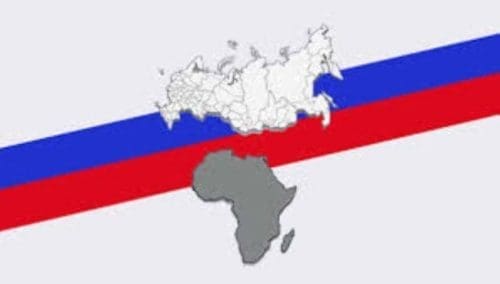
When African leaders gather in Moscow on 28 and 29 October 2026 for the third Russia-Africa Summit, the question they should carry with them is simple: what does Africa get back?

Russia’s renewed courtship of the continent cannot be separated from its war in Ukraine, which has become a test of Moscow’s economic, military and political endurance. Western sanctions have restricted Russian trade and finance and squeezed the revenues that sustain the war. In that setting, Africa matters to Moscow for more than diplomacy. It offers political partners, alternative markets, military cooperation and, critically, natural resources and revenue streams that can help Russia withstand pressure.

From Sochi to Moscow

The summits themselves trace that shift. The first, in Sochi in 2019, was pitched as an effort to rebuild and formalise Russia’s ties with Africa around trade, investment and security. By the second, in St Petersburg in 2023, Russia was deep into the war and under heavy sanctions. That meeting served as much to show that Moscow still had friends outside the Western bloc as to deepen any particular partnership.

This year’s summit comes at a more consequential moment still. Moscow wants to prove its African relationships have survived a long war and still deliver strategic benefits. African governments should be asking whether they deliver comparable benefits to them. Declarations, defence pacts and summit photographs are not the test. The balance of what each side gains is.

Gold and the logic of sanctions

Natural resources are the place to start. Gold matters because it can move through opaque networks and be turned into money outside conventional financial channels. The US Treasury has previously linked gold operations associated with the Wagner Group in Africa to financing the group’s activities, including in Ukraine.

That does not mean every Russian deal with an African mining state is designed to fund the war. It does show why African resources have strategic value for a Russia trying to stay strong under sanctions. The same logic reaches beyond gold to energy and critical minerals. In countries such as Mali and the Central African Republic, Russian security partnerships have created relationships in which military, political and commercial interests overlap. The model deserves scrutiny: Russia provides security assistance and political backing, and gains influence, business openings and potentially privileged access to resources.

Mali as a case study

Mali shows the pattern most clearly. Wagner personnel arrived in 2021, and the deployment later passed to Russia’s state-run Africa Corps. Moscow presents the arrangement as an alternative to Western security partners and proof of its commitment to African sovereignty. But it raises an unavoidable question: what does Russia receive in return?

Seen against the war in Ukraine, the answer matters. Access to gold and other strategic resources, closer ties with resource-rich governments and new economic channels all help Moscow blunt sanctions and sustain its wider strategic capacity. The Mali relationship is not only about counterterrorism. It is part of a broader contest over resources, influence and economic staying power.

The numbers behind the rhetoric

The economic record reinforces the point. At the 2019 Sochi summit, President Vladimir Putin set a goal of doubling Russia-Africa trade to US$40 billion within four to five years. Russian Foreign Minister Sergei Lavrov said in June 2026 that trade in 2025 had exceeded US$27 billion. By comparison, Russian estimates put China’s trade with Africa at about US$150 billion a year and Europe’s at about US$300 billion.

Those figures do not prove Russia’s Africa strategy has failed, and they do not capture every kind of value Moscow draws from the continent. They do raise a question. If Russia’s conventional economic footprint remains modest, why invest so heavily in African relationships? Part of the answer is that Africa’s value to Moscow cannot be measured by trade alone. Political influence, military access, votes at the United Nations, alternative markets and resources all count. For a country fighting a long war under sanctions, they can matter as much as trade statistics.

Travelling to a capital at war

The setting of this summit exposes the tension in Moscow’s pitch. African delegations are being asked to travel to a capital where Ukrainian drone attacks have repeatedly closed airspace. In early September, an Air Tanzania flight bound for Moscow’s Vnukovo airport was diverted to St Petersburg, and the airline briefly suspended its new Moscow route after a risk assessment before reversing the decision within a day.

The irony is hard to miss. Russia presents itself as Africa’s security partner, yet African officials must weigh their own safety before flying to its capital. More importantly, governments must judge whether the benefits of the relationship justify its risks and costs.

Why Ghana should pay attention

For Ghana, the calculation is sharper than for most. The security consequences of Russia’s growing role in the Sahel are tied to Ghana’s own national and regional interests. The deteriorating situation in the Sahel, and the risk of violence spilling towards Ghana’s northern borders, should make Accra ask hard questions. Is Russian engagement mainly delivering security and development to African states, or is Africa becoming a source of the influence, resources and economic resilience Moscow needs for its own ambitions?

The answer will not be simple. Russia’s Africa policy serves several purposes, and resources are only one of them. But the war has changed the calculation. What Moscow once presented as a drive for trade, investment and diplomatic ties must now also be read through its need to preserve strategic autonomy, resist sanctions and keep fighting.

The Moscow summit is therefore a test not of whether African leaders will keep talking to Russia, but of whether Russia can persuade them the relationship is genuinely reciprocal. Russia clearly wants a deeper partnership with Africa. The question that matters is what Moscow needs from the continent, what Africa receives in return, and whether that balance is tilting further against Africa.

Joseph McCarthy is an analyst and researcher specialising in governance, security and political transitions in the Sahel.