

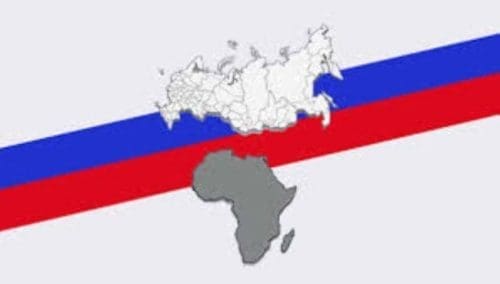
When African leaders gather in Moscow on 28 and 29 October 2026 for the third Russia-Africa Summit, the question they should carry with them is simple: what does Africa get back?
Russia’s renewed courtship of the continent cannot be separated from its war in Ukraine, which has become a test of Moscow’s economic, military and political endurance. Western sanctions have restricted Russian trade and finance and squeezed the revenues that sustain the war. In that setting, Africa matters to Moscow for more than diplomacy. It offers political partners, alternative markets, military cooperation and, critically, natural resources and revenue streams that can help Russia withstand pressure.
From Sochi to Moscow
The summits themselves trace that shift. The first, in Sochi in 2019, was pitched as an effort to rebuild and formalise Russia’s ties with Africa around trade, investment and security. By the second, in St Petersburg in 2023, Russia was deep into the war and under heavy sanctions. That meeting served as much to show that Moscow still had friends outside the Western bloc as to deepen any particular partnership.
This year’s summit comes at a more consequential moment still. Moscow wants to prove its African relationships have survived a long war and still deliver strategic benefits. African governments should be asking whether they deliver comparable benefits to them. Declarations, defence pacts and summit photographs are not the test. The balance of what each side gains is.
Gold and the logic of sanctions
Natural resources are the place to start. Gold matters because it can move through opaque networks and be turned into money outside conventional financial channels. The US Treasury has previously linked gold operations associated with the Wagner Group in Africa to financing the group’s activities, including in Ukraine.
That does not mean every Russian deal with an African mining state is designed to fund the war. It does show why African resources have strategic value for a Russia trying to stay strong under sanctions. The same logic reaches beyond gold to energy and critical minerals. In countries such as Mali and the Central African Republic, Russian security partnerships have created relationships in which military, political and commercial interests overlap. The model deserves scrutiny: Russia provides security assistance and political backing, and gains influence, business openings and potentially privileged access to resources.
Mali as a case study
Mali shows the pattern most clearly. Wagner personnel arrived in 2021, and the deployment later passed to Russia’s state-run Africa Corps. Moscow presents the arrangement as an alternative to Western security partners and proof of its commitment to African sovereignty. But it raises an unavoidable question: what does Russia receive in return?
Seen against the war in Ukraine, the answer matters. Access to gold and other strategic resources, closer ties with resource-rich governments and new economic channels all help Moscow blunt sanctions and sustain its wider strategic capacity. The Mali relationship is not only about counterterrorism. It is part of a broader contest over resources, influence and economic staying power.
The numbers behind the rhetoric
The economic record reinforces the point. At the 2019 Sochi summit, President Vladimir Putin set a goal of doubling Russia-Africa trade to US$40 billion within four to five years. Russian Foreign Minister Sergei Lavrov said in June 2026 that trade in 2025 had exceeded US$27 billion. By comparison, Russian estimates put China’s trade with Africa at about US$150 billion a year and Europe’s at about US$300 billion.
Those figures do not prove Russia’s Africa strategy has failed, and they do not capture every kind of value Moscow draws from the continent. They do raise a question. If Russia’s conventional economic footprint remains modest, why invest so heavily in African relationships? Part of the answer is that Africa’s value to Moscow cannot be measured by trade alone. Political influence, military access, votes at the United Nations, alternative markets and resources all count. For a country fighting a long war under sanctions, they can matter as much as trade statistics.
Travelling to a capital at war
The setting of this summit exposes the tension in Moscow’s pitch. African delegations are being asked to travel to a capital where Ukrainian drone attacks have repeatedly closed airspace. In early September, an Air Tanzania flight bound for Moscow’s Vnukovo airport was diverted to St Petersburg, and the airline briefly suspended its new Moscow route after a risk assessment before reversing the decision within a day.
The irony is hard to miss. Russia presents itself as Africa’s security partner, yet African officials must weigh their own safety before flying to its capital. More importantly, governments must judge whether the benefits of the relationship justify its risks and costs.
Why Ghana should pay attention
For Ghana, the calculation is sharper than for most. The security consequences of Russia’s growing role in the Sahel are tied to Ghana’s own national and regional interests. The deteriorating situation in the Sahel, and the risk of violence spilling towards Ghana’s northern borders, should make Accra ask hard questions. Is Russian engagement mainly delivering security and development to African states, or is Africa becoming a source of the influence, resources and economic resilience Moscow needs for its own ambitions?
The answer will not be simple. Russia’s Africa policy serves several purposes, and resources are only one of them. But the war has changed the calculation. What Moscow once presented as a drive for trade, investment and diplomatic ties must now also be read through its need to preserve strategic autonomy, resist sanctions and keep fighting.
The Moscow summit is therefore a test not of whether African leaders will keep talking to Russia, but of whether Russia can persuade them the relationship is genuinely reciprocal. Russia clearly wants a deeper partnership with Africa. The question that matters is what Moscow needs from the continent, what Africa receives in return, and whether that balance is tilting further against Africa.
Joseph McCarthy is an analyst and researcher specialising in governance, security and political transitions in the Sahel.

