

A major fault on Ghana’s national grid triggered widespread outages in July 2026, affecting Accra, Kumasi and parts of northern Ghana and forcing several power plants to shut down. The episode brought dumsor — intermittent power supply — back into public attention. Its effects extended beyond electricity: Ghana Water Limited reported disruptions at treatment plants and pumping stations, temporarily affecting the production and distribution of potable water in several areas.
In such a situation, households face inconvenience, while the cost for businesses is even higher. A World Bank analysis of Ghana’s previous energy crisis found that each additional day of blackout was associated with an average 11% decline in weekly profits. The same study found that almost nine in ten firms experienced power outages, while electricity interruptions represented significant losses in annual sales. The lesson is straightforward: a more resilient power system needs enough dependable generation capacity to meet demand when the system comes under pressure.
For Ghana’s coastal cities, the location of electricity supply is particularly relevant. Accra and Tema concentrate population, commerce, industry and logistics, while coastal ports and industrial facilities depend on reliable power. This makes the coast a relevant setting for examining generation options that could serve major centres of demand.
Ghana already has experience with floating electricity generation. Gas-fired power vessels have operated in the country since the mid-2010s. In 2017, a 470 MW Karpowership replaced an earlier 235 MW vessel and began operating in September. It was subsequently relocated from Tema to the Western Region to use Ghanaian natural gas. This provides a local reference point for the floating-generation model, although a nuclear facility would require a different technical and regulatory framework.
In a floating power facility, generating equipment is installed on a vessel or platform and connected to the local electricity grid. The arrangement can reduce the land required for the generating plant and allow capacity to be located near coastal industrial and population centres. Depending on the design and supporting infrastructure, it may also offer flexibility in where the facility is deployed.
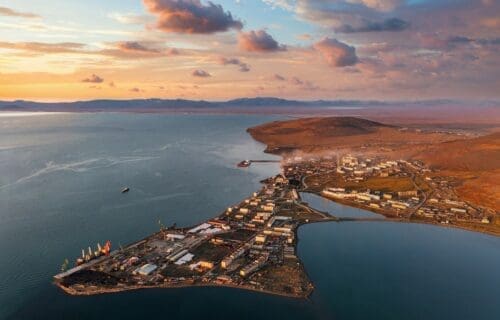
Floating generation is not limited to gas- or oil-fired plants. The model has also been applied to nuclear power, with Rosatom’s Akademik Lomonosov providing an operating example. Equipped with two KLT-40S reactors with a combined electrical capacity of 70 MW, the plant supplies electricity and heat to Pevek and surrounding areas in Russia’s isolated Chukotka power system. By January 2025, it had generated its first billion kilowatt-hours of electricity, according to World Nuclear News.
The plant has also attracted interest from nuclear specialists in Africa. Group Executive: Power and Industry in South African Nuclear Energy Corporation (NECSA) Sengiphile Simelane, who visited the plant, shared: “The introduction of the FNPP has been a welcome relief to the residents and businesses of Pevek, offering benefits such as carbon-free and cheaper electricity, a revival of the mining sector, and a reduction in regional unemployment”.
The experience is being extended. Four additional floating power units are under construction in Russia to provide electricity for the Baimsky mining project in Chukotka. The new units are designed around RITM-200 reactors, with each unit equipped with two reactors. The concept is entering the global market. For example, in June 2024, Russia and Guinea signed a memorandum to consider the possibility of developing such units, while Indonesia explored potential regulatory approaches for their use.
For Ghana, floating nuclear generation would need to be considered within the country’s wider electricity strategy. Renewable energy and storage can contribute to a diversified system, while nuclear power can provide dependable generation. A floating facility would combine that role with a coastal deployment model, making it relevant to discussions about electricity supply for industrial and urban demand centres.
Ghana’s experience with floating gas-fired generation provides a useful starting point for examining what a nuclear version could offer. The operating record of Akademik Lomonosov gives that discussion a practical reference beyond the concept stage. For Ghana’s coastal cities and industrial centres, the next question is how such a facility could fit local demand, grid connections and the country’s developing nuclear framework. Economic, environmental and regulatory assessment would be essential to establishing that fit.

