

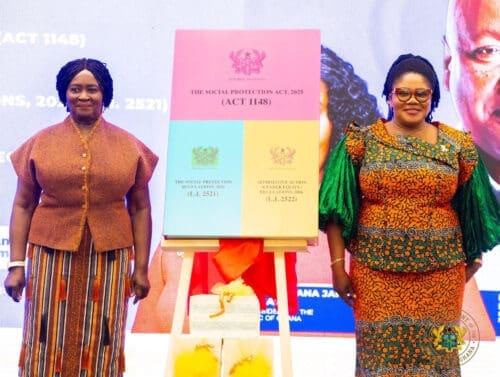
Social worker Alhassan Mbalba has urged Ghana to regulate social work by law, arguing that new social protection laws launched on 7 October cannot succeed without trained professionals.
Mbalba, a social protection expert who attended the launch at the Marriott Hotel in Accra, made the case in an article published on 8 October. He said Parliament should create a statutory regulator for the profession and make “social worker” a legally protected title.
The call puts pressure on a Bill that professional bodies have chased for years. Social work has been practised in Ghana since the 1940s, yet no law sets who may practise it, how they are licensed or who disciplines them.
Vice-President Professor Naana Jane Opoku-Agyemang launched three instruments at the event: the Social Protection Act, 2025 (Act 1148), the Social Protection Regulations, 2026 (L.I. 2521) and the Affirmative Action (Gender Equity) Regulations, 2026 (L.I. 2522). The Act creates a coordinated national system covering social assistance, social insurance and emergency support, and provides for a Social Protection Fund. L.I. 2522 puts into effect the Affirmative Action (Gender Equity) Act, 2024.
The Vice-President said the laws must reach the most vulnerable, widen opportunities for women and ensure social protection money reaches intended beneficiaries. She told the audience the framework had to deliver change beyond paperwork, pointing to existing programmes such as the Livelihood Empowerment Against Poverty (LEAP) cash transfer, school feeding, the National Health Insurance Scheme and Free Senior High School. The World Bank and UNICEF commended the government and pledged further support.
Mbalba said the government’s commitment to resetting social protection was clear, but warned that implementing the laws depends on social workers who serve children, older people, persons with disabilities and families in hardship. “A stronger social protection system requires a stronger professional social work workforce,” he wrote.
He noted that Ghana trains social workers at the School of Social Work in Osu, founded in 1945, and at universities including the University of Ghana, Kwame Nkrumah University of Science and Technology, the University for Development Studies and Methodist University, from first degree to doctorate.
He pointed to the United Kingdom, where each of the four nations has its own social work regulator, as a model. In the United States, licensing is handled state by state. Regulation, he argued, would also help Ghanaian social workers seeking jobs abroad have their qualifications recognised, which ties in with the government’s Work Abroad Programme run through the Youth Employment Agency.
A Bill to set up a regulator was introduced in the Eighth Parliament but did not pass. Mbalba said stakeholders are consulting on a similar Bill for the Ninth Parliament.
Practitioners have pressed for the law repeatedly. The Social Workers Association of Ghana called for its passage in March 2023 and again in March 2025, saying licensing would weed out unqualified practitioners. At a World Social Work Day event in March 2024, UNICEF said it and the US Agency for International Development were supporting Ghana to build the missing regulatory framework.
In May 2026, the Ghana Association of Social Workers told Minister for Gender, Children and Social Protection Dr Agnes Naa Momo Lartey that the proposed Social Work Council Bill had reached an advanced stage. The Minister said her ministry was ready to work with stakeholders on the framework.

