Netflix is considering cutting about 5 per cent of its workforce in a restructuring that could be announced as early as next week, according to a report by the media outlet Puck. The streamer is losing viewing time to YouTube.
Puck did not say which departments would be affected. A Netflix spokesperson declined to comment.
The reported cuts follow a difficult few weeks. On 6 October, Paramount Skydance completed its takeover of Warner Bros. Discovery, a prize Netflix had agreed to buy last December. Netflix’s deal, which valued Warner’s studio and streaming business at about US$83 billion, fell apart when Netflix declined to match Paramount’s rival offer of roughly US$110 billion. The merged company now trades as Skydance, under Chairman and Chief Executive David Ellison.
Wall Street has also cooled on the company. Wells Fargo cut Netflix to underweight in September, and HSBC downgraded it from buy to hold on 22 September, lowering its price target to US$76 from US$96. Both pointed to weak engagement. HSBC, citing Nielsen data, said Netflix took 7.8 per cent of United States (US) television viewing time in July, while YouTube took about 14 per cent.
Netflix shares fell to their lowest level since August 2024 in July and are down by more than a third over the past year.
Sarandos concedes the pace
Co-Chief Executive Ted Sarandos acknowledged the slowdown at Bloomberg’s Screentime conference. “We’re not growing as fast as I want us to,” he said, adding that the company was working to speed up.
Sarandos said he did not regret the Warner bid. He described Netflix’s offer as the highest price at which it could still return value to shareholders. He said it was too early to tell whether the Paramount-Warner combination would add up to more than the sum of its parts.
He also said Netflix would not move into user-generated video. The company is interested in deals with creators whose work is close to professional standard, he said, but it is not trying to win over YouTube’s mass of uploaders.
To revive growth, Netflix has expanded into live events, sport, podcasts, games and short vertical video. It has struck a content partnership with French broadcaster TF1, and it is exploring live channels and bundles with services such as Peacock.
If confirmed, the cuts would be among the largest in Netflix’s recent history. The company has made smaller rounds of layoffs, mostly in its film and product teams.
Imperial General Assurance has signed on as official insurance partner of Ghana’s karting team, which starts racing at the Karting Africa Trophy in Benguela, Angola, on Saturday, 10 October 2026.
Under the deal, the insurer will provide group personal accident cover for the team’s drivers. The policy pays out for injury, temporary or permanent disability and death, including injuries suffered while racing. The company did not disclose what the deal is worth.
The races mark Ghana’s first appearance in international karting. The team will compete against drivers from 14 other countries at the karting track at Benguela’s Ombaka National Stadium, with main races on 10 and 11 October. It is the first time Angola has hosted the African karting championship.
The three-driver squad left Accra on 5 October, according to JoyNews. Officials from the National Sports Authority and the Auto Racing Ghana board saw them off. Jihad Armand is the senior driver, and the two juniors are Khloé Kusi-Asomah, 11, and Ezra Stephens, nine. The team is due back in Ghana on 13 October.
Harry Ofori-Attah, Managing Director of Imperial General Assurance, said the company was proud to back the team at a first for Ghana. “Every big moment starts with someone daring to go first,” he said.
The cover fills a gap many young athletes face. In motorsport, crashes are part of competition, yet few junior drivers in Ghana have insurance of their own.
Imperial General Assurance is a Ghanaian non-life insurer. It describes itself as the country’s fastest-growing insurance company.
Management of Comet Properties Limited has appealed to President John Dramani Mahama and the national security authorities to urgently intervene in what it describes as an escalating landguard operation, alleged criminal trespass, destruction of property and threats to residents and investors at the Comet Estate near Brekuso in the Akuapem South Municipality of the Eastern Region.
The company’s leaders stated that they are issuing this distress call to President Mahama and national security authorities because local police cannot protect lives and property in the area.
They noted that the gang leaders are mostly foreigners. This includes a self-styled chief identified as Mawuko, who claims to be executing these acts of mayhem for the top echelons of the Ghana Police Service.
Consequently, local police officers are reportedly afraid to arrest them for criminal investigation.”
The company says the alleged activities, which it claims have intensified over the past two weeks, have created an atmosphere of insecurity within the estate and raised serious concerns about the protection of private investments and the safety of residents.
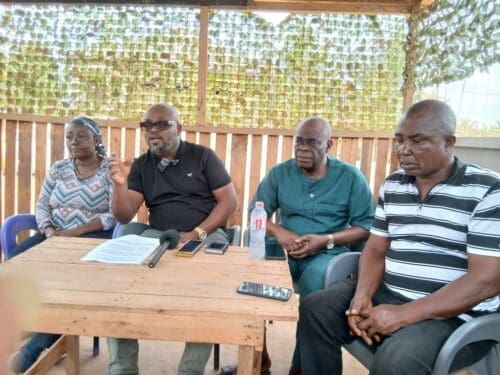
At a press conference held at CometHill at Brekusu on Friday October 9, 2026, Director of Comet Properties Limited, Nana Yaw Adom, alleged that groups of persons armed with dangerous weapons have entered portions of the company’s lands, destroyed property and attempted to sell disputed parcels to third parties.
He told journalists at a press conference that when the management of estate developing company confronted the illegal claimant to its land at Comet Estate, the developer claimed he had purchased the land from the Owoo family.
Nana Yaw Adom asserted that the company has petitioned President John Dramani Mahama to advise the illegal claimant to stop trespassing on its legally registered land.
He further claimed that whenever the company confronted the illegal developer, the individual would drop the names of top figures at the Jubilee House and within the police hierarchy.
He alleged these officials were actively supporting the developer’s encroachment on the company’s registered land, which is situated near the Brekusu Police Station.
He commended President John Dramani Mahama for his prompt response to the petition, noting that the President had directed the Crime Officer of the Accra Regional Police Command to intervene, investigate the matter, and ensure that the law was upheld.
In acting on President Mahama’s directive, a senior police officer invited both the management of Comet Estates and the illegal land developer to a meeting.
He noted that the police have instructed both parties to provide their legal indentures, certificates, and land documents so investigator can determine the true owner of the disputed property.
He pointed out that although the illegal claimant was warned to halt all development, he defied the order.
Instead, he hired masons and deployed heavily built land guards to continue constructing a house on the land, creating tension and insecurity within Comet Estate.
“As of today, Friday, October 9, 2026, while we were preparing to brief the press to expose these illegal activities, the masons and their laborers were busily constructing buildings on the disputed land, even though a special police investigator has been officially assigned to look into the matter,” Nana Yaw Adom revealed after conducting journalists around the site to give them firsthand information on exactly what is happening on the disputed land at Comet Estate.
According to him, some of the individuals allegedly involved have claimed to be acting on behalf of influential persons within the Ghana Police Service and political authorities at the Presidency.
The company, however, stressed that the allegations are claims that require independent investigation and verification.
Call for presidential investigation
Nana Yaw Adom called on President Mahama to institute an inquiry into the alleged claims of political and police connections made by persons the company identifies as landguard leaders.
He said petitions on the matter had already been submitted to the Presidency, Interior Minister and and appealed for direct intervention to restore what he described as peace and sanity to the Comet Estate.
«“Laws should work in Ghana. There should be order in Ghana,” Nana Yaw Adom said.»
The company also called on the national security authorities to assist in dealing with what it described as an organised group allegedly operating on its lands.
Allegations against persons identified as landguard leaders
Management specifically mentioned individuals it identified as Nii Sowah Shippi, also known as Mawuko, Kwabena Debrah and a Nigerian national identified as Jeremy.
According to the company, Mawuko is allegedly leading a group of landguards operating in the area, while some of the individuals are alleged to have claimed connections to powerful persons within the Police Service or political leadership.
Comet Properties alleged that such claims have made some police officers reluctant to arrest or investigate the individuals.
The company did not provide independent evidence at the press conference to establish that the named individuals are in fact acting on behalf of senior police or political officials.
The allegations therefore remain subject to investigation and the right of the accused persons to respond.
Company traces dispute to land ownership claims
Comet Properties said it was established in 2002 as a real estate development company specialising in converting undeveloped land into planned communities and providing infrastructure for residents.
Its flagship project, the company said, is the Comet Estate, located within the Akuapem South Municipality.
According to the company, the estate covers approximately 1,500 acres and currently has a population of about 15,000 residents, although its earlier description at the press conference referred to a potential population of about 20,000.
Management said the development was undertaken under the appropriate planning arrangements and that the company acquired its interests from traditional landholding families in Brekuso, Akorpman and surrounding communities.
It said the company subsequently obtained planning scheme approval from the Akuapem South Municipal Assembly.
Company disputes alleged overlap with Odai Ntow family lands
A significant part of the dispute, according to Comet Properties, concerns competing claims involving the Odai Ntow family of Ashongman and Kwabenya.
The company referred to the historical Bosompim v. Martei (1904) judgment and related judgment plan, as well as a statutory declaration said to have been registered in 1977.
According to Comet Properties, the relevant documents establish the boundaries of lands associated with the Odai Ntow family and demonstrate that those lands are distinct from the lands acquired from the Brekuso traditional landowners for development of the Comet Estate.
The company insists that its lands do not overlap with the lands claimed by the Odai Ntow family.
Management, however, alleges that some persons associated with the Odai Ntow family have repeatedly entered portions of the Brekuso lands occupied by Comet Properties and purportedly sold parcels to third parties.
The company further alleged that landguards have been used to enforce such transactions.
These claims were presented by Comet Properties and have not, in the material provided, been independently adjudicated or established by a court.
Owoo family dispute
The company also outlined a separate dispute involving the Owoo family of Accra.
According to Nana Yaw Adom, Comet Properties acquired additional lands from the Asona family of Brekuso in 2002, part of which involved approximately 67 acres released to the Owoo family pursuant to a settlement between the Owoo family and the Asona family.
He said the Owoo family subsequently sold approximately 25 acres of the released land to Comet Properties for what he described as valuable consideration of about GH¢400 million, which the company said was fully paid.
However, Comet Properties alleges that in 2013, the Owoo family subsequently entered into transactions involving the same area and began selling portions of land adjoining the 67-acre parcel.
The company claims that landguards were subsequently deployed in connection with those transactions, resulting in multiple legal disputes and confrontations.
Seven foundations allegedly destroyed
One of the most serious incidents cited by the company allegedly occurred in November 2024, when persons said to be associated with Mawuko allegedly entered disputed portions of the Comet Properties development.
The company claims that seven building foundations were destroyed, with the total value of the damage estimated at more than US$500,000.
According to Nana Yaw Adom, the incident was reported to the police, but the company was dissatisfied with the subsequent response.
He further alleged that despite legal action and an injunction obtained against Mawuko and others, the group allegedly continued to operate on the disputed lands.
Comet Properties claims that as many as 50 persons have been maintained on the land as part of the alleged landguard operation.
The company is therefore asking the authorities to enforce existing court orders and prevent further destruction or occupation of the disputed properties.
Security concerns
Management said the alleged activities have gone beyond an ordinary civil land dispute and have become a security concern because of the alleged use of armed groups, threats and destruction of property.
It argued that disputes over land ownership should be resolved through the courts and other lawful mechanisms rather than through the use of force.
The company also expressed concern that repeated changes in political administrations could be exploited by land actors who allegedly invoke the names of newly appointed political authorities to pursue claims over disputed properties.
According to the company, such conduct undermines confidence in Ghana’s land administration system and discourages private investment.
Impact on residents and investors
Comet Properties said the alleged insecurity poses a threat not only to its corporate interests but also to residents who have invested in homes and businesses within the estate.
The company described Comet Estate as a community of law-abiding residents who have invested substantial resources in the area and are entitled to protection under Ghanaian law.
It warned that continued clashes, alleged landguard activities and destruction of property could undermine the development of the community and create fear among residents.
Company seeks protection, enforcement of law
Nana Yaw Adom said Comet Properties was not asking for preferential treatment but for the enforcement of the law and protection of legitimate investments.
He urged the police, national security authorities and other relevant state institutions to investigate the allegations independently and ensure that persons found to have engaged in criminal conduct are dealt with according to law.
He also appealed to the President to investigate claims that persons involved in the alleged activities have links to senior officials within the Police Service or political authorities.
The company said it was prepared to provide relevant documents, including land acquisition records, planning documents, court processes, judgment plans and other materials relating to the disputed properties, to assist any official investigation.
Broader landguard challenge
The allegations come against the backdrop of Ghana’s longstanding struggle with landguardism, a phenomenon that has frequently been associated with violent enforcement of competing land claims, illegal sale of land, threats to developers and destruction of property.
Legal experts and civil society groups have repeatedly argued that land ownership disputes must be settled through established legal and customary processes rather than through private enforcement groups.
For Comet Properties, the immediate concern is that the alleged activities at its estate could escalate unless state institutions intervene.
The company maintained that it remains committed to the development of the Comet Estate but insisted that such investment can only continue in an environment where the rule of law is respected.
“We are a responsible corporate organisation and need a peaceful environment to carry out our business,” Nana Yaw Adom said, reiterating the company’s appeal for urgent state intervention.
Comet Properties Limited says it is seeking an independent investigation into the allegations, protection for residents and investors, and enforcement of all applicable court orders and laws governing the disputed lands
International Justice Mission (IJM) Ghana warmly congratulates the Government of Ghana and all stakeholders on Ghana’s upgrade from Tier 2 to Tier 1 in the United States Department of State’s Trafficking in Persons (TIP) Report. This prestigious recognition affirms Ghana’s sustained commitment and significant progress in preventing human trafficking, protecting survivors, and prosecuting offenders.
The Tier 1 ranking signifies that Ghana fully meets the minimum standards for the elimination of trafficking in persons. This achievement reflects years of coordinated action, strategic investments, strengthened institutional collaboration, and the unwavering commitment of government agencies, civil society organizations, development partners, the media, and citizens across the country.
IJM Ghana extends its heartfelt congratulations to:
The Ministry of Gender, Children and Social Protection (MoGCSP),particularly the Human Trafficking Secretariat, for its leadership in coordinating national anti-trafficking efforts and implementing Ghana’s National Action Plan.
The Office of the Attorney-General and Ministry of Justicefor strengthening prosecutions and securing increased convictions of traffickers.
The Ghana Police Service,including specialized anti-trafficking and marine units working to combat child trafficking and exploitation, particularly on Lake Volta.
The Ghana Immigration Service and the Economic and Organised Crime Office (EOCO)for their contributions to investigations, victim identification, and efforts to tackle emerging forms of trafficking, including cyber-enabled exploitation.
The Ministry of Labour, Jobs and Employment Relationsfor efforts to strengthen labour migration safeguards and worker protections.
Members of Parliament,especially the Select Committees on Human Rights and Gender, for championing laws, oversight, and policies that advance the protection of vulnerable populations.
The National Commission for Civic Education (NCCE), media organizations, civil society actors, faith groups, traditional leaders, and development partnerswhose awareness creation, advocacy, and community engagement efforts have strengthened prevention and protection efforts nationwide.
Traditional and religious leaderswhose voices and influence have helped drive the campaign.
Most importantly, the people of Ghana,whose vigilance, reporting of suspected trafficking, community action, and support for vulnerable children and families have been critical to this success.
A Milestone Marked by Tangible Results
The Tier 1 ranking was driven by measurable progress across prosecution, protection, and prevention efforts.
During the reporting period, Ghana significantly increased law enforcement action against traffickers, prosecuting 212 alleged traffickers and securing 28 convictions, while identifying 2,331 trafficking victims and referring all identified victims to appropriate services. The government also increased funding for victim assistance and anti-trafficking initiatives, expanded frontline training, strengthened international cooperation, and enhanced efforts to combat online scam operations linked to trafficking and forced labour.
Particularly encouraging is the increase in victim identification and referral, which demonstrates growing capacity among social welfare officers, law enforcement personnel, labour inspectors, immigration officers, and civil society organizations working together to ensure survivors receive the care and support they deserve.
Child Trafficking Remains a Critical Challenge
While this recognition is worth celebrating, it should also remind us that the fight against human trafficking is far from over.
The TIP Report notes that children in Ghana continue to face exploitation in forced labour, especially within inland and coastal fishing, domestic work, street hawking, agriculture, artisanal mining, quarrying, and herding. Child trafficking on Lake Volta remains a significant concern, and children from Ghana and neighbouring West African countries continue to be vulnerable to exploitation.
The report further highlights the increasing use of technology by traffickers to recruit and exploit victims through fraudulent job offers, cybercrime schemes, online scams, and deceptive migration opportunities.
These realities underscore the importance of sustained investments in child protection systems, survivor-centred services, community awareness, and coordinated law enforcement responses.
The Vital Role of Civil Society
Civil society organizations and NGOs have been indispensable partners in Ghana’s anti-trafficking journey. Throughout the reporting period, NGOs partnered with government agencies to provide survivor care, operate shelters, conduct public education campaigns, support investigations, build community resilience, train frontline officials, and strengthen prevention efforts in high-risk communities.
Organizations working directly with vulnerable children, families, and survivors continue to fill critical gaps in protection services and contribute invaluable expertise toward strengthening Ghana’s response to human trafficking.
Sustaining the Momentum
Despite the achievement of Tier 1 status, important challenges remain. Shelter capacity, particularly for adult survivors, remains limited. Additional investments are needed to strengthen anti-trafficking responses in rural communities, enhance specialized training on cyber-enabled trafficking crimes, improve survivor services, and address vulnerabilities that place children and adults at risk of exploitation.
This is the time to increase funding for human trafficking and child protection.
IJM Ghana encourages all stakeholders not to view Tier 1 as the termination of our efforts, but as a platform for deeper action and greater impact. Sustained progress will require continued collaboration, adequate resourcing of frontline institutions, strengthened accountability mechanisms, and a renewed commitment to protecting every person from violence, exploitation, and abuse.
Reacting to this development, IJM’s Director, West Africa Programme, Anita Budu, said:
“Ghana’s elevation to Tier 1 status is a significant national achievement that reflects the power of coordinated action and collective commitment. We commend the Government of Ghana and all stakeholders whose dedication has contributed to this milestone.
“At the same time, we recognize that thousands of children and vulnerable adults remain at risk of trafficking and exploitation. This achievement should inspire us to work even harder to ensure every child is safe, every survivor is protected, and every trafficker is held accountable.”
About IJM Ghana
International Justice Mission (IJM) is a global organization that protects the vulnerable and people living in poverty from violence and exploitation. We partner with local authorities in 33 programme offices in 19 countries to combat violence against women and children, abuse of power by public authorities, and various forms of human trafficking and forced labour.
We aim to strengthen justice systems, support survivors, and advocate for lasting change.
In Ghana, IJM partners with government institutions to address human trafficking and forced labour in the agricultural sector by strengthening the capacity of relevant authorities to identify, remediate, and prevent cases.
Ghanaian media professional and digital creator Citizen Kafui has been appointed Media Relations Manager for EMY Africa adding another significant responsibility to his growing career in media, communications and brand management.
With professional experience spanning GBC, Light TV, Citi FM, Channel One TV, 4Syte TV and entertainment and lifestyle portal GhanaWeekend Citizen Kafui brings a wealth of experience in media production, publicity, storytelling and audience engagement to his new role.
At EMY Africa he will lead the brand’s media engagements and publicity rollout supporting its communication efforts as the organisation continues to celebrate distinguished personalities, business leaders and individuals making meaningful contributions to society.
The appointment further strengthens Citizen Kafui’s growing portfolio in public relations and entertainment where he continues to work at the intersection of media, music and brand development.
He currently serves as Media Relations Manager for Ghanaian singer Gyakie a role that has seen him contribute to the artiste’s publicity and media engagements.
His latest appointment at EMY Africa marks another step in his professional journey reflecting his continued commitment to building strong brands, telling compelling stories and creating visibility for individuals and organisations making an impact.
Speaking on the new opportunity Citizen Kafui described the appointment as another challenge and an opportunity to grow professionally while contributing meaningfully to the industry.
“For me, this is another challenge to keep growing contributing to the industry building great brands and representing amazing people.
I look forward to this great opportunity and what we can achieve together,” he said.
As EMY Africa continues to expand its presence through its awards, events and Magazine publications Citizen Kafui’s appointment comes at a pivotal time for the brand with strategic media relations and engagement remaining central to amplifying its work and celebrating excellence.
Ghanaian singer and songwriter Gyakie is gearing up for another exciting release as she unveils the official artwork for her upcoming single, “Your Body,” a smooth feel-good record expected to bring a fresh wave of energy to her growing catalogue.
Following a year marked by a string of releases and notable musical moments Gyakie is keeping the momentum going with the new single, scheduled for release on October 16, 2026.
The song is expected to build anticipation for Gyakie’s third EP The Dawn which is scheduled for release later this year.
The unveiling of the artwork offers fans an early glimpse into the creative direction of the upcoming release, building anticipation for what promises to be another exciting addition to the singer’s repertoire.
Known for her distinctive vocals captivating melodies and ability to connect with listeners Gyakie continues to explore her sound while maintaining the musical identity that has endeared her to audiences at home and abroad.
With “Your Body,” fans can look forward to a record designed to bring a feel-good atmosphere and get listeners moving as the countdown to its release begins.
The single also serves as another step towards the arrival of The Dawn EP Gyakie’s upcoming third EP project as she continues to build on her achievements and strengthen her position on the global music stage.
FlipTheMusic continues to play an influential role in strengthening Gyakie’s position as one of Ghana’s leading music artistes through its strategic support and efforts to expand her reach as she connects with audiences across borders.
As excitement builds around her next body of work, “Your Body” presents another opportunity for Gyakie to connect with her audience while keeping her musical journey moving forward.
Fans can mark October 16, 2026 on their calendars for the release of “Your Body” as anticipation builds for The Dawn EP and the next chapter in Gyakie’s evolving sound.
Pre-save Gyakie’s “Your Body” now and get ready for its official release.
Questions are being raised over the handling of a number of alleged assault, death threat and murder-related complaints in Ningo, with affected families accusing the police of failing to pursue some cases through the normal criminal justice process.
The complaints are linked to a wider dispute involving Nene Nartey Asamoah, who is described by some members of the community as the chief of Kopodor.
Information and documents made available to the family indicate that several complaints have been lodged at the Ningo and Prampram Police Stations over alleged attacks, threats and other incidents involving persons said to be associated with Nene Asamoah.
The allegations include claims that some victims were assaulted, threatened with death and, in some instances, that serious cases were not processed before the courts.
The complainants allege that police officers, instead of proceeding with investigations and prosecution where appropriate, have on some occasions advised the parties to resolve the disputes within the family.
They are questioning why allegations involving possible criminal offences would be referred for family settlement rather than being subjected to the applicable investigative and prosecutorial procedures.
Claims over attacks on Okada riders
One of the most serious allegations concerns attacks on commercial motorbike riders, commonly known as Okada riders, in the Ningo area.
According to information provided by the family and community sources, an Okada rider, Timothy teye Otubua, was allegedly killed in July after being severely beaten by persons described as land guards allegedly linked to Nene Asamoah.
His fellow Okada riders waited for him for some time, but when he did not return, they decided to follow up. They later found him at the village, lying in a pool of blood and dead.
The father of the deceased boy, Kwao teye Otubua says the family made several requests to the police to pursue the case in court, but those requests were allegedly refused.
He claims that the suspect, John Happy Asamoah, alias Nene Nartey Asamoah, continues to walk freely in the Kopodor community in Ningo and has allegedly issued threats to members of the deceased’s family.
According to the father, following the boy’s death, his fellow Okada riders went to observe the situation involving Nartey Asamoah.
He alleges that Nartey Asamoah, together with some of his alleged land guards and police officers, caused the arrest of 12 of the riders.
The father further alleges that the 12 men were beaten and subsequently detained at the Prampram Police Station cells.
The family subsequently reported the incident to the Prampram Police Station. The case was taken up by the CID, led by a female investigator identified as Madam Grace.
The account further alleges that other Okada riders subsequently travelled to the area to inquire about the circumstances surrounding the death and were also attacked.
The sources claim that as many as six Okada riders have since lost their lives in connection with the incidents.
They further allege that complaints were made to the Ningo-Prampram Police Station but that no meaningful action has followed.
Another allegation is that motorbikes belonging to some of the deceased riders were subsequently found at a property said to belong to Nene Asamoah.
These claims have not been independently established, and the circumstances surrounding the reported deaths, the identities of the perpetrators and the alleged recovery of the motorbikes require confirmation from the police and other relevant authorities.
Families question police response
The complaints also involve alleged assaults and threats against several individuals, including persons identified as Larseh Joshua, Addo and Isaac Tetteh Kwadwo.
Others, including Nii Akweh, Atteh Chenchenmah, Larseh Emmanuel, Arkuteeye, Sernor Kwao Stephen and Pastor Enoch Mensah, are alleged to have received death threats.
According to the complainants, the various matters were reported to the police at Ningo and Prampram, but the cases have allegedly not resulted in prosecutions.
The family further alleges that on occasions when Nene Asamoah was invited to the police station, he allegedly insulted or threatened complainants in the presence of police officers.
The allegations have prompted calls for the police hierarchy to review the handling of the complaints and establish whether proper procedures were followed.
According to the family, Nartey Asamoah and his associate, the Chief of Lakpleku, allegedly colluded with the police, while one Nene Simpin allegedly brought the matter to the family home, where the bereaved parents were asked to bury their son.
Dispute over Dankyira family house
The tensions have also extended to the Dankyira family house at Ningo, where members of the family allege that attempts have been made to demolish the property.
The Alipue, Chenchenma and Ashalley Botwe Gates are reportedly opposed to any demolition of the house.
In a letter dated September 30, 2026, lawyers representing the affected Gates reportedly called on Nene Asamoah to abandon any plans to demolish the property.
Documents cited by the family indicate that the house was constructed through contributions from members of the wider Dankyira clan drawn from several communities.
The family therefore maintains that the property belongs to the wider Dankyira family and that no individual should unilaterally determine its future.
Traditional authority dispute
The wider dispute has also generated questions about Nene Asamoah’s authority and his claim to the traditional position he occupies.
Some family members have challenged his authority over them and disputed his right to exercise control over family property.
The family also alleges that Nene Asamoah insulted the Gborbu Wulomo in the presence of senior police officers and later disregarded an invitation from the traditional authority.
The claims form part of a broader dispute involving land ownership, traditional authority and alleged activities of land guards in Ningo and surrounding communities.
The complainants are calling for the police administration to clarify the status of the various complaints and explain why some of the reported cases have allegedly not proceeded to court.
They insist that their concerns are not intended to interfere with traditional processes but that allegations involving assault, threats or possible loss of life should be investigated independently and dealt with according to law.
The allegations against Nene Asamoah, the alleged land guards and the police remain disputed and unproven. No finding of criminal liability has been established against the persons named in the complaints based on the information provided.
The Ghana Police Service and Nene Asamoah have not, in the material provided, given a public response to the allegations.
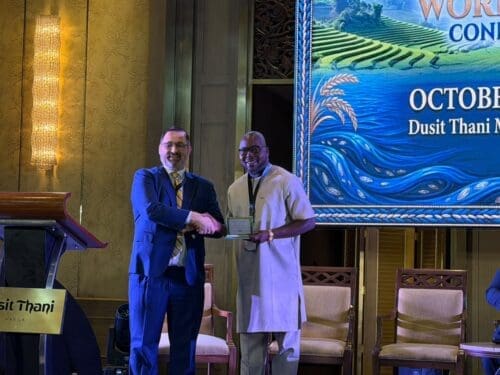
The Executive Secretary of the Importers and Exporters Association of Ghana (IEAG), Mr. Samson Asaki Awingobit, has received a Certificate of Appreciation at the 2026 International World Rice Conference in recognition of his active participation, knowledge-sharing and valuable contributions to the global rice industry.
The recognition was presented by the conference organisers, The Rice Trader and the International Commodity Institute, at the three-day event held from October 7 to 9 at the Dusit Thani Manila in the Philippines.
Mr. Awingobit also distinguished himself as a key contributor to this year’s conference, actively participating in discussions and sharing perspectives on issues affecting the global rice trade. His contributions provided an important platform for highlighting Ghana’s rice import and trade interests while strengthening engagement between Ghanaian businesses and international stakeholders across the rice value chain.
Mr. Awingobit’s recognition underscores his continued engagement with the international rice trade community and his efforts to strengthen collaboration among rice producers, farmers, importers and exporters across markets.
This year’s conference brought together key stakeholders from across the global rice value chain to exchange market intelligence, explore emerging trade opportunities and discuss developments shaping the future of rice production and commerce.
It marks the third time Mr. Awingobit has participated in the prestigious international gathering, having previously attended the 2024 edition in Manila, Philippines, and the 2025 conference in Phnom Penh, Cambodia.
Through his previous engagements, the IEAG Executive Secretary has helped connect Ghanaian rice importers with farmers, producers and trading partners in the Philippines and Cambodia, creating opportunities for Ghanaian businesses to establish commercial relationships and explore new markets.
The Association believes these engagements are important to strengthening Ghana’s rice supply chain, improving access to international suppliers and creating mutually beneficial partnerships that support the country’s wider trade interests.
The IEAG is confident that Mr. Awingobit’s continued participation in the conference will yield further benefits for Ghana by deepening international trade relationships, expanding business opportunities and improving access to market information for Ghanaian importers and exporters.
The Association has reiterated its commitment to pursuing strategic international engagements that promote trade facilitation, enhance private-sector competitiveness and advance Ghana’s position in the global trading environment.
Story By: Felix Ernest Odamtten / Muhammad Faisal Mustapha….
The clearance of unauthorised structures from the beachfront adjoining the Labadi Beach Hotel and La Palm Royal Beach Hotel has opened a new chapter in the long running effort to reclaim, restore and redevelop one of Accra’s most strategically located coastal tourism enclaves.
At the heart of the exercise is a proposition that extends beyond the removal of structures: the beachfront can become a properly planned tourism and hospitality destination capable of attracting visitors, creating jobs and generating sustainable economic opportunities for communities around Labadi.
Management of the two hotels say, the objective is not simply to take away livelihoods that have developed around the beachfront over the years, but to create a better organised environment in which economic activity can flourish on a more sustainable basis.
The challenge, therefore, is how to transform a contested and increasingly congested coastal space into an attractive destination without losing sight of the people whose livelihoods have been built around it.
For years, informal businesses and other activities have emerged around the beachfront, reflecting the economic importance of the area to residents and visitors.
Indeed, the continued unauthorised occupation has created serious safety, sanitation, environmental and operational concerns for the hotels and the wider beachfront.
Management’s position is that the assets being protected are not ordinary commercial properties. They form part of investments made with the contributions of Ghanaian workers and are ultimately intended to generate sustainable returns for members.
“These assets belong to the workers and pensioners of Ghana.”
The Trust’s intervention followed what it described as persistent unlawful occupation, encroachment and unauthorised activities on the beachfront adjoining and directly in front of the two hotels. The Social Security and National Insurance Trust (SSNIT) sought the intervention of the National Security Council Secretariat to help protect the properties and restore proper control of the area.
The Trust has identified several risks associated with the encroachment, including threats to the safety and security of hotel guests, employees, service providers and visitors, as well as unauthorised access to sensitive guest and operational areas.
There were also concerns over fire, sanitation, environmental and public health hazards, alongside the deterioration of the beachfront and the potential damage to the standards expected of internationally recognised hospitality facilities.
The environmental dimension is particularly important. Construction and other activities on the beachfront can place pressure on the coastal ecosystem, while poor sanitation and uncontrolled activity can undermine the quality of the beach and the experience of residents and visitors.
Yet the future of the enclave cannot be measured solely by the number of structures removed. Its success will ultimately depend on what replaces them and whether the redevelopment produces tangible benefits for the communities that have historically depended on the area.
SSNIT says young people from Labadi and surrounding communities will be considered for employment opportunities created by the redevelopment and subsequent operations, subject to the relevant recruitment requirements. The potential areas of employment are wide ranging.
Construction alone could generate opportunities for skilled and unskilled workers, while the completed destination could support jobs in hospitality, food services, tourism, entertainment, security, cleaning, maintenance, transportation and other related businesses.
“The objective is to create a better organised tourism environment capable of generating more sustainable and wider economic opportunities.”
This approach could provide an opportunity to move from fragmented informal economic activity towards a more structured local economy in which residents participate in the value chain created by tourism rather than remaining on its margins.
For that transition to succeed, however, community participation will be critical.
Management of the hotels recognises that the people of Labadi and surrounding communities have a legitimate interest in what happens to a major public facing asset located within their traditional and residential environment.
It has therefore indicated they will continue to engage chiefs, traditional authorities, community leaders and residents throughout the various stages of the redevelopment. Such engagements can help communicate the plans, address concerns and identify practical opportunities for local participation.
Meaningful consultation will also be important in managing expectations. A redevelopment of this scale will inevitably change the character of the area, and communities need clarity about employment opportunities, access, environmental safeguards and the future use of the beachfront.
Importantly, SSNIT says the beachfront will remain a public beach. The redevelopment is expected to commence soon after engagement with stakeholders, with an emphasis on cleaning and restoring the area to a safer, more attractive and properly managed environment while retaining public access.
That commitment could become one of the defining features of the project. A successful tourism destination does not necessarily have to mean exclusion; it can combine investment, hospitality, environmental responsibility and public enjoyment when properly planned and managed.
The redevelopment also comes at a time when Ghana is seeking to strengthen tourism as a source of foreign exchange, employment and local economic development. A well-managed beachfront destination in the heart of Accra could add another dimension to the city’s tourism offering and strengthen the country’s appeal to domestic and international visitors.
The proximity of the Labadi Beach Hotel and La Palm Royal Beach Hotel gives the enclave an existing hospitality foundation on which a broader destination could be developed. With appropriate planning, the surrounding beachfront could complement the hotels rather than remain a source of operational, environmental and security challenges.
For SSNIT, the economic argument is equally significant. Protecting and enhancing the value of its investment assets is part of its fiduciary responsibility, particularly because the ultimate beneficiaries are contributors and pensioners whose financial security depends on the effective management of the Scheme’s investments.
The real measure of the redevelopment, therefore, will not simply be the physical transformation of the beachfront. It will be whether the project succeeds in creating a cleaner and safer public beach, strengthening Ghana’s tourism proposition, opening legitimate economic opportunities for local people, protecting the coastal environment and improving the long term value of an important national investment.
Labadi and La Palm beachfront now stand at a crossroads: it can remain a contested coastal space characterised by unplanned activity, or it can evolve into a properly managed tourism and economic hub that works for visitors, residents, the hospitality industry and the workers and pensioners whose contributions underpin SSNIT. The way forward, ultimately, is redevelopment that protects the asset while ensuring that the benefits of its renewal extend beyond its boundaries.
Insights from more than 40 nonprofit, funders, and other experts highlight practical lessons for deciding whether and how to use AI responsibly and equitably.
Artificial intelligence (AI) is creating new possibilities for nonprofits across Africa to expand access to services, strengthen programme delivery, and address challenges in areas ranging from health and education to livelihoods and agriculture. A new report from The Bridgespan Group examines how African nonprofits are beginning to use artificial intelligence to advance their missions—and offers a practical roadmap for organisations considering whether, where, and how AI could help.
“The question for nonprofits isn’t ‘how do we use more AI?’ but ‘what problem are we solving, and is AI the right way to solve it?’ This involves looking beyond the technology to the organisation’s data, people, governance, as well as the communities at the centre,” said Madhuri Mukherjee, Bridgespan partner and co-author of the research. “That’s how adoption becomes responsible, helping nonprofits reach more people and deepen impact.”
Pursuing the Promise: A Guide for African Nonprofits to Advance Their Missions with AIdraws on interviews and discussions with more than 40 nonprofits and social enterprises, funders, experts, and intermediaries across Africa working on issues such as education, health, and livelihoods. The research examines how organisations have approached AI—from identifying a problem and testing a use case to embedding it in programmes and, in some cases, beginning to consider scale. It also explores the strategic and organisational choices nonprofits encounter along the way.
Although nearly all interviewees recognised AI’s potential, relatively few nonprofits reported using it directly in programmes or services. Many were already using AI for day-to-day productivity, an important starting point. The report focuses instead on “mission-driven AI”: applications that directly strengthen, scale, or create programmes and services.
While adoption paths vary, the research identifies four stages in the journey towards mission-driven AI:
Stage 1: Explore & prepare
Organisations move from general interest in AI to considering whether and how to use it to advance their missions. Key questions surround the problem being solved, whether AI is the right tool to address it, and assessing if the necessary data, language layer, and organisational readiness are in place
Stage 2: Prove & learn
Organisations pilot a specific use case to understand whether it works in real-world conditions and merits further investment. This also includes decisions to build, buy, adapt, or partner—and defining what success looks like
Stage 3: Embed & operate
If a pilot shows promise, organisations begin integrating it into regular programme delivery. At this stage, organisations consider shifts in internal structure—governance, talent, operating models, and long-term costs—to ensure it can be effectively sustained
Stage 4: Sustain or scale
Organisations consider whether and how the use case should continue or expand—to more users or geographies, through public systems, or through other ecosystem actors—and what it will take to sustain it over time. The report also emphasises maintaining the status quo or reassessing a use case as appropriate outcomes
Across the interviews, nonprofits also emphasised that mission-driven AI does not happen in a vacuum. Access to digital infrastructure, local and context-specific data, policy and regulation, and existing channels for reaching communities can all shape whether AI is effective and sustainable. The report highlights a role for funders and other ecosystem actors in addressing these gaps through flexible, stage-appropriate funding; shared infrastructure; technical and strategic support; and broader capacity building.
“The aim of our research is not to advocate for mission-driven AI adoption as an end goal for African nonprofits,” said Bridgespan principal and report co-author Aditi Sharma. “It is to help organisations make informed choices about where AI can genuinely advance their missions. The next few years present an important opportunity to shape how AI is used across the continent—and to ensure it is grounded in real needs, local contexts, and meaningful impact.”
New Bank of Mozambique licence enables direct merchant onboarding across one of Africa’s fastest-growing mobile money markets
PawaPay, a leading pan-African payments aggregator, has been granted a Payment Service Provider (PSP) licence by the Bank of Mozambique through its local subsidiary, Quidexplus Mozambique.
The authorisation makes PawaPay one of the first companies to be licensed to operate as a PSP in Mozambique, giving merchants a regulated route into one of Africa’s most active mobile money markets.
The licence allows PawaPay to onboard merchants directly in Mozambique and provide regulated payment services across the country.
Mozambique’s mobile money market now exceeds 12 million active accounts across three operators: M-Pesa (Vodacom), E-Mola (Movitel) and mKesh (Tmcel).
Until now, limited licensed payment infrastructure has restricted how merchants operate at scale in the market.
“Mozambique has been one of the most active mobile money markets on the continent for years, but merchants have had no reliable way to operate here at scale,” said Ilídio Matchebe, Mozambique Country Director at PawaPay. “Becoming one of the first PSPs licensed by the Bank of Mozambique changes that. We can now onboard merchants directly and connect them to the operators their customers already use day to day.”
The Mozambique licence sits alongside PawaPay’s existing regulated presence across 23 African markets, where the company processes around 7 million transactions a day for customers operating in sectors including ride-hailing, remittance, retail and NGOs.
The licence enables PawaPay to begin commercial operations immediately, with merchant onboarding expected to begin in the coming days.
The company is also in advanced discussions with M-Pesa, E-Mola and international remittance providers around expanding inbound payment flows into Mozambique.
Thales is proud to support Royal Air Maroc’s ambitious growth strategy with scalable, future-ready digital solutions that enhance operational excellence and long-term sustainability.
Under this 5-year agreement, pilots across Royal Air Maroc aircraft will be equipped with AvioBook Flight, the cutting-edge Electronic Flight Bag (EFB) solution, developed by AvioBook, a Thales Group company.
With AvioBook Flight, the airline will enhance operational efficiency, support fuel optimisation, and streamline pilot and ground staff workflows.
Through this new contract, Thales will provide Royal Air Maroc with the most innovative Electronic Flight Bag technology platform in the industry. AvioBook Flight is the only fully-integrated Electronic Flight Bag solution on the market that streamlines and enhances efficiency across every phase of flight operations – before, during, and after each flight.
AvioBook Flight’s comprehensive software is designed to mitigate safety risks, enhance compliance, add technology redundancy and resiliency, and increase environmental sustainability, while enabling shorter turnaround times. Drawing on more than a decade of experience, AvioBook Flight is a proven solution that sets itself apart through seamless integration with back-office systems and functionalities tailored to meet users’ real-world needs. AvioBook has extensive experience in the development of adaptable and flexible solutions, with previous implementations on 70 airlines around the world.
This contract marks a new milestone in the long-standing partnership between Thales and Royal Air Maroc, notably in In-flight Entertainment, maintenance and cybersecurity.
The announcement comes as Thales takes part in the Marrakech Airshow 2026, held from 7 to 10 October at the Royal Moroccan Air Force Base in Marrakech. At this 8th edition of the show, Thales is presenting its latest solutions for civil aviation, defence and cyber & digital, and meeting with its Moroccan customers and partners, reaffirming its commitment to the development of the Kingdom’s aerospace ecosystem.
“We are proud to provide Royal Air Maroc with our market-leading software solutions that align with the airline’s ambitious digitalisation and expansion plans as they grow their fleet to 200 aircraft by 2037. We look forward to contributing to the airline’s evolution, positioning high technology at the heart of its development.”Frédéric Dru, CEO AvioBook, a Thales Group Company.
“This agreement reflects Thales’ long-standing commitment to Morocco and to supporting the Kingdom’s ambitions. As Royal Air Maroc pursues its fleet expansion and strengthens its role as a leading carrier, we are proud to contribute with scalable digital solutions that enhance competitiveness, operational excellence and sustainability. Through innovation and local engagement, Thales remains fully aligned with Morocco’s vision for a modern, resilient and globally connected aviation sector.”Yan Levy, CEO of Thales in Morocco
Roger Agambire Agana, President of the Institute of Financial and Economic Journalists (IFEJ), wants Ghana’s constitutional review to produce a long-term development plan, backed by law, that no incoming government can set aside.
He also wants the rules on public appointments rewritten so that fewer posts go to people who already hold office, while large numbers of graduates and young Ghanaians cannot find work.
His call comes as the reform process moves from consultation to drafting. On 28 August 2026, Attorney-General Dr Dominic Akuritinga Ayine inaugurated an 11-member Constitution Review Implementation Committee, chaired by Presidential Legal Counsel Marietta Brew Appiah-Oppong, to turn accepted proposals into a working framework. Agana, who founded NewsGhana and serves as its Managing Editor, said that stage will decide whether the exercise changes anything.
“If we are always having constitutional review committees, they sit in one government and the other government comes and their report is useless, what are we achieving?” he asked in an interview.
A record of unfinished reviews
The history supports his concern. President John Dramani Mahama set up the committee chaired by Professor H. Kwasi Prempeh in January 2025, partly to find out why earlier efforts had stalled. Those efforts included the 2010 Constitution Review Commission and a 2023 consultative committee. The Prempeh committee handed its final report to the President on 22 December 2025.
Agana said every accepted recommendation should come with a timeline and a named institution responsible for moving it into law and practice. In his view, Ghana already understands most of its problems. What it lacks is a set of rules that binds every government that follows.
“Our politicians know what we need to do to develop,” he said. “We need to change our laws and our Constitution to meet what we want in Ghana.”
Plans that outlast elections
Planning sits at the centre of his case. Parties should still campaign on their own ideas, he said, but those ideas should fit inside a national plan that runs beyond the four-year electoral cycle. A party that wins power should not have to restart the country’s development from zero.
“If it is 20 years, 20 years, we should be achieving it,” he said. “You can do one or two programmes of your own, but the rest should be what the country needs.”
That continuity, he argued, would let the state plan roads, schools, industry and jobs over several years. It would also end the cycle in which one government launches a programme and the next abandons or rebrands it.
He drew a clear line between the Constitution and ordinary legislation. The Constitution should set the broad rules. Acts of Parliament should supply the targets, reporting duties and penalties for institutions that miss agreed standards. Loading administrative detail into the Constitution itself, he warned, would be a mistake.
Appointments and a narrow circle
Agana’s second target is the way public posts are filled. He pointed to MPs who double as ministers and to officials who move from one political appointment to the next while qualified Ghanaians stay outside government.
He said his objection is to the structure that allows that concentration, not to any individual appointee. He also rejected the argument that the same experienced hands must stay because they know the system.
“This is not about experience. What are you talking about?” he said. Officials retire, fall ill or die, he noted, and the state carries on, so it should be training successors all the time.
“If government is giving employment, it should be able to absorb as many Ghanaians as possible, not just a few people for political appointments,” he said.
He wants wider recruitment tied to clear rules on merit and performance, with every office holder given defined targets and assessed against them. State-owned enterprises, he said, need the same discipline to limit political discretion over how they are run.
The Prempeh committee reached similar ground. It recommended separating the executive from Parliament, and it proposed constitutional oversight of state-owned enterprises to protect them from over-politicisation.
Agana framed the Parliament question in terms of scrutiny. When legislators join the executive, he said, the country should ask whether the House can still hold that government to account. A reformed system would let the President recruit from a wide pool while MPs concentrate on law-making, representation and oversight.
Results over announcements
He wants the review to examine how much economic activity and decision-making is concentrated in Accra, and how stronger local government could give people elsewhere a greater stake in development. The Prempeh report also proposed changes to local governance as Ghana considers electing its district chief executives.
Governments and public bodies, Agana said, should have to show how they spend money, what they deliver and who answers for missed targets. He said a country with limited resources should judge its system by what reaches ordinary citizens, not by the number of ministries or announcements.
“We have unemployed graduates, a lot of unemployment,” he said. “These jobs could have also gone to other people who are equally Ghanaian, who can equally work for Ghana’s progress.”
He insisted that reform must belong to no single party. Ghana has lived under several constitutional arrangements since independence, ending with the 1992 Constitution, and he sees the present review as the next stage of that adaptation.
The implementation committee must now weigh the government’s position paper against the Prempeh report and decide which proposals go forward.
Ghana’s Health Minister Kwabena Mintah Akandoh disclosed during the health sector’s media engagement in Accra, the capital, on Wednesday that the country had recorded at least 450 cases of suspected yellow fever over the past four months.
“The suspected yellow fever cases were around 450 from June to September. Of these suspected cases, 74 were from the Upper West (Region), and three were confirmed,” Akandoh said.
According to the minister, the Ministry of Health has intensified surveillance and response measures, particularly in northern Ghana, with the National Rapid Response Team deployed to the Upper West Region, where confirmed cases have been recorded.
Moreover, the minister said laboratories have been equipped with the necessary reagents to support the detection and confirmation of suspected cases, and designated areas in district hospitals have been isolated to support the management of suspected and confirmed cases.
Akandoh urged the public to remain calm and support the response efforts by the health ministry, as adequate measures are in place to contain any emergency. There was no indication from the minister of any deaths from the confirmed cases yet.
According to the World Health Organization, Ghana recorded 202 suspected yellow fever cases in 2021, including 70 confirmed cases and 35 deaths.
Apple Music’s Rap Life Africa playlist will feature tg.blk this month, following the release of her long-awaited new EP, Besides You. The six-part project is a dive into sensuality, soaked in the sunshine of her coastal hometown of Mombasa, and marks an elevation of the sound she has been developing since her landmark 2024 EP IT’S NOT THAT DEEP, which earned streams in the tens of millions.
Besides You is the first in a trilogy of EPs that will dissect the arc of a relationship, from the moments we obsessively replay in our minds to those we would rather forget. This first chapter captures the flush of new love, the head-over-heels obsession where all the red flags look green. The EP arrives alongside the single “Squeeze Me?”, which captures the thrill and fear of a new crush.
The project includes the dreamy, jazz-inflected “Clutch My Bag”, which conjures the pastel hues of Tyler, The Creator and Flower in Bloom, while “Stop It” is a confident declaration aimed at keyboard warriors. “So Bad”, meanwhile, is the track that kicked off the project, setting the tone with its swooning, sexy, and playful energy.
This month, Rap Life Africa will also spotlight Sammie Heavens and Nasty C’s “TELL DAT TO DA OPS”, a playful collaboration that blends modern trap elements with playful harmonies and lyrics. The track embraces a tone of self-belief and confidence, touching on the inner swagger that comes with understanding yourself and moving through the world with conviction.
Also featured is Loatinover Pounds’ “My Life”, from his latest project Ground 2 Glory. The track forms part of a new chapter for the Pretoria hip-hop heavyweight following the impact of his acclaimed album Pray 4 Pitori. With Ground 2 Glory, Loatinover Pounds turns his attention to what comes after the struggle, exploring ambition, success, responsibility and moving from survival to achievement.
Spotlight On
For tg.blk, music has always been rooted in community, from making songs with friends in high school to seeking out like-minded collaborators online. Her influences have expanded from the 80s R&B and Funk she was raised on to the beat-making alchemy of Timbaland and boom-bap. Working independently with little more than Logic and a microphone in her bedroom, she has developed a distinctive sound and built a growing cult following.
First To Know
At the centre of Besides you is tg.blk’s fascination with love in its most intoxicating early stages. “I’m always putting a bunch of pressure on myself to be something bigger than I am. I love love, and it’s all I want to talk about at the moment,” she says. “The EP to me feels like the beginning of most of my relationships. It’s exciting, sexy, fun and obsessive. All I want to be is besides you.” Speaking on being selected for Rap Life Africa, tg.blk tells Apple Music, “It feels great to be chosen and I’m so proud of myself. I do sing a lot now but rap is where I started so it’s really nice to stay connected to that part of myself.”
Press Play
Rap Life Africa serves as a companion to Apple Music’s flagship Hip-Hop playlist, Rap Life.
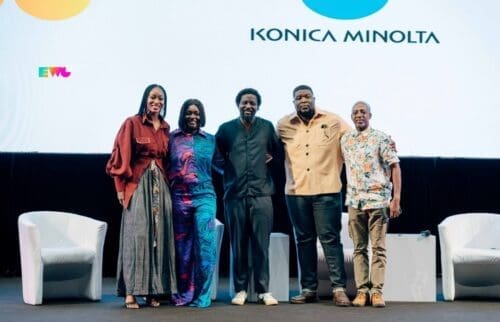
Entertainment Week Ghana will hold its 2026 summit at Bloombar on 28 November. The organisers also plan to publish their first report on the country’s creative economy, as they try to turn the festival into a source of industry data.
They said the summit will gather creatives, founders, investors, brands and executives for discussions on artificial intelligence (AI), technology, finance and the creative economy. Businesses chosen from the event’s Creative Economy Incubator will be put in front of investors there.
An art exhibition with Sankofa Gallery follows on 29 November. In December, the programme returns with the second Atalé fashion party and the Airwaves music festival, timed for Ghana’s year-end festive season.
The planned report is the main departure from last year. The organisers have given no date or detail yet. They said the report will cover jobs, investment, consumer behaviour and business activity across Ghana’s creative industries. Creators, investors and policymakers often cite the lack of reliable data on those industries as a barrier to funding.
Incubator’s second round
The Creative Economy Incubator and Deal Room is running for a second year. According to the organisers, the first round drew more than 50 applications. The winner, Seudio, received GH¢50,000 to develop its business.
This year’s round will focus on AI, technology and capital. It is open to start-ups working on media, fashion technology and e-commerce, creator tools, streaming and distribution, fan engagement, music, gaming, sport, film and event technology. Selected founders will get mentorship and advice on legal matters, monetisation and fundraising. Paystack, WeWire and Google are listed as partners.
The organisers have not said when applications close or how much prize money is on offer this year.
After a December debut
Entertainment Week Ghana launched in December 2025. Joseph Adjei, Chief Executive of the media firm BlacVolta, said at the time that the idea grew out of his team’s three and a half years documenting festive-season events.
The organisers said the first edition was backed by the Ghana Tourism Authority, the National Film Authority, the Black Star Experience and the Ministry of Youth Development and Empowerment. It also included a film programme with Idris Elba’s Akuna Pod, and the Airwaves Beach Festival with Lynx Entertainment.
BlacVolta, PartyXtra and Q Africa are behind the 2026 edition.
Ghanaian gospel artist ADEMAN has released a powerful new single titled ‘Turn Up For Me,’ a faith-filled song that speaks to the assurance that God will fight for His children in moments when they feel overwhelmed, challenged, or unable to fight their battles alone.
Produced by Ivan, ‘Turn Up For Me’ draws its message from a deeply personal place of surrender and dependence on God. The song presents a believer’s cry for divine intervention, trusting that God will step into the battle, wrestle for his soul, and provide the strength needed to overcome life’s struggles.
Rather than focusing solely on the difficulties believers face, ADEMAN shifts the attention toward God’s power and faithfulness. ‘Turn Up For Me’ captures the moment when a person recognizes that some battles are beyond human strength and chooses to place complete trust in God.
The song’s gospel message centers on the conviction that God does not abandon His people in their most difficult moments. Through its heartfelt delivery and spiritually charged lyrics, ADEMAN encourages listeners to surrender their fears, struggles, and battles to God.
Play
With Ivan’s production providing the musical foundation, ADEMAN delivers ‘Turn Up For Me’ as both a personal declaration of faith and an encouragement to anyone going through a difficult season. The song ultimately carries a simple but powerful message: when the battle becomes too much to handle, God can step in and fight for you.
Accra-based public relations firm Elite PR has been shortlisted for PR Agency of the Year at the 2026 West African Citizens Awards (WAFRIC Awards), the agency said on Friday, 9 October 2026.
The agency said it was named on the organisers’ newly released shortlist for the category. It did not say how many other agencies are in contention or when the winners will be announced.
Elite PR was founded in October 2020 by Francis Amissah, who uses the nickname “Banks”. It grew out of TalkMediaGhana, an entertainment media platform he set up earlier. Most of its clients are musicians, entertainers and public figures in Ghana and the diaspora.
In a statement, Amissah said the nomination reflected the agency’s work for its clients. “We’re grateful to be recognised alongside some of the industry’s finest,” he said.
According to the agency, the WAFRIC Awards have recognised individuals and organisations across West Africa for the past five years. This year’s edition runs under the theme “Recognizing the Unseen. Celebrating the Exceptional.”
Ghanaian media personality Kojo Manuel has joined EIB Network’s Starr FM as the new host of the station’s afternoon drive programme.
Kojo Manuel will host the show Monday to Friday from 2:00pm to 5:00pm, bringing his distinctive personality, energy and experience to Starr FM’s programming lineup.
Known for his work across radio, television and entertainment, Kojo Manuel has built a reputation as an engaging presenter with a strong connection to Ghana’s youth and pop-culture audience. His appointment is expected to bring a fresh dynamic to Starr Drive with a mix of entertainment, conversations, music, current affairs and audience interaction.
The move marks a new chapter in Kojo Manuel’s broadcasting career as he joins one of Ghana’s prominent radio brands. His experience in the entertainment and media space is expected to complement Starr FM’s focus on news, entertainment and engaging conversations.
On his first day, Ghanaian superstar Camidoh popped in to surprise him, and they had a fun moment on air.
Listeners can look forward to Kojo Manuel’s signature style and energetic approach as he takes on his new role at the station.
A new festival experience is coming to Accra as Ibiza 233 Festival takes over GHUD Park on 30 December 2026, bringing together music, food, drinks, games, fashion, entertainment and culture for a full-day experience.
Inspired by the carefree energy and social spirit associated with Ibiza, the festival brings that sense of escape to the 233 reimagined with a distinctly Ghanaian flavour.
This is not simply a concert. It is the whole experience. From daytime into the evening, festival-goers can expect live performances, DJs, food and drinks, games, fashion, interactive experiences and spaces created for people to meet, connect and enjoy themselves beyond the main stage.
Ibiza 233 is designed to be as much about what happens around you as what happens on stage.
MORE THAN A PARTY
Food vendors, drinks brands, fashion and product businesses, creatives and other experiences will form part of the festival, creating a space where entertainment, lifestyle, culture and community come together. Media houses, bloggers, photographers, videographers and content creators are also invited to document the inaugural Ibiza 233 Festival.
TICKETS: GET ON THE LIST
Tickets will be released soon, and the official Ibiza 233 ticket waitlist is now open.
Join the waitlist to be among the first to receive ticket information and access when sales open.
Join the waitlist: https://www.veetickets.com/waitlist?event=ibiza233festival
Highlife singer RCee performed with the Blackcode Band at the Red Room at Bella Dolce Vita, in a show his team said was sold out.
The set ran through songs from across his catalogue, including “Agenda”, “Money Makes the World Go Round”, “My Dear”, “Atiaa”, “Serious” and “Knees & Bend”, rearranged for a live band. According to his team, “Agenda” and “Money Makes the World Go Round” drew the loudest response from the crowd.
RCee, whose real name is Austin Antwi Boakye, grew up in Bremang, Kumasi, and is now based in Accra. He blends highlife with Afrobeats and Afro-fusion, and draws on vintage Ghanaian sounds.
He first drew attention with “Knees & Bend”, “Amazing” and “Blessings”, then followed with “Agenda”, “Atiaa” and “Knees & Bend II”, which features rapper Joey B. Apple Music has featured him in its Up Next programme for emerging artists in Ghana. He released his “Young Daddy” EP in April 2026.
Playing with a full band is still uncommon for young Ghanaian acts, many of whom perform over backing tracks. The Red Room show is part of RCee’s push to build a reputation as a live performer.
Apple Music has released this month’s Africa Now DJ Mix, featuring SALT THE DJ. For her Africa Now DJ Mix, SALT THE DJ delivers a fun, carefree and energetic selection of contemporary African music, bringing together different sounds, energies and artists while maintaining a distinctly African identity. Designed to soundtrack everything from getting ready and driving to parties and casual hangs, the mix keeps the energy high while moving listeners through a range of moods.
Featuring music from artists including Ayra Starr, Wizkid, Rema, Davido and Focalistic, the mix moves across Afrobeats, Amapiano and other contemporary African sounds, reflecting the breadth and energy of the continent’s current music landscape.
“I picked these songs because they’re a good reflection of what I love about African music right now. There’s a mix of different sounds, energies and artists, but everything still feels very African,” SALT THE DJ tells Apple Music. “I wanted songs that would flow well together and take you through different moods while still keeping the energy up.”
Speaking about the evolution of African music, SALT THE DJ adds: “African music is constantly changing, and I love that. We’re seeing artists experiment with different sounds, mix genres and take inspiration from different parts of the world while still keeping their African identity. There’s so much talent coming out of the continent, and I think we’re only going to see more new sounds and styles.”
“The curious beauty of African music is that it uplifts even as it tells a sad tale. My mix is a little taste of the sounds and energy I’m feeling right now,” SALT THE DJ tells Apple Music. “Just good African music, good vibes and a lot of energy. I hope you enjoy it as much as I enjoyed putting it together.”
Check out Apple Music’s Africa Now dedicated space, including its weekly radio show and companion playlist.
Africa Now October 2026 (DJ Mix) mixed by SALT THE DJ – Tracklisting
Apple Music is the ultimate hub for an eclectic array of independently curated DJ Mixes from Nigeria, South Africa, Kenya, Uganda and Ghana. Apple Music’s African DJ Mix curator partners also include a wide variety of top-tier names like Balcony Mix Africa, iMullar Sound System, KUNYE, Life Of The Party, Obrigado, Pan African Music, Party In The Jungle, Soul Candi, Spin With Engage and Turntable Entertainment.
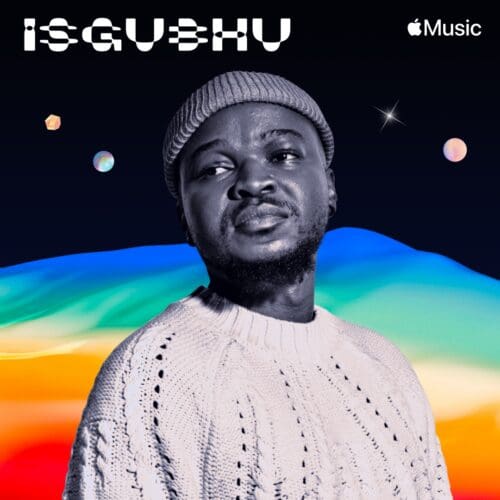
Apple Music has released its latest Isgubhu DJ Mix, featuring an exclusive mix from South African DJ, producer, and Stay True label head Kid Fonque, available exclusively on Apple Music from Friday, 2 October 2026.
Isgubhu continues to serve as Apple Music’s home for African dance music culture, spotlighting the producers, DJs and underground innovators shaping the continent’s club scenes. Each month, Isgubhu highlights the boundary-pushing sounds redefining Afro house, 3-step, gqom and electronic music across Africa.
Scottish-born and South African-raised, Kid Fonque has spent more than two decades immersed in South Africa’s electronic music and club culture. Beginning his career in Johannesburg, he went on to establish himself as a DJ, producer, broadcaster and tastemaker, founding Stay True Sounds in 2016 as a platform for South Africa’s deep house and Afro house talent. His musical approach draws on deep house, Afro house and Afro tech, combining local rhythms with global influences.
Kid Fonque’s exclusive Isgubhu DJ Mix is a snapshot of the South African underground right now, moving between house, Afro, 3-Step and the spaces in between. Featuring a mix of established artists and newer names, it reflects the sounds he champions through Stay True Sounds and in his DJ sets across the country. “There’s lots of different flavours from South Africa’s underground scene,” he tells Apple Music about the mix. “It touches on House, Afro and 3-Step. It’s a mix about discovery, where the scene is right now and where it’s heading next. The future of electronic music in South Africa is incredibly bright.”
Speaking about the artists and tracks selected for the mix, Kid Fonque says: “The music I chose for this mix is very much in line with what I’m excited about sonically in South Africa right now. It moves from the raw, untapped talent of artists like Spotz, through to the colourful and forward-thinking sounds of Chronical Deep, as well as PAGEZ, Dr Feel and Beekay Monalayzzar. Ultimately, the mix is about discovery and sharing the music and producers that are moving me right now.”
Kid Fonque describes the mood of the mix as “bright and colourful, with some darker moments along the way,” with warmth and soul sitting alongside deeper and more electronic passages. For him, however, the overriding feeling is all about discovery: “That has always been a huge part of DJing – finding something that excites me and then being able to introduce that record or artist to somebody else.”
Speaking about the evolution of African dance and electronic music, Kid Fonque says South Africa’s music scene “constantly reinvents itself,” with new genres and sounds emerging year after year. “What excites me most is that producers here aren’t afraid to experiment. They take influences from house, Afro, jazz, soul and electronic music, but then interpret them in a way that feels completely South African. There’s also so much young, untapped talent coming through, so I genuinely feel like we’re still only scratching the surface of where African electronic music can go.”
Listeners can stream the Isgubhu DJ Mix by Kid Fonque exclusively on Apple Music, alongside the Isgubhu playlist, which continues to spotlight the best in African dance and electronic music.
Listen to the Isgubhu playlist now on Apple Music.
Isgubhu September 2026 (DJ Mix) mixed by Rosey Gold Tracklisting
Spotz — When She Left
Buddynice — Nothing Special
umuntfuNje — Rush Hour
Kudbeu & Kana — My Love / E Samba (Kid Fonque Edit)
China Charmeleon & Brandon Dlhudhlu — Birds Sings (Ed-Ward Remix)
Herbert & Momoko Gill — Babystar (Kid Fonque Refix)
Thabo Tonick — Listen To The Kids
Charles Webster & Atmos Blaq — Free
PAGEZ, Dr Feel & Beekay Monalayzzar — Was You ft Kali Mija
On the cover this month is FKA MASH, whose debut album EXITECHNO presents a new kind of expression for the DJ and producer. Released on his record label, September Bloom, the project ties disco, techno and deep house together over the backdrop of Soweto, with FKA MASH bringing influences from outside electronic music, from classical to jazz as he continues to push the boundaries of his sound.
Isgubhu also houses a collection of alumni playlists, editorial playlists, exclusive DJ mixes, and additional content from the best dance and electronic acts on the continent.
Check out Isgubhu only on Apple Music: http://apple.co/Isgubhu
Ghanaian-German-Cameroonian singer-songwriter Malaïka has released “Place I Go To,” a new single featuring Ghanaian-Burkinabé singer-songwriter Ria Boss, marking a years-in-the-making collaboration and continuing Malaïka’s reflective, self-exploratory songwriting.
“Place I Go To” is built from soul and jazz, the music Malaïka loves most and the influence that shapes her melodies and compositions. The song began with no instrumentation at all, just her voice, growing out of her habit of writing melodies in silence and singing a cappella.
What started as a single line grew over time: first as an interlude on Malaïka’s debut EP, 27, then into a guitar and piano arrangement performed live; then a full-band version debuted at her headline show in Accra, before finally evolving into the rich, textured production heard today.
Producer Enid Blekk and creative director/A&R Kafui Offori developed the song’s arrangement, with Tronomie handling vocal production and recording for both Malaïka and Ria Boss. Malaïka describes the result as “really rich, really soulful,” the kind of sound that “instantly puts you at ease.”
Speaking about the song, Malaïka says, “The song is about finding a home or resting place, somewhere you feel safe. For me that’s the ocean, for others it’s the people they love or a higher power, but most importantly, you can find it within yourself. I hope anyone who hears this song is reminded that they can find a resting place within themselves, too.”
Malaika has admired Ria Boss since seeing her perform live in 2019, and the two later became friends through the Black Girls Glow residency. When the song was ready for a second voice, Ria Boss was the only choice. Describing the collaboration, Malaika calls it simply: “Made in heaven.”
Earlier this year, Malaïka previewed the song for a blindfolded audience, an experiment that revealed how powerfully the track lands when listeners close their eyes. She hopes fans will do the same on first listen.
“Place I Go To” ft. Ria Boss is available now on all streaming platforms.
The Managing Director of Tema Oil Refinery (TOR), Mr. Edmond Kombat, has expressed his profound appreciation to the President of the Republic, H.E. John Dramani Mahama, the Minister for Energy and Green Transition, Hon. Dr. John Abdulai Jinapor, and the entire leadership and staff of the Ministry for their continued support and confidence in the Board, Management and staff of Tema Oil Refinery.
Mr. Kombat was recognised as the “Energy Sector Recovery Programme (ESRP) Champion of the Year, 2026” at the 2026 Annual Retreat of the Ministry of Energy and Green Transition, held at the Volta Serene Hotel in Ho, in the Volta Region of Ghana.
The Annual Retreat provided an opportunity for the Ministry to review its performance and achievements for 2026 and strategise and set priorities for 2027, bringing together key leadership and stakeholders within the energy sector.
The recognition of Mr. Kombat was in acknowledgement of his leadership and contribution to the recovery of Ghana’s downstream petroleum sector and the restoration of TOR’s refining operations.
The citation highlighted the successful completion of critical Turnaround Maintenance (TAM) works on the Crude Distillation Unit (CDU), the resumption of crude oil refining after several years of operational inactivity, and the progress made in repositioning TOR towards its core mandate of domestic crude refining and local value addition.
It further recognised TOR’s successful processing of locally produced Jubilee Medium Sweet Crude, including the significant milestone of processing one million barrels by August 2026.
Gratitude to the President and Energy Ministry
In expressing his appreciation, Mr. Kombat said the recognition was a reflection of the collective efforts of the Government, the Ministry, the TOR Board, Management, staff and other stakeholders who have contributed to the refinery’s recovery.
He expressed particular gratitude to H.E. President John Dramani Mahama for the policy direction and support being provided by Government towards the revival of strategic national assets and the strengthening of Ghana’s energy security.
Mr. Kombat also thanked Hon. Dr. John Abdulai Jinapor, Minister for Energy and Green Transition, and the entire Ministry for their continued guidance, engagement, encouragement and support for the Board, Management and staff of TOR.
“I am deeply humbled and grateful for this recognition. I receive it not simply as a personal honour, but as recognition of the collective effort of the Government, the Ministry, the TOR Board, Management and staff, and all our partners who have contributed to the progress we are making at Tema Oil Refinery.”
He added:
“I wish to express my sincere appreciation to His Excellency the President, the Honourable Minister and the entire Ministry of Energy and Green Transition for their continued confidence and support for Tema Oil Refinery. Their commitment has provided the encouragement and direction needed for us to pursue the recovery of this important national asset.”
Recognition as a Motivation to Do More
Mr. Kombat said the recognition, coming at the Ministry’s Annual Retreat as the sector reviewed its performance for 2026 and charted the course for 2027, was particularly significant.
He noted that the award should serve not as a reason for complacency, but as a motivation for the Board, Management and staff of TOR to do more and deliver even greater results in the coming year.
“This recognition is a great motivation for us to do more. As the Ministry reviews what we have achieved in 2026 and looks ahead to 2027, we at TOR are equally encouraged to raise the bar, consolidate the gains we have made and pursue even greater achievements.”
He stressed that the refinery’s focus would remain on operational excellence, safety, reliability, efficiency, accountability and financial sustainability, while continuously improving its capacity to contribute to Ghana’s energy security.
Recognition of the TOR Team
Mr. Kombat also acknowledged the Chairman and Members of the TOR Board, Management and the entire staff of the Refinery, particularly the technical teams, engineers, operators, artisans and support staff whose dedication and resilience have contributed to the refinery’s ongoing recovery.
“This recognition belongs to the entire TOR family. Our people have worked with dedication, resilience and a strong sense of national duty. I commend the Board, Management and staff for their commitment, and I encourage everyone to see this award as a call to work even harder.”
He said the achievements recorded so far demonstrate what can be accomplished when Government commitment, strong institutional leadership, technical expertise and dedicated staff come together around a common national objective.
Looking Ahead to 2027
As the Ministry looks ahead to 2027, Mr. Kombat reaffirmed TOR’s commitment to working closely with the Government, the Ministry, the Board and all stakeholders to consolidate the gains made and position the refinery as a safe, reliable, efficient and sustainable strategic asset for Ghana.
“We are grateful for the recognition, but we recognise that there is still much more work to be done. The award strengthens our resolve to deliver more, improve continuously and ensure that Tema Oil Refinery fulfils its strategic role in Ghana’s energy sector.”
Mr. Kombat once again expressed his profound gratitude to H.E. President John Dramani Mahama, Hon. Dr. John Abdulai Jinapor, the Ministry of Energy and Green Transition, the TOR Board, Management, staff and all partners and stakeholders for their continued confidence, support and commitment to the recovery and transformation of Tema Oil Refinery.
After years of building a catalogue filled with some of Ghana’s most recognisable records, Lasmid is finally giving his fans what they have been asking for; his own concert.
The Ghanaian singer and songwriter has officially announced Lasmid Live In Concert, themed The Legacy Begins, marking a defining new chapter in a journey that started in Takoradi and has grown into one of contemporary Ghanaian music’s most consistent runs.
Lasmid first captured national attention after winning MTN Hitmaker Season 8 in 2019, but it was the release of Friday Night in 2022 that introduced him to a much wider audience and became one of the defining records of his breakthrough.
Rather than allowing that moment to define his career, Lasmid continued to build.
Records including Puul, Running, Olivia, Bad Boy, Atele, Biggest Nathaniel and Liquor Store have steadily expanded his catalogue, while his distinctive voice, melodies and songwriting have made him an increasingly sought-after collaborator.
That run has seen him work across Ghana and the wider African music scene, appearing on records with the likes of King Promise, KiDi, Tml Vibez, Kweku Smoke, Wendy Shay and JZyNO, whose Butta My Bread featuring Lasmid became a major continental success.
Through each era, Lasmid’s audience has grown with him.
And as the catalogue grew, so did one request.
Across social media, performances and fan interactions, audiences have repeatedly called for a headline Lasmid concert; a chance to experience not only the records currently dominating their playlists, but the songs and collaborations that have soundtracked different stages of his journey.
Lasmid has been listening.
The announcement film for Lasmid Live In Concert reflects on that journey, revisiting moments from his MTN Hitmaker days through his breakthrough, subsequent releases, collaborations and evolution into the artist he is today. At the centre of it all are the listeners who have supported the music, sung the records back to him and, increasingly, asked for a night of their own.
Now, he is answering them.
Rather than simply another performance, Lasmid Live In Concert is being positioned as an intimate experience between Lasmid and the audience that has grown alongside him, bringing together the hits, fan favourites, collaborations, memories and surprises in one room.
The concert’s theme, The Legacy Begins, speaks directly to the significance of the moment.
For Lasmid, the milestones achieved so far are not being presented as the finished story. They are the foundation for what comes next.
From a young artist in Takoradi with hopes that people would hear his music, to an artist whose songs now reach audiences across Ghana and beyond, the concert represents both a celebration of how far he has come and the beginning of the next phase of his career.
And fittingly, the moment belongs just as much to the people who asked for it. They asked. Lasmid listened. Now, The Legacy Begins.
Lasmid Live In Concert
The Legacy Begins
Date: 5th December, 2026
Venue: The Palms Convention Centre (La Palm Royal Beach Hotel)
MTN Ghana has launched its digital entertainment platform, MTN One TV, as part of efforts to transform Ghana’s creative industry, expand the global reach of local productions, and create sustainable revenue opportunities for filmmakers, broadcasters, and digital content creators.
The initiative is aimed at addressing longstanding challenges confronting Ghana’s creative sector, particularly limited distribution channels, inadequate financing, piracy and the difficulty many content producers face in generating meaningful income from their work.
The platform brings together Ghanaian films, television productions, live television channels and international entertainment, offering audiences flexible viewing options while providing content owners with opportunities to distribute and monetise their productions.
The launch formed part of an inaugural industry conference held under the theme, “Empowering Ghana’s Creative Industry Through Collaboration and Digital Innovation,” which attracted government officials, filmmakers, producers, actors, broadcasters, media executives, technology professionals and other key stakeholders.
Chief Digital Officer Of MTN Ghana Mr Ibrahim Misto
MTN Targets Ghana’s Untapped Creative Potential
The Chief Digital Officer of MTN Ghana, Mr Ibrahim Misto speaking at the launch explained that the introduction of One TV represented a significant step towards building a commercially sustainable digital entertainment ecosystem capable of connecting Ghanaian creativity to larger markets.
He said Ghana possessed enormous creative potential, with talented filmmakers, actors, producers, writers, musicians and digital content creators producing compelling stories that reflected the country’s identity, history and cultural heritage.
However, he observed that the absence of adequate distribution opportunities and strategic partnerships continued to limit the commercial success of many productions.
According to him, producing quality content was no longer sufficient in an increasingly competitive digital environment, as creators also required access to audiences, technology and reliable revenue opportunities. “This is where MTN One TV comes in,” he stated.
Mr Misto explained that the platform was designed to bridge the gap between content creation and consumption by connecting producers, broadcasters, advertisers, technology partners and audiences within a single digital entertainment ecosystem.
He said partnerships with content owners would help improve the visibility of Ghanaian productions, broaden their distribution and create opportunities for emerging talent to gain recognition.
He emphasised that the economic impact of the initiative could extend across the creative value chain, supporting writers, directors, actors, editors, technicians and production crews whose livelihoods depended on the industry’s growth.
The Chief Digital Officer stressed that MTN’s ambition went beyond attracting viewers to creating an environment in which Ghanaian creators could earn sustainable income, expand their businesses and compete effectively in the global entertainment market.
He further highlighted the importance of protecting Ghana’s cultural identity through digital storytelling. “Our stories carry our history, languages, traditions and values,” he said.
Mr Misto maintained that providing Ghanaian productions with stronger digital visibility would not only promote local talent but also preserve indigenous languages, traditions and cultural values for future generations.
He noted that the initiative coincided with MTN Ghana’s 30th anniversary celebrations under the theme, “30 Years of Progress, Powered by You.”
Reflecting on the company’s journey, he said MTN had evolved from a telecommunications operator primarily offering voice and data services into a digital platform business supporting innovation, entrepreneurship and broader economic development.
He described One TV as another milestone in that transformation, demonstrating the company’s determination to leverage its technological capabilities to create opportunities beyond traditional telecommunications.
Mr Misto called for stronger collaboration among filmmakers, content creators, broadcasters, telecommunications operators, investors, regulators and technology providers to build a competitive and sustainable entertainment industry. “We want to hear from you. We want to understand your challenges,” he assured industry stakeholders.
He said the company’s objective was to develop commercially meaningful partnerships that would deliver value to creators while improving entertainment choices for consumers.
“Together, let’s use technology to give Ghanaian stories greater reach, create new opportunities for our creative talent, and build an industry that is competitive, sustainable, and proudly Ghanaian,” he urged.
Senior Manager For Digital Services And Verticals at MTN Ghana Dr Bless Sefenu
One TV Must Deliver Real Earnings for Creators — Dr Bless Sefenu
The Senior Manager for Digital Services and Verticals at MTN Ghana, Dr Bless Sefenu, reinforced the company’s commitment to building an inclusive entertainment platform that would respond directly to the needs of Ghanaian content producers.
He said Africa’s rich storytelling heritage presented enormous opportunities for digital innovation, commercial expansion and international recognition.
Tracing the evolution of storytelling from traditional fireside gatherings, folklore, music, dance and talking drums to radio, television and modern streaming services, he observed that technological advancement had transformed the delivery of stories without diminishing their cultural significance.
Dr Sefenu stressed that Africa had never lacked compelling stories or talented storytellers, but the challenge remained how to distribute African content effectively and generate greater economic value from it.
He said the digital revolution had created an opportunity for African creators to take ownership of their narratives, reach wider audiences and build sustainable businesses around their creative works.
According to him, MTN One TV was intended to strengthen the connection between quality content and audiences while providing creators with greater visibility, wider distribution and additional earning opportunities.
He cautioned, however, that attracting large audiences would be meaningless if the people producing the content continued to struggle financially.
A thriving creative industry, he explained, required more than viewership figures; it demanded sustainable revenue, consistent investment in quality productions and deliberate support for talent development. “That is why we want to build MTN One TV with you, and not simply for you,” he declared.
Dr Sefenu said MTN had deliberately positioned its inaugural One TV industry conference as a platform for open dialogue to ensure that filmmakers, producers and other stakeholders played an active role in shaping the initiative.
He encouraged participants to raise difficult questions, identify industry challenges and propose practical solutions capable of strengthening the platform and the wider creative ecosystem.
He also urged stakeholders to take advantage of the networking opportunities to establish partnerships that could translate into long-term commercial relationships.
Deputy Minister For Communication Digital Technology And Innovations Hon Mohammed Adams Sukparu
Government Challenges MTN to Finance Ghanaian Films
The Deputy Minister for Communication, Digital Technology and Innovations, Hon. Mohammed Adams Sukparu, challenged MTN Ghana to demonstrate its commitment to the creative industry by investing in the production of original Ghanaian films and television programmes.
Speaking on behalf of the sector minister, Hon. Samuel Nartey George, he said the launch of One TV was a welcome development but insisted that digital distribution must translate into measurable economic benefits for Ghanaian creators.
He noted that although the internet had revolutionised the entertainment industry and opened global markets to local productions, many content owners continued to face serious financial and structural challenges.
He identified piracy, inadequate financing, the collapse of traditional CD and VCD distribution markets and dependence on international digital platforms as major obstacles to sustainable growth.
According to him, the increasing consumption of digital entertainment should create corresponding financial opportunities for the people responsible for producing the content.
He therefore urged MTN to move beyond licensing existing productions and explore direct investment in new Ghanaian films, television programmes and other creative projects.
Such investments, he explained, would stimulate local production, generate employment, support emerging talent and strengthen the country’s creative economy.
The Deputy Minister disclosed that the government had established a GH¢20 million Film Development Fund as seed funding to support the growth of Ghana’s film industry.
He stressed that public funding alone could not meet the industry’s investment needs and called for stronger private-sector participation.
He maintained that companies generating commercial value from creative content had a responsibility to contribute meaningfully to the development of the ecosystem producing it.
He further called for deliberate efforts to promote Ghanaian languages and indigenous productions to prevent local storytelling from being overshadowed by foreign entertainment.
Judge One TV by Creators’ Earnings, Not Viewership — Deputy Minister
The Deputy Minister stressed that the ultimate measure of One TV’s success should be its economic contribution to Ghana’s creative industry rather than merely the number of people watching content on the platform.
He said industry stakeholders must assess the revenue earned by creators, jobs generated, investments attracted and the proportion of economic value retained within Ghana.
According to him, Ghana’s creative industry could become a major driver of employment and economic transformation if digital platforms were structured to provide fair returns to content owners.
He also called for stronger measures to combat piracy and the unauthorised distribution of creative works, warning that weak intellectual property protection continued to undermine the commercial viability of local productions.
Hon. Sukparu also reaffirmed the government’s commitment to strengthening the policy and regulatory environment, expanding digital infrastructure, improving affordable connectivity and supporting skills development.
He cited the One Million Coders Programme as part of the government’s efforts to prepare Ghanaians for opportunities in the expanding digital economy.
Touching on artificial intelligence, he acknowledged its growing influence on film production, editing, animation, audience analysis and content distribution. However, he cautioned that technological advancement must not come at the expense of artists’ rights.
He stressed the need to protect the voices, images, identities and intellectual property of creators against unauthorised exploitation through artificial intelligence.
He said the Ministry of Communication, Digital Technology and Innovations would collaborate with the Ministry of Tourism, Culture and Creative Arts to promote responsible and ethical AI adoption within the industry.
Deputy Minister For Tourism Culture And Creative Arts Hon Yussif Issaka Jajah
Ghana’s Creative Talent Must Translate Into Economic Wealth — Deputy Tourism Minister
The Deputy Minister for Tourism, Culture and Creative Arts, Hon. Yussif Issaka Jajah, said the introduction of MTN One TV offered a major opportunity to reposition Ghana’s creative industry as a commercially viable sector capable of generating employment, attracting investment and contributing to national development.
Delivering an address on behalf of the sector minister, Hon. Abla Dzifa Gomashie, he said Ghana’s storytelling tradition had produced remarkable creative works over the years, but the economic benefits had not always adequately reached the individuals responsible for their production.
He cited celebrated Ghanaian productions, including Osofo Dadzie, Obra, Inspector Bediako and Love Brewed in the African Pot, as examples of the country’s rich cultural and entertainment heritage.
He observed that despite their contribution to national identity and cultural preservation, many creative professionals continued to face difficulties in converting their talent into sustainable livelihoods.
Hon. Jajah stressed that Ghana must move beyond celebrating its creative achievements and establish practical systems that allow artists, filmmakers and producers to benefit financially from their intellectual property.
He explained that the government’s revised cultural policy sought to position culture as an economically productive sector, with digital innovation and strategic collaboration playing central roles.
He commended MTN Ghana for its contributions to the creative economy through initiatives such as caller tunes and cultural festivals, describing One TV as another opportunity to deepen private-sector investment in Ghanaian entertainment.
According to him, a strong digital distribution platform could help connect local productions to new markets while strengthening the international competitiveness of Ghanaian storytelling.
The Deputy Minister identified intellectual property protection, professional training, quality content production and access to markets as critical areas requiring sustained attention.
He reaffirmed the government’s commitment to working with industry stakeholders, development partners and technology companies to establish an environment conducive to innovation, investment and creative entrepreneurship.
Hon. Jajah urged filmmakers and other creative professionals to embrace digital technology without compromising the authenticity of Ghanaian stories.
He also challenged participants to develop practical proposals that would address the industry’s structural challenges rather than allowing the conference to end without concrete outcomes.
He expressed optimism that MTN One TV would create new opportunities for emerging talent, expand the reach of Ghanaian productions and contribute to building a stronger and more competitive creative economy.
A New Test for Ghana’s Digital Creative Economy
The launch of MTN One TV represents a significant expansion of MTN Ghana’s digital business ambitions and introduces another potential distribution channel for an industry seeking greater investment, visibility and financial sustainability.
For Ghanaian filmmakers, producers and content owners, the platform presents an opportunity to reach wider audiences and explore new revenue streams in an increasingly digital entertainment market.
Ghanaian actress Nadia Buari has warned that children who grow up in homes affected by domestic violence may be left with the damaging belief that violence is a normal part of family life.
Buari raised the concern in a post on X as she spoke against domestic violence and child abuse in the home.
She said a home should provide children with safety, protection and love, but warned that violence can turn that environment into a place of fear.
According to the actress, domestic violence involving children should not be treated simply as a family disagreement because it constitutes abuse and can have serious consequences for young people.
“When they are hit too, the harm is even deeper. They learn that home is not safe and that the people who should protect them can hurt them,” she said.
Buari identified physical, emotional, verbal, sexual and financial abuse as forms of domestic violence. She noted that children exposed to such situations may struggle with fear, anxiety, guilt and anger, while some may experience sleep difficulties, withdrawal or noticeable behavioural changes.
She urged victims not to stay in abusive situations while hoping that the violence will eventually stop on its own.
“Abuse rarely stops without help. Apologies and promises do not erase violence,” she warned.
The actress also advised against staying in abusive relationships simply because of children, saying that doing so could unintentionally expose children to harmful ideas about relationships and conflict.
She maintained that marriage, cultural expectations and concerns about what people might say should not compel anyone to tolerate abuse.
“Love is not fear,” Buari said.
She encouraged victims and members of the public who notice signs of domestic violence to take action by seeking help, making reports through the appropriate channels and placing the safety of victims and children first.
The newly elected National Youth Organiser of the New Patriotic Party (NPP), Abanga Fuseini Yakubu, has pledged to mobilise four million youth votes for the party in the 2028 general elections.
He said although more than 10 million young people are registered on the voters’ register, he would work to mobilise at least four million of them to support the NPP and help return the party to power.
Speaking in an interview with this paper, Mr Abanga, who is often described as the “Youth Commander”, appealed to all party members to support his efforts to achieve the target.
He also promised to secure five ministerial slots for the party’s youth wings if the NPP wins the 2028 elections and returns to power in 2029.
Mr Abanga attributed the NPP’s defeat in the 2024 general elections to voter apathy, internal wrangling and complacency, and called for an end to such challenges ahead of the 2028 elections.
He further pledged to make the party more attractive to Ghanaian youth through innovative programmes and practical support for the youth wing.
“I am working hard to set up a printing press for the party, buy motorbikes for the youth wings, and purchase pick-ups for the youth on a cluster basis,” he disclosed.
He underscored the need for members of the party to bury their differences and unite to secure victory for the NPP in the 2028 general elections.
The NPP National Youth Organiser pledged to bring innovation, creativity, hard work, dedication and sacrifice to the leadership of the party’s youth wing.
Mr Abanga was elected at the NPP’s National Delegates Conference held at the Baba Yara Sports Stadium in Kumasi on Saturday, October 3, 2026.
He secured 1,550 votes to defeat five other contenders. Clement Opoku Gyamfi polled 631 votes, Michael Osei Boateng 78, Chris Lloyd Nii Kwei Asamoah 46, Vera Oye Bram-Larbi 44 and Alfred Kumi Ababio 25.
KGL Group Executive Chairman Alex Apau Dadey has called for stronger collaboration between government, the private sector and the media to create an environment that supports the growth of Ghanaian businesses into large, sustainable and globally competitive companies.
Mr. Dadey said Ghana must move beyond creating small and fragmented enterprises and deliberately develop pathways that allow small businesses to grow into medium-sized companies, large corporations and eventually African and global champions.
He made the call at the launch of the 30th Ghana Journalists Association (GJA) Media Awards, where KGL Group served as headline sponsor for the third consecutive year.
According to him, while small and medium-sized enterprises remain critical to employment, innovation and livelihoods, the country’s long-term economic transformation would require businesses capable of surviving their founders and succeeding across generations.
“We must now become equally good at building large, well-governed, professionally managed and trans-generational Ghanaian businesses,” he said.
Mr. Dadey argued that the strength of an economy should not be measured only by the number of businesses created but also by the ability of those businesses to scale, create intellectual property, employ people, pay taxes and compete internationally.
He identified corporate governance, succession planning, competent and independent boards, professional management, patient capital and disciplined reinvestment as essential elements for building businesses that can endure beyond their founders.
Media urged to deepen economic reporting
The KGL Group chairman also called for a deeper relationship between Corporate Ghana and the media, stressing that such collaboration must not compromise journalistic independence.
He said journalists should continue to scrutinise businesses, investigate wrongdoing and question corporate power, but should also highlight legitimate Ghanaian enterprises that invest, innovate, create jobs, pay taxes and expand beyond Ghana.
“The media does not simply report an economy. The media helps shape the culture within which that economy develops,” he said.
Mr. Dadey urged journalists to contribute to a national conversation focused not only on who owns a company, but also on the value businesses create for Ghana.
He said questions about employment, local capacity development, tax contributions, innovation, international competitiveness and succession should increasingly form part of business reporting.
Call for evidence-based policymaking
Mr. Dadey further urged policymakers to make research and evidence the foundation of public policy.
He cautioned that policies introduced to address particular problems could sometimes create unintended consequences for businesses, investment and employment if they were not subjected to rigorous impact analysis.
“Good intentions are not enough. Policy must be supported by data. It must be informed by evidence,” he said.
He also called for broader consultation with businesses and other stakeholders before major policy and regulatory changes are implemented.
According to him, businesses can adapt to difficult policies, but uncertainty, inconsistent regulations and unpredictable policy environments can undermine long-term investment.
“Policy consistency, regulatory predictability and institutional stability are therefore not favours to Corporate Ghana. They are part of the infrastructure of economic development,” he said.
New compact needed
Mr. Dadey proposed what he described as a new compact involving government, Corporate Ghana and the media.
He said government must create an enabling environment, businesses must invest, innovate and strengthen their governance structures, while the media must continue to provide independent scrutiny and help the public understand enterprise, investment and economic transformation.
He also urged Ghanaian entrepreneurs to view their greatest legacy not merely as wealth accumulated, but as the institutions they leave behind for future generations.
“If every generation has to rebuild yesterday’s businesses from the ground up, nations cannot achieve industrial scale,” he said.
GJA Media Awards
Mr. Dadey congratulated GJA President Albert Kwabena Dwumfour, the association’s national executive, past executives and generations of Ghanaian journalists for sustaining the awards for three decades.
He urged journalists to pursue reporting that investigates ethically, interrogates policy, follows data and holds both government and businesses accountable.
At the same time, he encouraged the media to identify solutions, celebrate innovation and help Ghanaians envision the country’s economic potential.
He said the partnership between KGL Group and the GJA went beyond sponsorship and represented the company’s commitment to supporting journalism and national development.
Mr. Dadey expressed hope that by the time the GJA celebrates its 60th Media Awards, Ghana would have companies that have grown from small enterprises into African multinationals, survived their founders and expanded their operations and ownership across generations.
“Ghana’s next phase of development will require us to move from fragmentation to scale; from short-term thinking to generational thinking; from instinctive policymaking to evidence-based policymaking; and from simply creating businesses to deliberately building Ghanaian business champions,” he said.