Five years after Ibrahim Mahama watched his trucks load at a rival’s plant and decided he could build one himself, his Dzata Cement is days from filling its 30 millionth bag and says it wants to be Ghana’s biggest cement maker by 2030.
The Tema-based company marked its fifth anniversary on Tuesday 6 October 2026 with plans to lift annual capacity to about three million tonnes, add new cement grades and build an automated packing plant. It describes itself as Ghana’s only wholly Ghanaian-owned cement manufacturer.
The ambition lands in a crowded market. Ghana has 15 major cement producers and installed capacity of more than 10 million tonnes a year, Trade Minister Elizabeth Ofosu-Adjare said this year, and the industry depends heavily on imported clinker, the main ingredient in cement. Reaching three million tonnes would give Dzata a large share of national capacity.
From haulier to manufacturer
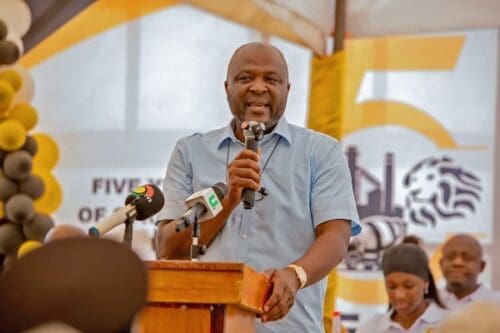
Mahama, founder, sole shareholder and Group Chief Executive Officer of DZATA Holdings, built his early business transporting cement and doing mining contract work. He told guests at the anniversary that following his trucks into the Ghacem plant in Takoradi showed him how cement was made, and convinced him the job was within reach.
“I looked at the structure and said, look, I could build one,” he said.
He travelled to Germany to engage equipment makers and assemble financing. Construction and installation ran into serious money and operational problems, he said, and outside help was needed to finish putting in the equipment. He recalled that a senior figure in the industry had told him a Ghanaian could not build such a plant, a remark he said hardened his resolve.
Mahama, a younger brother of President John Dramani Mahama, said he wanted to show that Ghanaians could own large industrial businesses rather than only work for foreign ones. “We can’t always be beggars and we can’t only just be employees to foreign companies. We can build it ourselves,” he said.
Distributors to the rescue
The launch nearly stalled when the company struggled to raise money to clear imported cement at the port. Mahama said distributors pooled resources to get the consignment released. “They all joined hands together, the cement came, we allocated it to them, and then Dzata Cement started,” he said.
He also thanked former Trade Minister Alan Kyerematen, who served under former President Nana Addo Dankwa Akufo-Addo, for backing the project.
Inside the plant
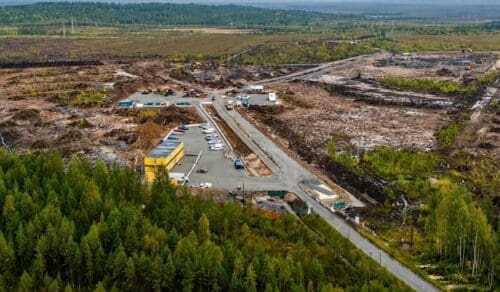
The plant sits on 10 acres near Tema Port and represents an investment of more than $100 million, the company says. It makes Ordinary Portland Cement using equipment from Germany’s Haver & Boecker, with bagging lines averaging 120 bags a minute and output of about 80,000 bags a day. The company puts its annual capacity at about two million tonnes.
A family handover
Mahama said he had stepped back from daily management so younger leaders could learn by taking risks. His daughter, Nafisa Mahama, is Managing Director.
He joked that when he once ordered cement from the company, she refused to release it until he paid, and said he had not visited the plant for about three years since.
“We won’t live forever. So sometimes we should give the children the opportunity to be able to take that risk of managing,” he said.
Nafisa Mahama thanked customers, distributors who stayed loyal through hard times, and staff, whom she called the heart of the company, and promised that employee welfare would stay a priority. She also thanked suppliers, GCB Bank, government agencies and the Chamber of Cement Producers, and said management would invest more in training its people.
The next phase
Plant Director Abderrahim Ouahab set out the near-term plan. Dzata will add cement grades, consider a 25kg bag alongside its 50kg pack, upgrade its laboratory and safety training, and seek ISO 9001, 14001 and 45001 certification for quality, environmental and workplace safety management. It also plans to use artificial intelligence and digital tools in some operations.
The largest capital item is a 300-tonne-an-hour receiver for jumbo cement bags, designed to improve handling, screening and dust collection. The company will also expand storage to 40,000 tonnes and build an automated packing facility of about 6,000 tonnes a day.
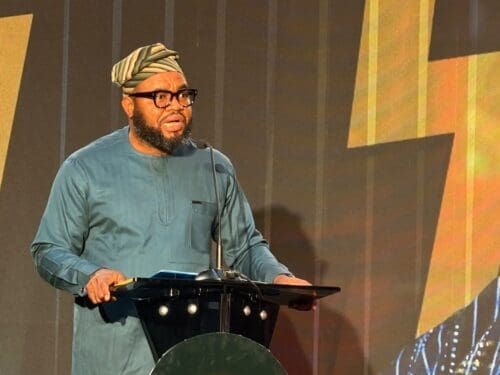
Finance Director Godfred Barnes said the company had absorbed supply-chain disruption, freight costs, inflation and currency swings in its first five years. He said the next five would require disciplined investment, stronger distribution, reliable production and tighter cost control to meet the 2030 goal.
Dzata ultimately plans to move into ready-mixed concrete and other cement-related products.