

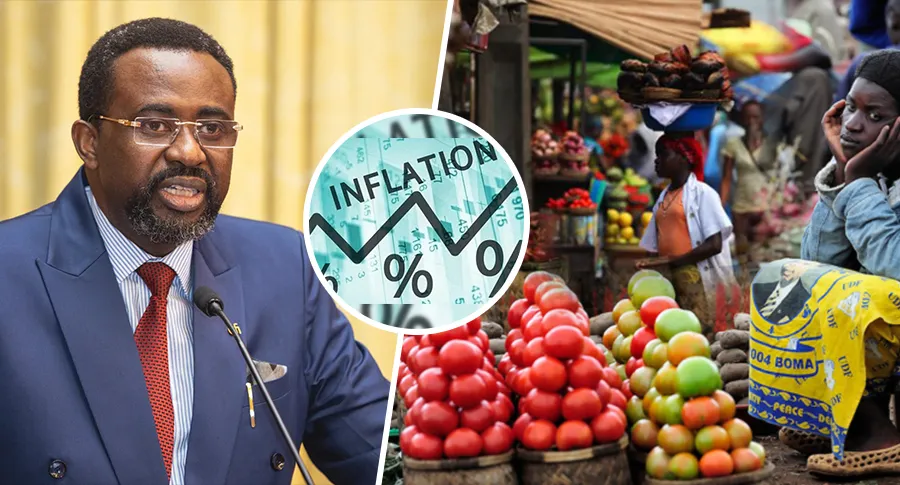
Ghana’s inflation continues easing, yet sharp increases in specific everyday items like ginger are shaping household cost of living experiences even as broader price pressures moderate.
Ghana’s inflation rate fell to 5.4 per cent year-on-year in December 2025, marking the 12th consecutive month of disinflation, according to the Ghana Statistical Service (GSS). However, ginger recorded the highest inflation at 76.7 per cent, followed by green plantain at 69.4 per cent and charcoal at 66.8 per cent.
Government Statistician Dr Alhassan Iddrisu explained the concentrated nature of price pressures. In December 2025, the top five contributors to inflation were charcoal, green plantain, smoked herrings, cinema and cultural services and ginger. Together these items accounted for over 40 percent of overall inflation. These are items that many households consume regularly, so changes in their prices have a strong impact on inflation.
The pattern reveals how inflation affects Ghanaians unevenly across different purchases. While headline inflation shows improvement, commonly used cooking ingredients remain costly for consumers monitoring daily spending.
Food inflation matters because food accounts for about 43 per cent of household spending, Dr Iddrisu noted. This makes price shifts in staples and everyday cooking items particularly impactful across households nationwide.
The December figures show mixed performance within food categories. Garden eggs fell by 56.7 percent, while kontomire dropped by 51.9 percent. Fresh tomatoes declined by 39.8 percent, and both cabbage and pawpaw recorded price falls of over 40 percent, providing relief in parts of the food basket.
Food inflation recorded a sharp decline, falling to 4.9 per cent in December 2025, down from 6.6 per cent in November 2025 and 27.8 per cent in December 2024, representing a 22.9 percentage point drop over the year.
The divergence between items reflects how seasonal trends, market supply conditions and consumer demand patterns shape inflation differently across products. Consumers experience uneven cost of living changes as some goods become more affordable while others grow significantly more expensive.
Food prices still increased by 1.1 per cent between November and December 2025, pointing to ongoing short-term pressures. Items such as onions, yam, and fish recorded month-on-month increases, reflecting seasonal demand, transport costs, and distribution challenges.
As Ghana enters 2026, macroeconomic indicators show improving stability, yet household experiences continue being influenced by specific items dominating daily spending. With ginger recording among the highest year on year increases in December 2025, its price trend remains relevant to both household budgets and national conversations about food affordability.

