

Global economic leaders face mounting pressure to implement structural reforms as the International Monetary Fund (IMF) warns that persistently weak growth threatens long-term prosperity worldwide.
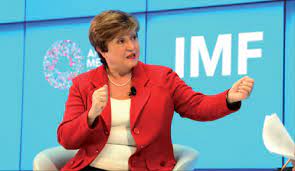
IMF Managing Director Kristalina Georgieva projects global growth at just 3.1 percent over the medium term, significantly below the historic average and insufficient to address rising debt burdens that plague many economies.
“Low growth and high debt are a dangerous mix,” Georgieva cautioned during recent remarks to G20 finance ministers. Her message couldn’t be clearer: countries must tackle structural weaknesses at home while strengthening international cooperation to navigate an increasingly complex economic landscape.
The warning comes as nations grapple with the aftermath of multiple global shocks, from pandemic disruptions to supply chain fragmentation. While the global economy has shown remarkable resilience, the recovery remains fragile and uneven across regions.
For Ghana, these warnings hit particularly close to home. The country recently completed its fourth review under a $3 billion Extended Credit Facility (ECF) arrangement with the IMF, with authorities adopting strong corrective measures to achieve a 1.5 percent fiscal primary surplus in 2025.
The IMF’s mission chief Stéphane Roudet acknowledged Ghana’s recent challenges, noting fiscal slippages ahead of the 2024 general elections and inflation exceeding targets due to delayed policy implementation. However, the new administration has responded with decisive action.
The government’s 2025 budget represents a dramatic fiscal turnaround, projecting a primary surplus after recording a 3.25 percent deficit the previous year. This ambitious target requires additional revenue mobilization and disciplined spending – exactly the kind of “house cleaning” Georgieva emphasized.
Ghana’s reform agenda extends beyond fiscal measures. The energy sector, long a drain on public resources, is undergoing significant restructuring. These reforms aim to reduce government subsidies that have historically cost billions while improving service delivery for consumers.
The cocoa sector, another critical area, faces similar transformation pressures. The Ghana Cocoa Board (COCOBOD) is implementing changes designed to strengthen its financial position while maintaining support for farmers who depend on this vital cash crop.
The IMF projects Ghana’s real GDP growth at 4.0 percent for 2025, though consumer prices are expected to remain elevated at 17.2 percent. This presents policymakers with the delicate challenge of supporting economic expansion while controlling inflation.
The Bank of Ghana has responded by raising its policy rate, reinforcing the government’s fiscal tightening efforts. It’s a classic example of the coordinated approach Georgieva advocates – using both monetary and fiscal tools to restore macroeconomic stability.
For ordinary Ghanaians, these reforms mean short-term adjustments in exchange for longer-term benefits. Electricity price adjustments and tax policy changes will impact household budgets, but the alternative – continued economic instability – poses far greater risks.
The World Bank recently approved $360 million in additional support for Ghana’s macroeconomic stability efforts, complementing the IMF program. This demonstrates how international financial institutions are coordinating to support countries implementing difficult but necessary reforms.
Yet Georgieva’s message emphasizes that external support alone isn’t sufficient. “Countries can do much to get their own house in order,” she noted, pointing to the need for improved governance, targeted investments in technology and human capital, and rebuilding fiscal buffers.
Ghana’s experience illustrates both the challenges and opportunities this approach presents. Finance Minister Cassiel Ato Forson has highlighted transformative tax amendment bills and public procurement reforms as evidence of the administration’s commitment to building a resilient economy.
The government’s 24-Hour Economy policy and “Big Push” infrastructure plan represent attempts to stimulate growth while maintaining fiscal discipline – a balancing act that requires careful execution.
Ghana’s journey reflects broader challenges facing emerging economies worldwide. A recent World Bank report noted that Ghana has spent 40 of its 68 years of independence under various IMF programs, highlighting the persistent nature of structural economic challenges.
This pattern isn’t unique to Ghana. Many developing countries find themselves repeatedly seeking external support during economic crises, suggesting that deeper structural issues require attention.
Georgieva’s call for countries to “get their house in order” speaks directly to this challenge. It’s not enough to implement temporary stabilization measures – sustainable prosperity requires addressing underlying weaknesses in fiscal management, institutional capacity, and economic diversification.
The IMF’s message carries both urgency and optimism. While acknowledging current challenges, Georgieva maintains that “with the right policy choices, a more balanced, sustainable, and prosperous world is within reach.”
For Ghana, this means staying committed to reform implementation despite political pressures and short-term costs. Recent progress in debt restructuring and fiscal adjustment demonstrates that sustained effort can yield results, though much work remains ahead.
The global economic environment won’t become easier anytime soon. Trade tensions, climate challenges, and technological disruption will continue testing national resilience. But countries that use this period to strengthen their economic foundations – getting their “house in order” as Georgieva puts it – will be better positioned to thrive in an uncertain world.
As Ghana continues implementing its comprehensive reform program, the country serves as a real-time test of whether emerging economies can break cycles of crisis and dependency. The results will matter not just for Ghana, but for the broader question of how developing nations can achieve sustainable prosperity in the 21st century.

