

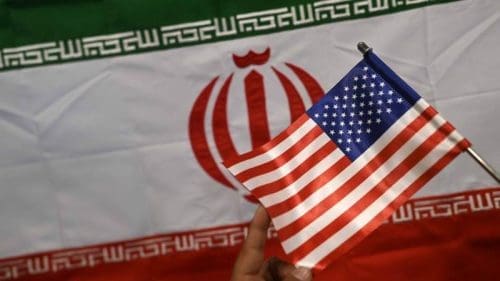
Iran’s army offered a $30,000 bounty on Sunday for killing or capturing US soldiers, funded by public donations, though no American ground troops are known to be inside Iran.
Army chief Major General Amir Hatami announced the payment, or five billion tomans, for anyone who kills or captures an American serviceman and hands him over. He doubled the offer for Iranian women who do the same.
The money comes from a public donation drive Hatami described as a “financial jihad,” with the army guaranteeing payment. He said the plan followed a heavy volume of requests from Iranians wanting to take part, and that any weapon used to kill an American would be bought back at twice its value, replaced with a new one, and placed in a planned museum. State broadcaster IRIB and the IRNA news agency carried the remarks.
The offer matters less for what it can achieve than for what it signals. Washington has put no ground forces inside Iran during nearly six months of war. Hatami gave no indication of where or when an American soldier might be killed or captured to qualify for payment. The announcement reads as a message to a domestic audience at a point when Tehran has few conventional cards left.
The only known American ground presence came in April, when an F-15E came down over Iran and roughly 200 US personnel and more than 170 aircraft were committed to recovering the crew. Both airmen were pulled out.
At least 17 US military personnel have been killed since fighting began on 28 February, the most recent in July, all outside Iranian territory, including in Jordan and Iraq.
The bounty also lands against a squeezed treasury. The United States imposed a naval blockade of Iranian ports on 13 April after talks in Islamabad collapsed. Oil loading at Kharg Island, which handles almost all Iranian crude exports, has nearly stopped, with no departures recorded since 31 July and 17 tankers waiting offshore, according to shipping analysts at Windward. Defence Secretary Pete Hegseth said last week the US Navy could sustain the blockade indefinitely by rotating ships through the region.Hatami repeated Tehran’s demand that American forces leave the Middle East, saying they no longer have permission to enter the Persian Gulf, the Gulf of Oman or the Strait of Hormuz.
Iran has said traffic through the strait will not return to normal until Washington ends the war, lifts the blockade, withdraws its forces and pays compensation.

