

Dozens of traders in Kumasi were left stranded Monday after a private developer demolished shops and stalls in a pre-dawn operation at Krofrom-Columbia, destroying goods worth thousands of cedis in a disputed land reclamation exercise.
The unauthorized demolition occurred before dawn in the Ashanti regional capital, razing several trading structures and leaving many scrambling to salvage their belongings from the debris, according to eyewitnesses and local officials.
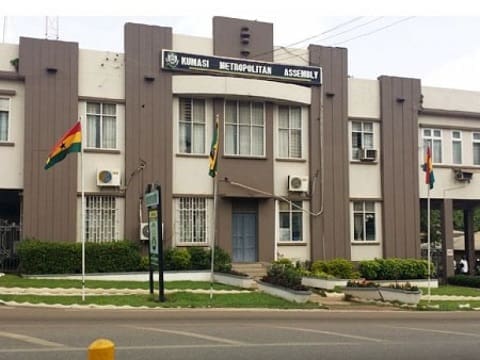
The Kumasi Metropolitan Assembly confirmed it did not sanction the exercise, though officials acknowledged the landowner had secured a development permit for the site.
“They demolished the shops, destroying our personal belongings and goods,” one affected trader told Asaase News. Many traders said they received no formal notice before the exercise, while others claimed they had been verbally warned two weeks earlier by unidentified individuals.
Henrietta Afia Konadu Aboagye, the KMA’s public relations officer, said the landowner failed to follow due process in evacuating the traders. She announced that the assembly would intervene to seek compensation if the traders formally lodge a complaint.
Aboagye, who has previously served as spokesperson for the KMA during various disputes, emphasized the importance of following proper procedures in land development projects involving existing occupants.
The incident highlights ongoing tensions between private developers and informal traders across Kumasi, where rapid urbanization has intensified competition for prime commercial land. The demolition comes just days after the Kumasi Mayor announced that the long-delayed Krofrom Market has been redesigned as a mall-style facility, with completion targeted for December 2026.
The Krofrom area has been a focal point for development disputes as authorities work to modernize the city’s infrastructure. The market project, which started under the John Agyekum Kufuor administration, was left uncompleted due to funding challenges, forcing many traders to establish temporary structures on surrounding lands.
The morning demolition caught many traders off-guard, with some arriving at their usual business locations to find rubble where their shops once stood. Videos shared on social media showed distraught vendors attempting to recover merchandise from destroyed structures.
Local residents expressed concern about the developer’s approach, questioning why the demolition proceeded without visible KMA supervision or adequate notice to affected parties. Some traders reported losing perishable goods and equipment they had stored overnight.
The KMA’s promise of mediation reflects growing pressure on local authorities to balance development needs with the livelihoods of informal sector workers who form a significant portion of Kumasi’s economy.
Similar land disputes have occurred across Ghana’s major cities as urban development accelerates, often leaving small-scale traders caught between property owners asserting legal rights and their own economic survival needs.
The case underscores challenges facing local assemblies in managing urban development while protecting vulnerable populations from sudden displacement. Legal experts note that proper evacuation procedures typically require adequate notice and consultation with affected parties.
The affected traders are expected to organize formally to lodge their complaint with the KMA, initiating the mediation process promised by assembly officials. The outcome could establish precedents for handling similar disputes across the region.
Industry observers note that the incident reflects broader tensions in Ghana’s urban development as authorities attempt to modernize cities while accommodating informal economic activities that provide livelihoods for millions.

