

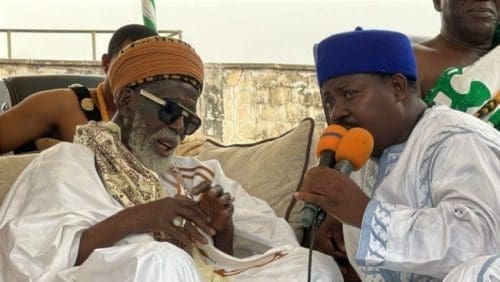
Ghana’s longstanding reputation as a beacon of religious harmony took center stage this week as Sheikh Mohammed Kawra Asha, the Chief Imam of Niger, praised the nation’s Muslim and Christian communities for fostering “a spirit of unity and mutual respect” during celebrations marking the birth of the Prophet Muhammad.
The event, held in Sekondi in the Western Region, drew a diverse gathering of government officials, traditional leaders, and faith groups, underscoring what many describe as Ghana’s unique interfaith ethos.
“I commend the Christian community for demonstrating love and inclusiveness,” Sheikh Asha declared, addressing crowds at the annual Maulid Nabiyy festival. “Despite our diverse religious backgrounds, we are united in our belief in one God.” His remarks resonated at a time when global tensions around religious divides often dominate headlines, positioning Ghana as a quiet counter-narrative of coexistence. The Nigerien cleric, serving as guest of honor, also led prayers for national peace, urging Ghanaians to “protect this harmony that brings joy to your faces.”
The celebration, themed “Unity and Peaceful Coexistence as a Prerequisite for National Development,” doubled as both a spiritual reflection and a civic call to action. Western Regional Minister Joseph Nelson echoed this dual focus, urging citizens to align their actions with the values of tolerance that have long defined the country. “Development cannot thrive in division,” he stressed, acknowledging Ghana’s upcoming political transition. “Our strength lies in co-existing peacefully while committing to progress.” His words carried added weight in a region where ethnic and religious fault lines have occasionally flared, particularly during elections.
Nana Kobbina Nketsia V, Paramount Chief of the Essikado Traditional Area, challenged attendees to use the occasion for introspection. “Does our lifestyle align with the Prophet’s teachings?” he asked, framing the event as a moment to reconcile past actions with future aspirations. The gathering also honored individuals for their contributions to societal development, weaving civic recognition into the fabric of religious observance.
Notably, Ghana’s National Chief Imam, Sheikh Osman Nuhu Sharubutu, reinforced the theme by leading prayers for national unity. His presence—a familiar symbol of interfaith bridge-building—highlighted his decades-long advocacy for dialogue, including his historic visit to a Christian church in 2019. Such gestures have cemented his status as a unifying figure in a nation where Muslims and Christians, making up roughly 18% and 71% of the population respectively, routinely share cultural and social spaces without conflict.
A Model Under Pressure?
While the event projected optimism, it also subtly acknowledged underlying challenges. Ghana’s peace, though resilient, is not immune to global trends of polarization or local strains from economic hardship. Rising youth unemployment and resource-driven tensions occasionally test the social fabric. Yet the deliberate emphasis on unity at the Sekondi gathering suggests religious leaders are acutely aware of their role as stabilizers.
“This isn’t just about tolerance—it’s about active collaboration,” remarked a local imam from Takoradi, who attended the event. “We eat together, trade together, and celebrate each other’s festivals. That’s how you prevent ‘us versus them’ mentalities.”
As Ghana navigates a fraught economic climate and prepares for a contentious election cycle, the Maulid Nabiyy celebration served as both a reminder and a challenge: the nation’s vaunted harmony is not accidental but requires constant nurturing. For now, however, the image of Christian and Muslim leaders sharing a platform to honor shared values offers a potent symbol—one that Sheikh Asha of Niger hopes will “shine as an example for the world.”

