

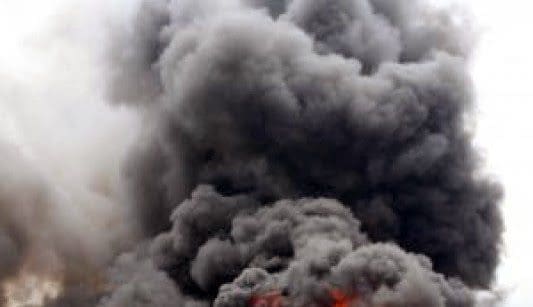
An attack on Riyadh’s main airport killed 12 people and injured 309 on 10 October, Saudi authorities said, tripling the week’s death toll from strikes on Saudi airports.
Saudi Arabia’s General Authority of Civil Aviation (GACA) said the attack hit a passenger terminal at King Khalid International Airport on Saturday afternoon, according to a statement carried by China’s Xinhua news agency. The dead were four Saudi citizens and eight foreign residents: two Bangladeshis and one person each from the United States, Egypt, Jordan, Syria, Palestine and Sudan. Some of the injured were in serious condition, and operations at the airport were suspended for damage checks.
The scale matters for anyone flying through the Gulf. Before Saturday, Houthi-claimed attacks on Saudi airports had killed six people in four days. A Sudanese national was killed and eight people wounded at King Khalid airport, while two women from Morocco and Algeria were killed and 28 wounded at Abha airport in the south-west, in attacks on 6 and 7 October. On 8 October three Saudi citizens were killed in two attacks on the Riyadh airport, one of which struck a Saudia aircraft. Among the dead was Saudia pilot Captain Hamoud Ali Alkalthami.
Major General Turki al-Malki, spokesperson for the Saudi-led coalition fighting the Houthis, said on X early on Sunday that the coalition would respond firmly to what he called a terrorist attack, within the bounds of international humanitarian law. He later said coalition forces had shot down a ballistic missile and a drone fired from Yemen towards the kingdom.
Houthis warn airlines again
Houthi military spokesperson Yahya Saree on Sunday repeated the group’s warning to airlines, aviation staff and travellers. He said all Saudi airports and airspace, apart from those serving Mecca and Medina, remained open to attack. The group would keep up its policy of “airport for airport, blockade for blockade and escalation for escalation” until it met its aims, he said.
After Saturday’s attack, the Houthis also said they were ready to agree reciprocal steps with Riyadh to keep airports, seaports and other humanitarian facilities out of the fighting, Xinhua reported.
Airlines have already pulled back. The European Union Aviation Safety Agency advised carriers on 9 October to avoid more sections of Saudi airspace. Etihad Airways cancelled eight Abu Dhabi to Riyadh flights on 9 and 10 October, and Cirium data showed 169 of 378 scheduled departures from the Riyadh airport were cancelled or listed as not flying on one day of disruption.
Washington weighs its role
US President Donald Trump told reporters at the White House on Saturday that the United States might join Saudi strikes on the Houthis and would decide quickly, according to Xinhua. That would mark a shift. Trump has so far held back from expanding US military involvement and has not ordered American forces to resume strikes on the group. Reuters reported in September that he had turned down Saudi requests for direct US military intervention.
UN Secretary-General António Guterres on Sunday condemned the Riyadh attack, saying strikes on civilians and civilian infrastructure breach international law and must stop.
Fighting inside Yemen
The airport strikes run alongside a ground and air war in Yemen. Houthi-run al-Masirah TV said Saudi Arabia launched a fresh wave of strikes on Saturday on Sanaa International Airport, areas near the Bab al-Mandab Strait and several northern provinces. Yemeni government forces, backed by Saudi air power, began a large offensive on 5 October to retake Houthi-held territory.
The current round began in July. On 13 July Saudi Arabia struck Sanaa airport to stop an Iranian plane carrying a Houthi delegation home from Ali Khamenei’s funeral from landing there. The Houthis answered with missiles and drones on Abha airport, their first claimed attacks on Saudi Arabia since an unofficial truce took hold in March 2022.
The Houthis seized Sanaa in late 2014. A Saudi-led coalition entered the war in 2015 to back Yemen’s internationally recognised government, which now operates from Aden.

