

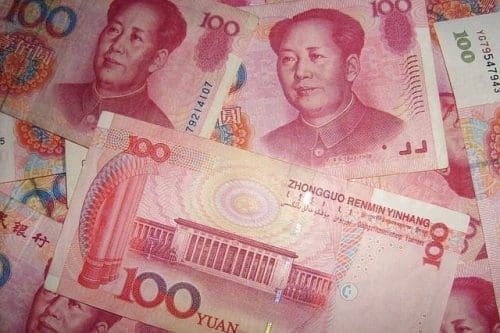
The Chinese yuan clung to recent gains despite lackluster trade figures, as rising bond yields and cautious optimism over fiscal buffers offset concerns about slowing growth.
The currency traded near a three-month high, while the 10-year government bond yield climbed above 1.81%, reflecting mixed signals in Asia’s largest economy.
Newly released January-February 2025 trade data revealed a stark divide: exports grew just 2.3% year-on-year to $540 billion, sharply missing forecasts of 5% and down from December’s 10.7% surge. Imports fared worse, slumping 8.4% to $369.4 billion against expectations of a modest rise. Analysts interpreted the figures as a warning sign—exports faltered amid sluggish global demand, while shrinking imports pointed to weakening domestic consumption. “This isn’t just a trade slowdown; it’s a dual-speed economic stall,” noted one Shanghai-based strategist.
Despite the headwinds, the yuan’s stability underscores Beijing’s tight grip on currency markets. The People’s Bank of China (PBoC) set the daily midpoint at 7.1705 per dollar, signaling resolve to prevent excessive volatility even as U.S.-China trade tensions simmer. Officials reiterated willingness to negotiate with Washington but vowed to “defend national interests” if President Trump follows through on tariff threats. Markets remain on edge, with traders hedging against potential disruptions to supply chains and foreign investment flows.
The bond market, however, tells a brighter tale. Rising yields have drawn foreign capital into Chinese debt, cushioning the yuan against downward pressure. Combined with China’s $3.1 trillion foreign exchange reserves—a war chest for countering speculative attacks—the government retains ample firepower to stabilize markets. Still, doubts linger. “Bond inflows are a temporary Band-Aid,” warned a Hong Kong fund manager. “Without stronger exports or domestic stimulus, the yuan’s resilience could crack.”
For now, Beijing walks a policy tightrope. While the PBoC avoids drastic rate cuts to safeguard the currency, weaker trade data raises pressure for targeted fiscal support. All eyes are on Washington, where Trump’s next move on tariffs could tip the scales. Until then, the yuan’s calm belies an economy bracing for turbulence.

