Jomoro MP, Nzema chief court investors for coconut factory

0

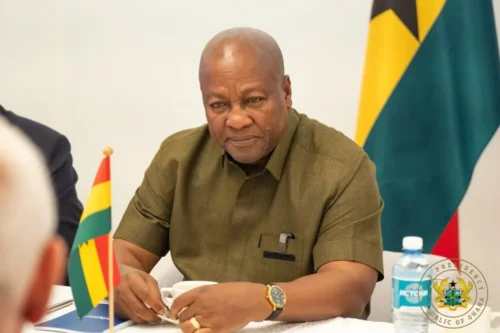
Jomoro MP Dorcas Affo-Toffey has met the Paramount Chief of the Western Nzema Traditional Area and prospective investors over a planned coconut processing factory in the Western Region municipality.

The investors, who have not been named, are studying whether a plant in Jomoro could turn locally grown coconuts into higher-value products for domestic and export markets. Affo-Toffey said the factory could create jobs for young people, widen markets for coconut farmers and raise incomes across the municipality.

The project is still at the feasibility stage. No investment amount, processing capacity, supply arrangement or construction timeline has been made public.

For Nzema farmers, the question is whether a processor would pay better and more reliable prices than the current trade in raw nuts. Coconuts can be processed into oil, milk, desiccated coconut and other foods, while husks and shells can supply fibre and industrial products. A plant’s value to farmers would depend on how it buys its raw material and on whether local supply is large and steady enough to keep it running near capacity.

The meeting follows a push by traditional leaders to revive the crop. In August, Awulae Kwasi Amakyi III, the Paramount Chief, told the Jomoro Development Conference at Half-Assini that the area would revive its coconut industry rather than turn to illegal mining. He said Jomoro needed processing factories to add value to its coconuts, and described the once-thriving industry as a former mainstay of employment in Nzema.

The Western Region is the centre of Ghana’s coconut production. In 2022, the then regional minister said it supplied more than 80 per cent of the country’s coconuts for local use and export. The Jomoro and Shama districts received new coconut seed gardens under a regional replanting programme launched in 2020.

Ashanti inflation hits 9.8% as Western prices fall in September

0

Inflation in Ghana’s Ashanti Region reached 9.8 per cent in September 2026, nearly double the national rate, while prices in the Western Region fell, Ghana Statistical Service (GSS) data show.

Figures released on 7 October put national inflation at 5.2 per cent. Ashanti recorded the highest regional rate, followed by the Eastern Region at 7.8 per cent. Greater Accra came in below the national average at 3.4 per cent. The Western Region recorded a rate of minus 0.5 per cent, meaning its consumer basket cost slightly less than a year earlier.

The spread shows how little the national average says about any one household. The 10.3-point gap between Ashanti and Western means two families buying similar goods can face very different price trends depending on where they live. For businesses and workers in Kumasi and the wider Ashanti Region, the cost of living is rising at close to the pace the whole country saw a year ago, when national inflation stood at 9.4 per cent.

A regional rate measures how fast prices are changing, not how expensive a place is. Faster inflation in Ashanti does not mean living there costs more than in Accra, only that prices there have risen more quickly over the past 12 months.

Nationally, inflation rose for a second straight month, from 5.0 per cent in August. Prices rose 1.1 per cent over the month, after falling 1.0 per cent in August. Food inflation climbed to 4.0 per cent from 3.0 per cent, driven by fresh tomatoes, up 153.4 per cent on the year, and ginger, up 100.4 per cent. Some staples moved the other way: lime prices fell 29.9 per cent and maize 26.4 per cent.

Locally produced items drove about 86 per cent of inflation, which Government Statistician Dr Alhassan Iddrisu described as largely homegrown. National inflation remains below the lower bound of the Bank of Ghana’s medium-term target of 8 per cent, plus or minus 2 points.

Rent becomes Ghana’s second-biggest inflation driver in September

0

Rent payments accounted for 13.9 per cent of Ghana’s 5.2 per cent inflation rate in September 2026, second only to fresh tomatoes, Ghana Statistical Service (GSS) data released on 7 October show.

Fresh tomatoes contributed 20.3 per cent of the headline rate and ginger 9.9 per cent. Prices of the two items rose 153.4 per cent and 100.4 per cent from a year earlier. The share figures measure each item’s contribution to overall inflation and reflect its weight in the consumer basket, not how much its price rose.

Rent’s place near the top of the table points to where the next price pressure lies. Food inflation is volatile and can swing back quickly once supply improves. Housing costs are stickier. Government Statistician Dr Alhassan Iddrisu said services inflation, at 8.3 per cent, was rising twice as fast as goods inflation, at 4.2 per cent. He said services “are the last hurdle for us to deal with.” Housing, water, electricity and gas recorded the highest inflation of any category, at 10.3 per cent.

Headline rate still low

Inflation rose for a second straight month, from 5.0 per cent in August, after falling to 3.2 per cent in March. It remains well below the 9.4 per cent recorded in September 2025 and below the lower bound of the Bank of Ghana’s medium-term target of 8 per cent, plus or minus 2 points. Food inflation rose to 4.0 per cent from 3.0 per cent, while non-food inflation eased to 6.2 per cent from 6.8 per cent. Locally produced items accounted for about 86 per cent of inflation, which the GSS described as largely homegrown.

The upfront cost the index misses

The price index does not capture the lump sums many tenants must pay before moving in. Landlords in Accra, Kumasi and other cities commonly demand one or two years’ rent in advance. That is illegal under the Rent Act, 1963 (Act 220), which caps advance rent at six months for tenancies longer than six months and two months for shorter ones.

The state has stepped up enforcement this year. In March, President John Mahama urged tenants to report landlords who demand more. The Rent Control Department said it would prosecute offenders from 1 April. In June, Acting Rent Control Commissioner Frederick Opoku told tenants to gather evidence and report violations. He also announced compulsory registration of landlords on a digital database.

The department’s capacity is limited. Opoku said in April that it had only 185 staff nationwide and described it as poorly resourced. It plans to introduce a standard tenancy agreement by November 2026.

Some landlords argue that long advances pay for repairs and building work. They have warned that tighter limits could push rents up.

Ghana’s mobile money boom leaves most businesses behind

0

Ghanaians moved GH¢518.8 billion through mobile money in August 2026, yet most of the country’s businesses still do not accept digital payments, according to central bank data and census-based research.

The gap between how Ghanaians pay and how firms get paid is now one of the clearest weak points in the country’s shift away from cash. It matters for small businesses in particular. Firms that keep no digital record of their sales struggle to show lenders what they earn, which shuts many of them out of credit.

Consumers moved first

Bank of Ghana figures show the value of mobile money transactions rose from GH¢323.2 billion in June 2025 to GH¢492.9 billion in June 2026, an increase of more than 50 per cent. Volumes reached 954 million transactions in June alone. Values rose again in July and August.

Across 2025, mobile money transactions totalled GH¢4.54 trillion, up 50.8 per cent on 2024. The infrastructure is extensive: about 546,000 active agents, and 26.4 million active accounts out of 85.8 million registered as of August.

Firms lag behind

Businesses tell a different story. A study by the Ghana Statistical Service and the Retail Finance Distribution (ReFinD) research initiative at the Institute of Statistical, Social and Economic Research (ISSER) found that only about 37 per cent of firms accept or use digital payments. The study drew on the 2024 Integrated Business Establishment Survey. By contrast, nearly 95 per cent of individuals surveyed had paid digitally as consumers.

“This large gap between individual and business use tells us there’s strong potential,” said Francis Annan, the initiative’s co-lead.

Adoption is uneven. It stood at 38.4 per cent in services, 34.9 per cent in industry and 22.4 per cent in agriculture. Formal firms were far more likely to go digital than informal ones, at 56.7 per cent against 35.2 per cent. Use is concentrated in Greater Accra and regional capitals, with businesses in northern Ghana less likely to take part.

Even firms that have adopted digital payments mostly rely on personal mobile money accounts, which the researchers describe as the costliest and riskiest option for business. Merchant accounts are cheaper and more efficient. The researchers found that firms using merchant accounts recorded better revenue growth. Owners cited limited knowledge, cost, taxes and fraud concerns as the main barriers.

Why records matter for credit

The link to financing is where the stakes rise. A business that takes payments digitally builds a transaction history that a bank can assess. A business that runs on cash usually cannot prove its cash flow.

That matters more now that borrowing costs are falling. The average lending rate dropped to 15.9 per cent in August 2026 from 24.2 per cent a year earlier, Bank of Ghana data show. Cheaper credit helps only firms that can show they are creditworthy.

The researchers have recommended stronger cybersecurity, wider digital infrastructure outside the main cities, incentives for women-led businesses and better financial literacy among business owners.

Mahama says government no longer crowds out private borrowers

0

President John Mahama says government has stopped crowding businesses out of the credit market, citing lower interest rates, during a visit to drinks maker Kasapreko reported on 9 October 2026.

Speaking at the Ghana Stock Exchange-listed company’s production facility, Mahama said heavy state borrowing had previously soaked up bank credit. He said that left little for private firms and pushed the interest rates they were charged to excessive levels.

“We are exercising fiscal discipline, making sure government lives within its means,” he said. He added that the aim was to create room for the private sector to grow.

The claim matters because the cost of credit decides whether manufacturers like Kasapreko can expand and hire. Official data show borrowing costs have fallen sharply, though not as far as some of the President’s examples suggest.

Mahama said commercial lending rates had dropped from highs of around 32 per cent, and that some businesses were now borrowing at rates as low as nine per cent. Bank of Ghana data put the average lending rate at 15.9 per cent in August 2026, down from 24.2 per cent a year earlier. The World Bank’s latest Ghana Economic Update said average lending rates fell from about 27 per cent in June 2025 to 15.6 per cent in June 2026. Rates still vary widely between banks and borrowers, with some lenders charging up to 30 per cent.

The decline followed deep cuts by the Bank of Ghana, which lowered its policy rate from 28 per cent in April 2025 to 14 per cent by March 2026. It has held the rate there since, most recently on 24 September, as inflation edged up to 5.2 per cent in September.

The President also pointed to a surge in foreign direct investment, which he said rose from $624 million in 2024 to $2.62 billion in 2025. The Ghana Investment Promotion Authority’s 2025 report confirms the $2.62 billion figure. However, Bank of Ghana data show that 95.4 per cent of net inflows on a balance of payments basis came from reinvested earnings of firms already operating in Ghana, not new money.

Mahama urged Ghanaian entrepreneurs to follow foreign investors and expand, and praised Kasapreko’s growth into export markets.

Bloom Africa injects GH¢1.13bn into Prudential Bank, eyes regional network

0

Mauritius-based Bloom Africa Holdings has completed a GH¢1.13 billion capital investment in Prudential Bank, a Ghanaian-owned lender, as the group pursues a West African banking network.

Prudential Bank announced on 9 October 2026 that the deal had closed after approval from the Bank of Ghana. The money came through Bloom Africa Holdings Ghana Limited, a wholly owned subsidiary of the Mauritius holding company.

The bank said the capital lifts it above the Bank of Ghana’s minimum capital requirement. It said the funds will support more lending to small and medium-sized enterprises and corporate clients, as well as spending on technology and digital banking.

“This investment significantly strengthens Prudential Bank,” said Ebow Quayson, the bank’s acting managing director.

For Bloom Africa, Ghana is the largest market yet in a West African expansion built largely on acquired banks. Its subsidiaries operate as Bloom Bank Africa in The Gambia, Sierra Leone and Liberia. Those banks were previously Skye Bank Gambia, Keystone Bank Sierra Leone and Global Bank Liberia. In 2024 the group drew backing from the Fund for Export Development in Africa, the impact investment arm of the African Export-Import Bank (Afreximbank), to support that expansion.

Gabriel Edgal, Bloom Africa’s board chairman, said the group wants to build African institutions that can finance trade and help businesses grow beyond their home markets. He said Prudential’s knowledge of its Ghanaian customers would anchor that plan, linking them to capital and opportunities elsewhere on the continent. Edgal also leads Oakwood Green Africa, an associate company of the group.

Prudential Bank, founded as a privately owned Ghanaian bank, has until now described itself as wholly Ghanaian-owned. The bank has not disclosed the size of the stake Bloom Africa now holds, how much of the new capital will go to small-business lending, or any lending targets.

Wontumi says GH¢30m Exim Bank case is civil debt

0

Bernard Antwi Boasiako, the former New Patriotic Party Ashanti chairman known as Wontumi, has asked the High Court to declare his GH¢30 million Exim Bank case a civil dispute.

In a filing reported on 8 October 2026, he and his company, Wontumi Farms Limited, argue that the dispute is a civil debt that has been wrongly treated as a crime. They say the Economic and Organised Crime Office (EOCO) has overstepped its mandate by acting as a debt collector for the bank.

They point to the security attached to the loan. Antwi Boasiako personally guaranteed repayment in the event of default, and the Ghana Export-Import Bank agreed to take out insurance on the loan. They are asking the court to send the matter to the civil courts. They also want it to direct the bank to recover any outstanding balance through the mortgage, his personal guarantee or the insurance cover.

If the court grants the application, the criminal prosecution would effectively end and the dispute would become a matter of recovering a debt.

Antwi Boasiako is standing trial with Thomas Antwi-Boasiako, who is at large, and Wontumi Farms Limited over an alleged GH¢30 million loss to the bank. The prosecution alleges that the two men obtained about GH¢14.302 million from Exim Bank in 2018 by false pretences. It alleges that a pro forma invoice for farm machinery was used to support the loan application, and that money was later withdrawn from the company’s accounts for personal use. None of the allegations has been tested at trial.

The state filed an amended charge sheet on 22 September after plea discussions with the defence broke down. It retains a charge of uttering a forged document under Section 169 of the Criminal Offences Act, 1960. The accused were first arraigned on 18 May 2026 and will have their pleas taken afresh on the amended charges.

Antwi Boasiako is currently serving a prison sentence after his conviction in a separate illegal mining case.

The Accra High Court will resume hearing the Exim Bank case on 13 October 2026 at 10.30am.

UTAG-UG threatens strike from 19 October over research allowance

0

The University of Ghana branch of the University Teachers Association of Ghana (UTAG-UG) threatened to withdraw teaching from 19 October 2026 unless members’ Book and Research Allowance is paid.

In a notice to the National Labour Commission dated 9 October, the branch gave the government until Friday, 16 October, to pay the 2026 allowance. It said members would withdraw all teaching and related services from the following Monday if the money had not arrived.

The branch said the delay breaches a 2020 Memorandum of Agreement between UTAG and the government, which it said requires the allowance to be paid by the end of August each year.

A walkout at the country’s largest public university would disrupt the new academic year at Legon. It would also add to pressure from other unions in the sector. The Technical University Teachers’ Association of Ghana (TUTAG) has been on strike since 1 October.

The allowance helps lecturers buy books and academic materials, fund research and attend scholarly events. It has been a recurring flashpoint this year. In June, UTAG’s national leadership threatened a nationwide strike over the Finance Ministry’s delay in releasing the dollar exchange rate used to calculate the allowance. It later set a 30 June deadline for the government to resolve outstanding conditions-of-service issues, and suspended planned action in early July after government assurances.

There are signs that payment is moving. TUTAG President Professor Deodat Adenutsi said on 1 October that a letter from the Ghana Tertiary Education Commission, dated 28 September, confirmed funds had been released on the government’s financial management system for first-batch payments by individual institutions. He said TUTAG no longer treated the allowance as a ground for its own strike. TUTAG is instead striking over unpaid post-retirement contracts and other conditions of service.

Dutch seek Ghana’s help to choke Bolle Jos supply lines

0

The Netherlands is seeking Ghanaian help to cut supply lines of fugitive Dutch trafficker Jos Leijdekkers, known as Bolle Jos, after cocaine shipped from Ghana was seized in France.

Dutch Justice and Security Minister David van Weel is backing efforts to bring Ghanaian authorities into the pursuit, the Dutch newspaper De Telegraaf reported. The form of the cooperation is still being worked out but could include sending Dutch police officers to Ghana, the paper said.

The move puts Ghana at the centre of one of Europe’s most prominent manhunts. Leijdekkers is the Netherlands’ most wanted criminal. Dutch authorities believe he is hiding in Sierra Leone, and The Hague has tried for months without success to secure his extradition from Freetown.

The trigger was a seizure in early September 2026, when French customs at the Port of Dunkirk found nearly 3.9 tonnes of cocaine in a container of plastic waste shipped from Ghana. French authorities valued the drugs at about €225 million (about US$260 million). De Telegraaf and Belgian media have linked the shipment to Leijdekkers’ network.

Four Ghanaians have since been arraigned before the High Court in Accra on charges of conspiracy to export narcotic drugs and exporting narcotic drugs. They have pleaded not guilty. The Narcotics Control Commission (NACOC) has said the suspects were under surveillance for one to two years before their arrest. It said intelligence showed that Leijdekkers himself had not entered Ghana, although associates operated from the country.

NACOC has said Ghana will not be a safe haven or transit point for international drug trafficking groups. President John Mahama has ordered an inter-agency task force to draw up a plan to stop drug trafficking through Ghana’s borders.

Europe is also stepping up pressure on Sierra Leone. The European Commission has suspended about €18 million in 2026 budget support to the country, which Van Weel said was because of its failure to cooperate on extradition. The Netherlands wants a further €22.5 million earmarked for 2027 withheld if Leijdekkers is not handed over. It is also pursuing European measures to freeze his assets and restrict his movements.

A Dutch court sentenced Leijdekkers in his absence to 24 years in prison for trafficking nearly seven tonnes of cocaine.

GES brands SHS placement ‘goro boys’ scammers, urges official help

0

The Ghana Education Service (GES) in remarks published on 10 October 2026 urged parents not to pay “goro boys” promising senior high school places, calling the middlemen criminals and scammers.

Daniel Fenyi, the GES head of public relations, told GhanaWeb TV’s Lowdown show that the Service has no dealings with people who claim they can influence placement for a fee. “They are criminals. They are scammers. We don’t work with them,” he said.

The warning targets the families still caught in this year’s self-placement process. Parents who pay middlemen risk losing their money with no school place to show for it.

Under the 2026 Computerised School Selection and Placement System, about 527,000 students were placed automatically. That left roughly 13 per cent of candidates to choose schools themselves through the self-placement portal. Official figures put the number eligible for self-placement at 53,887, of whom 33,726 had secured schools by mid-September. The Education Ministry then extended the exercise to 18 September.

Fenyi said parents struggling with the process should go to their children’s former school heads, district education offices or the placement resolution centres. GES runs 17 such centres nationwide, with the national centre at GNAT Hall in Accra. He said official staff there handle cases, including families who have trouble using the online system.

He asked parents who had already lost money to share details that could help trace the middlemen, such as phone numbers, names, payment records and photographs. Many victims, he said, have been unwilling to come forward.

This year’s placement drew complaints of long queues at resolution centres, particularly in Accra and the Ashanti Region. In September, Fenyi said 15 of the 17 centres were running smoothly. He argued that the pressure in those two areas did not amount to a national crisis, noting that there were about 800,000 places for just over 600,000 students.