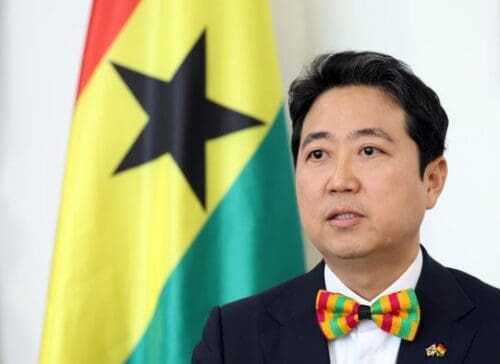
Ghana’s ambassador to South Korea, Kojo Choi, said on 11 October 2026 that his second year in Seoul would target jobs, investment and easier travel for ordinary Ghanaians.
Reviewing his first year in a Facebook post, Choi listed a visa-waiver deal for official travellers and a bilateral climate agreement as early gains. He said both grew out of President John Dramani Mahama’s visit to South Korea in March, which he credited with moving issues that had been stuck for more than a decade.
The gains so far benefit a narrow group. The visa waiver, signed in June by Foreign Affairs Minister Samuel Okudzeto Ablakwa and his South Korean counterpart, Cho Hyun, covers only diplomatic and service passport holders. Ablakwa described it at the time as the first visa-waiver agreement in almost 50 years of formal relations between the two countries, and said talks would continue to extend it to ordinary passport holders. Choi said that work was still under way.
The same applies to work permits. Choi said the embassy was in talks with South Korea’s labour, justice and immigration authorities on routes for Ghanaian workers into the Korean job market. He gave no timeline.
“The second year must be about walking through those doors,” he wrote.
On climate, Choi said the Ghana-Korea Climate Change Agreement had been concluded but must still be ratified before projects, technology transfer and investment can follow. The two governments signed a memorandum on climate cooperation during the March visit, alongside others on maritime security and digital technology. South Korea’s ambassador in Accra, Park Kyongsig, said in 2025 that a framework agreement on climate cooperation would open the way for Korean companies to run climate projects in Ghana.
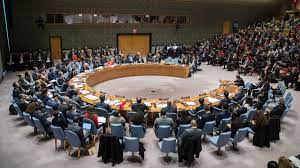
Choi also pointed to Ghana’s presence at the Korea-Africa Foreign Ministers’ Meeting and the Korea-Africa Finance Ministers’ Conference in Seoul, and said South Korea had backed Ghana’s resolution at the United Nations on slavery and the transatlantic slave trade as a historical injustice.
He said the embassy was pursuing cooperation in agriculture, education, health, infrastructure, digital services, artificial intelligence, trade and tourism, and that more Korean companies and institutions were studying the Ghanaian market.
Much of his year was spent on the Ghanaian community in Korea. The embassy restored Ghana’s National Day celebration after an absence of almost eight years, held its first joint worship and thanksgiving service, and revived the ambassador’s town hall meetings, Choi said. He also attended GHANASKO’s 30th anniversary celebration in Paju, which he said drew more than 400 Ghanaians.
Choi, a Korean-born naturalised Ghanaian, first came to Ghana in 1992 with his parents, who were Presbyterian missionaries. He presented his credentials to President Lee Jae-myung on 11 December 2025. His nomination drew public debate in Ghana over his citizenship, though legal commentators concluded he met the requirements for the post.
He thanked Mahama, Ablakwa, embassy staff, Ghanaians in Korea and Korean partners, and said he would travel more often between Seoul and Accra to link openings in Korea with Ghanaian businesses and institutions.