

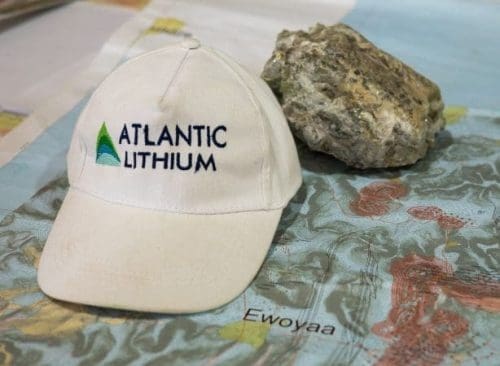
Ghana’s push to refine lithium domestically could cost the government up to $500 million in lost revenue over the lifespan of its flagship Ewoyaa mine, according to a new report by the Natural Resource Governance Institute (NRGI).
The analysis, titled Refining the Strategy: The Economics of Lithium Value Addition in Ghana, urges policymakers to prioritize economic viability over aspirations for local processing, citing China’s dominance in lithium refining and higher costs for new entrants.
The Ewoyaa project, operated by Barari DV Ghana Ltd a subsidiary of Australia’s Atlantic Lithium—is poised to begin lithium spodumene concentrate production within two years, pending parliamentary approval of its mining lease. Half of the mine’s output is already contracted to U.S.-based Piedmont Lithium for export. Pressure from civil society and political leaders to refine the remaining lithium locally aims to boost jobs and value addition, but NRGI warns this approach risks undermining fiscal returns.
Modeling by NRGI estimates Ghana would earn $2.7 billion in government revenue by exporting half of Ewoyaa’s spodumene concentrate to China, compared to $2.2 billion if processed domestically a $500 million gap equivalent to over half of Ghana’s total mining revenue in 2022. Chinese refiners, which control 60% of global lithium processing, benefit from lower operational costs and excess capacity, making Ghana’s proposed refinery economically uncompetitive. To survive, a local facility would need to purchase raw materials below market rates, slashing profits for both the state and Barari DV.
“The government would generate less revenue from its lithium by building a refinery even if cathode manufacturing develops outside China,” the report states, noting that such a facility would create no more than 200 direct jobs, with limited spillover benefits for other sectors. Environmental and social risks linked to refining further complicate the case for immediate domestic processing.
Instead, NRGI advocates a “mine-and-monitor” strategy: proceeding with exports while strengthening institutional capacity, tracking global market shifts, and preparing for future value-addition opportunities. This includes exploring uses for mining byproducts and fostering public dialogue on long-term lithium policies.
The findings highlight a recurring challenge for resource-rich African nations: balancing industrialization ambitions with fiscal pragmatism. While local processing promises job creation and reduced dependency on raw exports, Ghana’s case underscores the need for meticulous cost-benefit analysis in a market shaped by established global players. As the country navigates its lithium boom, the report stresses that proximity to minerals alone cannot guarantee prosperity, strategic planning and adaptive policies will determine whether the resource becomes a catalyst for equitable development or a missed opportunity.


The parliament is nothing short of disappointing… ML still not ratified due to selfish and stupid in fighting