

A record 50,895 students have been admitted to the Kwame Nkrumah University of Science and Technology (KNUST) for the 2024/25 academic year, a milestone hailed as progress for educational access but criticized as a looming crisis for academic quality and labor market alignment.
The surge, part of a broader trend dubbed “massification,” has reignited concerns over Ghana’s capacity to balance soaring university enrollments with adequate resources and relevant skills training.
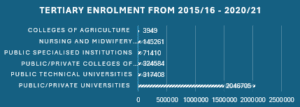
While expanded access to higher education reflects gains from Ghana’s Free Senior High School (SHS) policy, analysts warn that overcrowded lecture halls, overstretched faculty, and outdated curricula risk churning out underprepared graduates. Data from UNESCO reveals university admissions dwarf enrollments in technical colleges and vocational programs, with 75% of tertiary students opting for traditional degrees between 2015 and 2021. This lopsided preference persists despite chronic graduate unemployment and employer complaints of skills mismatches in critical sectors like agriculture, construction, and manufacturing.
“Massification has democratized education, but at what cost?” asked Dr. Ama Serwah, an education economist at the University of Ghana. “Without parallel investments in infrastructure, faculty, and curriculum modernization, we’re trading elitism for mediocrity.”
The strain is palpable. Student-to-lecturer ratios at public universities now exceed 50:1 in many departments, while outdated labs and libraries struggle to keep pace with enrollment spikes. A 2023 study by the African Education Watch found that 60% of Ghanaian employers rate university graduates as “insufficiently skilled” for entry-level roles, citing gaps in technical proficiency and problem-solving abilities.
Beyond Degrees
To ease pressure on universities, policymakers are urging a cultural shift toward apprenticeships, technical training, and entrepreneurship. Ghana’s National Apprenticeship Policy, revised in 2020, aims to formalize vocational pathways, yet implementation remains sluggish. Just 10% of apprenticeships are state-regulated, with most occurring in informal sectors like tailoring and carpentry.
Proposals for “degree apprenticeships,” blending classroom learning with on-the-job training, have gained traction in countries like the UK but remain untested in Ghana. Advocates argue such models could bridge the gap between academia and industry while reducing graduate unemployment, which hit 12% in 2023. “Why crowd lecture halls when employers are begging for electricians and agritech specialists?” said Kofi Mensah, director of the Accra-based Skills Development Initiative.
Efforts to elevate technical and vocational education (TVET) face an uphill battle against entrenched stigma. Though TVET institutions offer diplomas in high-demand fields like renewable energy and robotics, enrollment rates lag due to perceptions of inferiority. A 2025 survey by the Africa Leadership University found 90% of Ghanaian SHS graduates prioritize university degrees, viewing TVET as a “last resort.”
Career Guidance and Systemic Overhauls
Critics trace the university glut to weak career counseling in secondary schools. Less than 30% of SHS students receive formal guidance on post-graduation options, according to the National Council for Curriculum and Assessment. Many remain unaware of alternatives like Ghana’s nascent National Entrepreneurship Program, which offers seed funding and mentorship for youth-led startups.
“We’re failing students by not showcasing all pathways to success,” said Efua Coleman, a career counselor in Tamale. “Not every child needs a bachelor’s degree to thrive.”
The government has pledged reforms, including a revamped careers curriculum aligned with the Gatsby Benchmarks—a global framework emphasizing employer engagement and exposure to diverse professions. Pilot programs in 50 schools now integrate internships and industry talks, though scaling nationally remains a challenge.
Balancing Access, Quality and Relevance
President Mahama’s administration faces mounting pressure to address what educators call the “trilemma” of massification: expanding access without sacrificing quality or labor market relevance. Proposals include incentivizing private sector partnerships, fast-tracking TVET infrastructure projects, and tying university funding to graduate employment metrics.
“Education isn’t a checkbox—it’s an ecosystem,” said Education Minister Dr. Yaw Osei-Adutwum. “We’re working to ensure every pathway, from apprenticeships to PhDs, equips youth to drive national development.”
As the National Education Forum debates solutions, stakeholders agree on one point: Ghana’s future workforce depends on transcending the degree-at-all-costs mindset. With 500,000 youth entering the job market annually, the stakes for reform have never been higher.

