New World Medical Association president calls burnout a system failure

0

Dr Jung Yul Park took office as President of the World Medical Association (WMA) on 9 October 2026. He pledged to protect doctors from burnout and violence and to set ethical rules for the use of artificial intelligence (AI) in medicine.

The South Korean neurosurgeon was installed at the association’s 77th General Assembly in Rotterdam, the Netherlands. He had been elected President-Elect at last year’s assembly in Porto, Portugal. He succeeds Dr Jacqueline Kitulu of Kenya.

In his inaugural address, Park named four pressures on the profession: widening health inequities and failing health systems, the effects of climate change on health, physician burnout and workplace safety, and the ethical questions raised by AI and digital healthcare.

He was blunt about doctors’ wellbeing. “Burnout is not a personal weakness, but a system failure,” he said. He added that poor working conditions and heavy legal risks are pushing physicians out of medicine. He also condemned continuing attacks on hospitals and health workers in conflict zones as violations of international law.

Six commitments

Park set out six priorities for his year in office. He promised to strengthen primary healthcare and to encourage national medical associations to work together to close gaps in health infrastructure. He pledged to defend doctors’ professional autonomy and to expand mentorship and improve working conditions for young physicians.

On technology, he committed to drawing up ethical guidelines that put people first, so that AI supports doctors rather than replacing them. He also pledged to help member associations prepare health systems for disasters and climate shocks, to defend international humanitarian law and medical neutrality, and to give junior doctors, women and physicians from the smallest associations a greater voice in the WMA.

Park has taught neurosurgery at Korea University since 1995. He chairs international affairs at the Korean Medical Association and is President of the Korean Academy of Neurological Sciences.

Outgoing president’s African focus

In her farewell address, Kitulu, the first Kenyan to hold the post, highlighted the association’s first African Leadership Conference, held in Livingstone, Zambia. She said it strengthened the Coalition of African National Medical Associations. She also pointed to a mentorship programme built with the Kenya Medical Association.

Kitulu said only six of the WMA’s previous presidents have been women, and called for deliberate efforts to give women the chance to lead.

The WMA represents national medical associations around the world and sets ethical standards for the profession, including the Declaration of Helsinki on medical research.

deVere chief says 10-year Treasury yield could reach 6%

Nigel Green, chief executive of financial advisory firm deVere Group, said on Friday, 9 October 2026, that the 10-year United States (US) Treasury yield could climb to 6 per cent. That would be its highest level since 2000.

The yield, which sets borrowing costs worldwide, reached 5.35 per cent on 8 October, its highest in 24 years, according to Trading Economics. It eased to about 5.26 per cent by Friday. Long-dated US yields have risen by more than 110 basis points so far this year.

Green said investors debating whether 5.5 per cent marks a danger point were aiming too low. “Every force driving yields upward is still firing,” he said. He argued that heavy government borrowing, sticky inflation and the prospect of further interest rate rises would keep pushing yields higher.

Rate rises back in view

Expectations for tighter monetary policy have been building. Markets put the odds of a quarter-point rate rise by the Federal Reserve in December at roughly 70 to 80 per cent, Trading Economics reported. Minutes of the Fed’s September meeting showed most policymakers expect another increase this year. Governor Christopher Waller said further rises would probably be needed, but that the Fed has flexibility on timing.

Higher energy costs, linked to tensions in the Middle East, have added to price pressures. A gauge of prices in the US services sector reached a four-year high. Rising federal deficits and a heavy pipeline of corporate bond sales have increased the supply of debt competing for buyers.

Demand still strong at auction

Investors have not stepped away. The Treasury sold US$39 billion of 10-year notes on 7 October at a yield of 5.300 per cent, slightly below the 5.317 per cent expected before the sale. Bids totalled 2.77 times the amount on offer, against an average of 2.54. Indirect bidders, a group that typically includes foreign central banks, took 80.34 per cent of the notes.

Green warned that rising yields could weigh on stocks and credit markets. A government bond paying close to 6 per cent with little risk of default competes with every share, he said.

The rise in US yields matters well beyond Wall Street. Higher returns on Treasuries tend to draw investment out of riskier markets and raise borrowing costs for governments and companies that borrow in dollars.

Mega African Capital narrows first-quarter loss to GH¢2 million

0

Mega African Capital Limited, an investment firm listed on the Ghana Stock Exchange (GSE), cut its net loss by 80 per cent to GH¢2.00 million in the first quarter of 2026, from GH¢10.04 million a year earlier.

The improvement came almost entirely from lower borrowing costs, according to the company’s unaudited statements for the three months to 31 March 2026. Finance costs fell 82 per cent to GH¢1.82 million, from GH¢10.06 million, as the firm kept repaying the fixed-term deposits it holds for clients.

The core business weakened. Investment and operating income dropped 65 per cent to GH¢79,982, from GH¢228,438. Administrative, legal and professional expenses rose 26 per cent to GH¢205,026. That left an operating loss of GH¢172,551, against a small operating profit of GH¢18,306 a year earlier.

A GH¢6.41 million rise in the market value of its investments, booked in other comprehensive income, lifted the quarter’s total comprehensive income to GH¢4.41 million. In the same period of 2025, the company recorded a comprehensive loss of GH¢6.60 million.

Deposits shrink, cash runs low

Tenured deposits, the company’s largest liability, fell to GH¢127.99 million at the end of March, from GH¢173.20 million at the end of December. The company paid out GH¢45.21 million to depositors during the quarter. Most of that cash came from operating activities, which brought in GH¢42.19 million, largely by drawing down its holdings of financial assets. Those holdings fell to GH¢118.06 million from GH¢155.83 million.

The balance sheet remains tight. Current liabilities of GH¢129.04 million exceeded current assets of GH¢119.11 million by about GH¢9.93 million. Cash and cash equivalents stood at just GH¢86,681, down from GH¢326,282 at the start of the year.

Total assets fell 34 per cent year on year to GH¢228.81 million. Accumulated losses stood at GH¢72.70 million, but a GH¢150.11 million revaluation reserve kept net assets positive at GH¢99.76 million.

The firm’s shares are among the least traded on the exchange. They closed unchanged at GH¢5.20 on Friday, 9 October 2026, with 25 shares changing hands, and have not moved from that price this year. At that price, the company is valued at GH¢51.73 million, about half its reported net assets.

Mega African Capital listed on the GSE in 2014, after a restricted share offer priced at GH¢3 a share.

Cancer survivor takes glyphosate fight to African agroecology podcast

0

A Kenyan-linked author who traces her cancer to chemical farming has taken her campaign against the weedkiller glyphosate to an African food-sovereignty podcast. Her appearance comes months after the United States (US) Supreme Court limited cancer lawsuits over the product.

Dolar Vasani wrote “Pink Bucket: Glyphosate and My Cancer Journey” after being diagnosed with non-Hodgkin lymphoma. She is the guest on the 40th episode of “The Battle for African Agriculture”. The podcast is hosted by Dr Million Belay, General Coordinator of the Alliance for Food Sovereignty in Africa (AFSA).

The pink bucket in her title stands for the chemicals a person can absorb, unnoticed, through repeated exposure in the food system. Her book, published in South Africa by Yes!Press Publishing, mixes her account of illness with an explanation of the science on synthetic pesticides.

A contested chemical

In the episode, Vasani rejects the industry argument that glyphosate is safe when used as directed. She points to the 2015 decision by the World Health Organization’s International Agency for Research on Cancer (IARC) to classify it as “probably carcinogenic to humans”.

Regulators have reached a different conclusion. The US Environmental Protection Agency has repeatedly found that glyphosate is not likely to cause cancer in humans. Food and pesticide authorities in Europe, Canada and Australia have reached the same view. The IARC assessment rates whether a substance can cause cancer, not how likely it is to do so at the levels people are actually exposed to.

The dispute has played out mainly in courtrooms. Thousands of people in the US sued Bayer, which bought Roundup maker Monsanto in 2018, claiming the weedkiller caused their cancers. On 25 June 2026, the Supreme Court ruled 7-2 in Monsanto v Durnell that federal pesticide law prevents states from requiring a cancer warning that the US regulator does not demand. The ruling did not decide whether glyphosate causes cancer, but it is expected to end many of the remaining claims.

Seeds, chemicals and debt

Vasani also argues that genetically modified seeds and the chemicals sold alongside them come as a package. In her view, that package makes farmers dependent on bought inputs, weakens soils and can push smallholders into debt. She cites small-scale farmers in Uganda who rely on traditional knowledge as an example of a more resilient model.

Her alternative is agroecology, a way of farming that relies on biodiversity and natural soil fertility instead of synthetic inputs. She says making that shift will take public education, changes in behaviour and political will, not just new farming techniques.

AFSA is a coalition of African farmer, faith, consumer and civil society groups. It campaigns for food sovereignty and against what it calls corporate control of the continent’s food systems. The podcast is funded by the Swedish International Development Cooperation Agency (SIDA). New episodes are released every Friday.

GSE Composite Index falls 6.2% in September as trading doubles

0

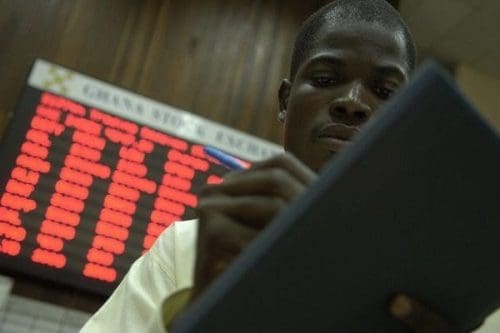
The Ghana Stock Exchange (GSE) Composite Index fell 6.20 per cent in September 2026, its first monthly loss in this year’s rally, even as trading volume roughly doubled.

The benchmark closed the month at 14,141.56, down from 15,076.25 at the end of August, according to the exchange’s September market summary. The GSE Financial Stocks Index fell 4.43 per cent to 7,554.56. Market capitalisation dropped GH¢15.24 billion to GH¢270.34 billion.

Both indices are still well ahead for the year. The Composite Index ended September up 61.24 per cent year to date, and the financial index up 62.56 per cent. The gain has narrowed since. By Friday, 9 October, the Composite Index stood at 14,053.48, and its year-to-date return had slipped to 60.24 per cent.

Selling met heavy demand

The decline came on far busier trading. Investors traded 102,975,663 shares worth GH¢562.29 million in September. Volume rose 101.95 per cent on August and value 166.83 per cent. Compared with September 2025, volume was up 123.94 per cent and value up 197.05 per cent.

From January to September, 1.06 billion shares worth GH¢5.34 billion changed hands, up 75.76 per cent in volume and 74.70 per cent in value on the same period last year. The exchange said it recorded 110,395 transactions, 221.65 per cent more than a year earlier.

Losers outnumbered gainers

Seventeen stocks fell during the month and five rose. Dannex Ayrton Starwin had the steepest drop, at 36.81 per cent. Access Bank Ghana fell 33.21 per cent and Clydestone (Ghana) 33.11 per cent. Intravenous Infusions lost 30.26 per cent and Ghana Oil Company 24.03 per cent.

Several heavyweights also slipped. MTN Ghana operator Scancom, the largest stock on the exchange by market value, fell 6.74 per cent. Ecobank Transnational dropped 6.99 per cent, and TotalEnergies Marketing Ghana 14.89 per cent.

Digicut Production & Advertising led the gainers with a 67.86 per cent rise. Cocoa Processing Company gained 40 per cent, Enterprise Group 9.38 per cent, Fan Milk 5.82 per cent and GCB Bank 1.14 per cent.

Bond trading eases from August

On the Ghana Fixed Income Market (GFIM), volume traded fell 32.58 per cent from August to GH¢33.03 billion, but rose 18.68 per cent on September 2025. Year-to-date bond volume reached GH¢337.79 billion, up 85.62 per cent from GH¢181.97 billion in the same period last year.

Enterprise Group presented its results at the exchange’s Facts Behind the Figures session during the month. It reported a 21.7 per cent rise in first-half net revenue and a 35.1 per cent increase in profit before tax. Standard Chartered Bank Ghana is next on the programme, on 13 October.

DDEP bonds drive GH¢2.23 billion trading on fixed income market

0

Bonds issued under Ghana’s Domestic Debt Exchange Programme (DDEP) made up nearly three-quarters of trading on the Ghana Fixed Income Market (GFIM) on Friday, 9 October 2026. The market recorded GH¢2.23 billion across 1,379 trades.

DDEP bonds accounted for GH¢1.64 billion of the total in 50 trades. Treasury bills followed with GH¢541.63 million across 1,287 trades. New government notes and bonds traded GH¢34.68 million, sell/buy-back trades in government bonds came to GH¢11.17 million, and corporate bonds added GH¢1.33 million.

Two DDEP bonds dominate

Two bonds took most of the DDEP business. The 2032 bond, with a 9.10 per cent coupon, was the most traded at GH¢625.93 million in four trades. Its yield eased to 14.37 per cent from 14.55 per cent, and it closed at a price of 80.73. The 2030 bond, with an 8.80 per cent coupon, traded GH¢501.61 million in 10 deals, and its yield slipped to 14.37 per cent from 14.46 per cent. Together the two accounted for 69 per cent of DDEP volume.

The shortest bond, due February 2027, moved the other way. It traded GH¢350.46 million, and its yield rose to 11.02 per cent from 10.62 per cent. The 2029 bond traded GH¢87.46 million at 13.98 per cent.

A falling yield means the bond’s price rose, so investors were paying more for the 2030 and 2032 papers on Friday. Yields on the longest DDEP bonds, due between 2033 and 2038, remained above 14 per cent.

Bills favour the one-year paper

The 364-day bill took GH¢495.03 million, or 91 per cent of Treasury bill volume, at a weighted average yield of about 8.38 per cent. The most active line, a bill maturing on 2 August 2027, traded GH¢175.88 million at 8.92 per cent.

The 91-day bill drew the most deals, 709, but only GH¢26.58 million in value, at an average yield of about 5.63 per cent. The 182-day bill traded GH¢20.02 million at around 6.13 per cent.

New bonds and corporates

Among newly issued government bonds, a seven-year bond maturing in March 2033 traded GH¢31.39 million in 16 trades, with its yield at 12.52 per cent. A four-year bond due September 2030 traded GH¢3.29 million, and its yield rose to 11.65 per cent from 11.55 per cent.

Corporate trading was limited to Ghana Cocoa Board (COCOBOD) paper. Its 13 per cent bond due August 2028 traded GH¢1.28 million in four deals at 102.82, and its 2027 bond traded GH¢50,000.

GSE Composite Index edges up as SIC, Kasapreko lead gainers

0

The Ghana Stock Exchange (GSE) Composite Index rose 29.30 points, or 0.21 per cent, to 14,053.48 on Friday, 9 October 2026. Gains in SIC Insurance and Kasapreko outweighed a drop in First Atlantic Bank.

The benchmark has now gained 60.24 per cent since 1 January. The GSE Financial Stocks Index slipped 2.04 points to 7,416.25, but is still up 59.59 per cent for the year.

Trading picked up from Thursday. A total of 5,380,378 shares worth GH¢31.89 million changed hands, against 1,638,218 shares worth GH¢6.86 million in the previous session. MTN Ghana accounted for most of the day’s business. Its 4,434,885 shares, worth GH¢28.62 million, made up almost 90 per cent of the value traded. The stock closed unchanged at GH¢6.45.

Gainers and decliners

SIC Insurance led the main board, rising 32 pesewas, or 6.65 per cent, to GH¢5.13. Kasapreko gained 10 pesewas, or 5.49 per cent, to GH¢1.92. CalBank added three pesewas, or 4.29 per cent, to GH¢0.73 on 416,756 shares, the second-highest volume of the day. Enterprise Group rose 10 pesewas, or 1.32 per cent, to GH¢7.70.

First Atlantic Bank fell the furthest, losing 40 pesewas, or 4.76 per cent, to GH¢8.00, after closing at its year high of GH¢8.40 the session before. Ecobank Transnational slipped one pesewa to GH¢1.54.

On the Ghana Alternative Market, Intravenous Infusions climbed 7.84 per cent to GH¢0.55, and Digicut Production & Advertising added one pesewa to GH¢0.56.

Total market capitalisation rose by GH¢244.24 million to GH¢266.50 billion.

A volatile week

The index ended the week below Monday’s close of 14,116.56. It peaked at 14,221.20 on Tuesday, then fell 1.83 per cent on Wednesday to 13,960.70, its lowest close of the week, before recovering over the last two sessions.

Wednesday was also the busiest day, with 13.38 million shares worth GH¢82.25 million traded. Over five sessions, 24.81 million shares worth GH¢141.88 million changed hands. Market capitalisation fell GH¢2.82 billion from Monday’s close.

Netflix weighs 5% job cuts as growth slows, Puck reports

0

Netflix is considering cutting about 5 per cent of its workforce in a restructuring that could be announced as early as next week, according to a report by the media outlet Puck. The streamer is losing viewing time to YouTube.

Puck did not say which departments would be affected. A Netflix spokesperson declined to comment.

The reported cuts follow a difficult few weeks. On 6 October, Paramount Skydance completed its takeover of Warner Bros. Discovery, a prize Netflix had agreed to buy last December. Netflix’s deal, which valued Warner’s studio and streaming business at about US$83 billion, fell apart when Netflix declined to match Paramount’s rival offer of roughly US$110 billion. The merged company now trades as Skydance, under Chairman and Chief Executive David Ellison.

Wall Street has also cooled on the company. Wells Fargo cut Netflix to underweight in September, and HSBC downgraded it from buy to hold on 22 September, lowering its price target to US$76 from US$96. Both pointed to weak engagement. HSBC, citing Nielsen data, said Netflix took 7.8 per cent of United States (US) television viewing time in July, while YouTube took about 14 per cent.

Netflix shares fell to their lowest level since August 2024 in July and are down by more than a third over the past year.

Sarandos concedes the pace

Co-Chief Executive Ted Sarandos acknowledged the slowdown at Bloomberg’s Screentime conference. “We’re not growing as fast as I want us to,” he said, adding that the company was working to speed up.

Sarandos said he did not regret the Warner bid. He described Netflix’s offer as the highest price at which it could still return value to shareholders. He said it was too early to tell whether the Paramount-Warner combination would add up to more than the sum of its parts.

He also said Netflix would not move into user-generated video. The company is interested in deals with creators whose work is close to professional standard, he said, but it is not trying to win over YouTube’s mass of uploaders.

To revive growth, Netflix has expanded into live events, sport, podcasts, games and short vertical video. It has struck a content partnership with French broadcaster TF1, and it is exploring live channels and bundles with services such as Peacock.

If confirmed, the cuts would be among the largest in Netflix’s recent history. The company has made smaller rounds of layoffs, mostly in its film and product teams.

Imperial General Assurance insures Ghana’s karting team for Angola

0

Imperial General Assurance has signed on as official insurance partner of Ghana’s karting team, which starts racing at the Karting Africa Trophy in Benguela, Angola, on Saturday, 10 October 2026.

Under the deal, the insurer will provide group personal accident cover for the team’s drivers. The policy pays out for injury, temporary or permanent disability and death, including injuries suffered while racing. The company did not disclose what the deal is worth.

The races mark Ghana’s first appearance in international karting. The team will compete against drivers from 14 other countries at the karting track at Benguela’s Ombaka National Stadium, with main races on 10 and 11 October. It is the first time Angola has hosted the African karting championship.

The three-driver squad left Accra on 5 October, according to JoyNews. Officials from the National Sports Authority and the Auto Racing Ghana board saw them off. Jihad Armand is the senior driver, and the two juniors are Khloé Kusi-Asomah, 11, and Ezra Stephens, nine. The team is due back in Ghana on 13 October.

Harry Ofori-Attah, Managing Director of Imperial General Assurance, said the company was proud to back the team at a first for Ghana. “Every big moment starts with someone daring to go first,” he said.

The cover fills a gap many young athletes face. In motorsport, crashes are part of competition, yet few junior drivers in Ghana have insurance of their own.

Imperial General Assurance is a Ghanaian non-life insurer. It describes itself as the country’s fastest-growing insurance company.

Comet Estates Under Siege: Landguards Assist Illegal Claimant To Encroach On Land

0

..Claim Police And Jubilee House Backing

Management of Comet Properties Limited has appealed to President John Dramani Mahama and the national security authorities to urgently intervene in what it describes as an escalating landguard operation, alleged criminal trespass, destruction of property and threats to residents and investors at the Comet Estate near Brekuso in the Akuapem South Municipality of the Eastern Region.

The company’s leaders stated that they are issuing this distress call to President Mahama and national security authorities because local police cannot protect lives and property in the area.

They noted that the gang leaders are mostly foreigners. This includes a self-styled chief identified as Mawuko, who claims to be executing these acts of mayhem for the top echelons of the Ghana Police Service.

Consequently, local police officers are reportedly afraid to arrest them for criminal investigation.”

The company says the alleged activities, which it claims have intensified over the past two weeks, have created an atmosphere of insecurity within the estate and raised serious concerns about the protection of private investments and the safety of residents.

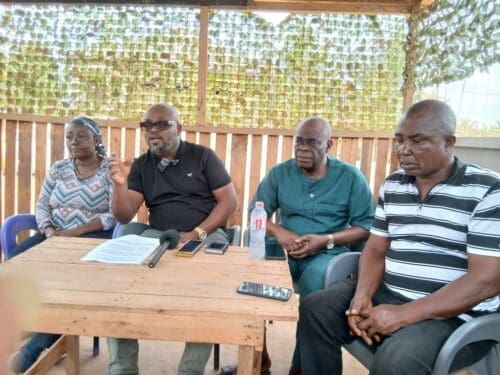
At a press conference held at CometHill at Brekusu on Friday October 9, 2026, Director of Comet Properties Limited, Nana Yaw Adom, alleged that groups of persons armed with dangerous weapons have entered portions of the company’s lands, destroyed property and attempted to sell disputed parcels to third parties.

He told journalists at a press conference that when the management of estate developing company confronted the illegal claimant to its land at Comet Estate, the developer claimed he had purchased the land from the Owoo family.
Nana Yaw Adom asserted that the company has petitioned President John Dramani Mahama to advise the illegal claimant to stop trespassing on its legally registered land.

He further claimed that whenever the company confronted the illegal developer, the individual would drop the names of top figures at the Jubilee House and within the police hierarchy.

He alleged these officials were actively supporting the developer’s encroachment on the company’s registered land, which is situated near the Brekusu Police Station.

He commended President John Dramani Mahama for his prompt response to the petition, noting that the President had directed the Crime Officer of the Accra Regional Police Command to intervene, investigate the matter, and ensure that the law was upheld.

In acting on President Mahama’s directive, a senior police officer invited both the management of Comet Estates and the illegal land developer to a meeting.

He noted that the police have instructed both parties to provide their legal indentures, certificates, and land documents so investigator can determine the true owner of the disputed property.

He pointed out that although the illegal claimant was warned to halt all development, he defied the order.

Instead, he hired masons and deployed heavily built land guards to continue constructing a house on the land, creating tension and insecurity within Comet Estate.

“As of today, Friday, October 9, 2026, while we were preparing to brief the press to expose these illegal activities, the masons and their laborers were busily constructing buildings on the disputed land, even though a special police investigator has been officially assigned to look into the matter,” Nana Yaw Adom revealed after conducting journalists around the site to give them firsthand information on exactly what is happening on the disputed land at Comet Estate.

According to him, some of the individuals allegedly involved have claimed to be acting on behalf of influential persons within the Ghana Police Service and political authorities at the Presidency.

The company, however, stressed that the allegations are claims that require independent investigation and verification.

Call for presidential investigation

Nana Yaw Adom called on President Mahama to institute an inquiry into the alleged claims of political and police connections made by persons the company identifies as landguard leaders.

He said petitions on the matter had already been submitted to the Presidency, Interior Minister and and appealed for direct intervention to restore what he described as peace and sanity to the Comet Estate.

«“Laws should work in Ghana. There should be order in Ghana,” Nana Yaw Adom said.»

The company also called on the national security authorities to assist in dealing with what it described as an organised group allegedly operating on its lands.

Allegations against persons identified as landguard leaders

Management specifically mentioned individuals it identified as Nii Sowah Shippi, also known as Mawuko, Kwabena Debrah and a Nigerian national identified as Jeremy.

According to the company, Mawuko is allegedly leading a group of landguards operating in the area, while some of the individuals are alleged to have claimed connections to powerful persons within the Police Service or political leadership.

Comet Properties alleged that such claims have made some police officers reluctant to arrest or investigate the individuals.

The company did not provide independent evidence at the press conference to establish that the named individuals are in fact acting on behalf of senior police or political officials.

The allegations therefore remain subject to investigation and the right of the accused persons to respond.

Company traces dispute to land ownership claims

Comet Properties said it was established in 2002 as a real estate development company specialising in converting undeveloped land into planned communities and providing infrastructure for residents.

Its flagship project, the company said, is the Comet Estate, located within the Akuapem South Municipality.

According to the company, the estate covers approximately 1,500 acres and currently has a population of about 15,000 residents, although its earlier description at the press conference referred to a potential population of about 20,000.

Management said the development was undertaken under the appropriate planning arrangements and that the company acquired its interests from traditional landholding families in Brekuso, Akorpman and surrounding communities.

It said the company subsequently obtained planning scheme approval from the Akuapem South Municipal Assembly.

Company disputes alleged overlap with Odai Ntow family lands

A significant part of the dispute, according to Comet Properties, concerns competing claims involving the Odai Ntow family of Ashongman and Kwabenya.

The company referred to the historical Bosompim v. Martei (1904) judgment and related judgment plan, as well as a statutory declaration said to have been registered in 1977.

According to Comet Properties, the relevant documents establish the boundaries of lands associated with the Odai Ntow family and demonstrate that those lands are distinct from the lands acquired from the Brekuso traditional landowners for development of the Comet Estate.

The company insists that its lands do not overlap with the lands claimed by the Odai Ntow family.

Management, however, alleges that some persons associated with the Odai Ntow family have repeatedly entered portions of the Brekuso lands occupied by Comet Properties and purportedly sold parcels to third parties.

The company further alleged that landguards have been used to enforce such transactions.

These claims were presented by Comet Properties and have not, in the material provided, been independently adjudicated or established by a court.

Owoo family dispute

The company also outlined a separate dispute involving the Owoo family of Accra.

According to Nana Yaw Adom, Comet Properties acquired additional lands from the Asona family of Brekuso in 2002, part of which involved approximately 67 acres released to the Owoo family pursuant to a settlement between the Owoo family and the Asona family.

He said the Owoo family subsequently sold approximately 25 acres of the released land to Comet Properties for what he described as valuable consideration of about GH¢400 million, which the company said was fully paid.

However, Comet Properties alleges that in 2013, the Owoo family subsequently entered into transactions involving the same area and began selling portions of land adjoining the 67-acre parcel.

The company claims that landguards were subsequently deployed in connection with those transactions, resulting in multiple legal disputes and confrontations.

Seven foundations allegedly destroyed

One of the most serious incidents cited by the company allegedly occurred in November 2024, when persons said to be associated with Mawuko allegedly entered disputed portions of the Comet Properties development.

The company claims that seven building foundations were destroyed, with the total value of the damage estimated at more than US$500,000.

According to Nana Yaw Adom, the incident was reported to the police, but the company was dissatisfied with the subsequent response.

He further alleged that despite legal action and an injunction obtained against Mawuko and others, the group allegedly continued to operate on the disputed lands.

Comet Properties claims that as many as 50 persons have been maintained on the land as part of the alleged landguard operation.

The company is therefore asking the authorities to enforce existing court orders and prevent further destruction or occupation of the disputed properties.

Security concerns

Management said the alleged activities have gone beyond an ordinary civil land dispute and have become a security concern because of the alleged use of armed groups, threats and destruction of property.

It argued that disputes over land ownership should be resolved through the courts and other lawful mechanisms rather than through the use of force.

The company also expressed concern that repeated changes in political administrations could be exploited by land actors who allegedly invoke the names of newly appointed political authorities to pursue claims over disputed properties.

According to the company, such conduct undermines confidence in Ghana’s land administration system and discourages private investment.

Impact on residents and investors

Comet Properties said the alleged insecurity poses a threat not only to its corporate interests but also to residents who have invested in homes and businesses within the estate.

The company described Comet Estate as a community of law-abiding residents who have invested substantial resources in the area and are entitled to protection under Ghanaian law.

It warned that continued clashes, alleged landguard activities and destruction of property could undermine the development of the community and create fear among residents.

Company seeks protection, enforcement of law

Nana Yaw Adom said Comet Properties was not asking for preferential treatment but for the enforcement of the law and protection of legitimate investments.

He urged the police, national security authorities and other relevant state institutions to investigate the allegations independently and ensure that persons found to have engaged in criminal conduct are dealt with according to law.

He also appealed to the President to investigate claims that persons involved in the alleged activities have links to senior officials within the Police Service or political authorities.

The company said it was prepared to provide relevant documents, including land acquisition records, planning documents, court processes, judgment plans and other materials relating to the disputed properties, to assist any official investigation.

Broader landguard challenge

The allegations come against the backdrop of Ghana’s longstanding struggle with landguardism, a phenomenon that has frequently been associated with violent enforcement of competing land claims, illegal sale of land, threats to developers and destruction of property.

Legal experts and civil society groups have repeatedly argued that land ownership disputes must be settled through established legal and customary processes rather than through private enforcement groups.

For Comet Properties, the immediate concern is that the alleged activities at its estate could escalate unless state institutions intervene.

The company maintained that it remains committed to the development of the Comet Estate but insisted that such investment can only continue in an environment where the rule of law is respected.

“We are a responsible corporate organisation and need a peaceful environment to carry out our business,” Nana Yaw Adom said, reiterating the company’s appeal for urgent state intervention.

Comet Properties Limited says it is seeking an independent investigation into the allegations, protection for residents and investors, and enforcement of all applicable court orders and laws governing the disputed lands