

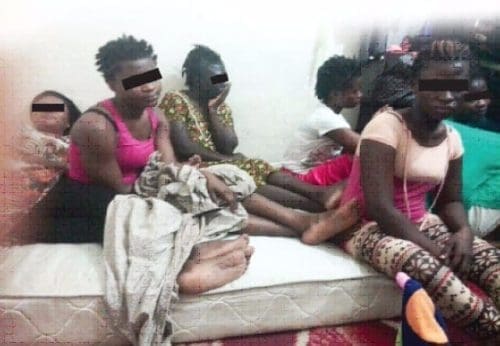
The US State Department has lifted Ghana to Tier 1 in its 2026 Trafficking in Persons Report, published on 8 October, after sharp rises in prosecutions and rescued victims.
Tier 1 is the highest of the report’s four rankings. It means a government fully meets the minimum standards for eliminating trafficking set by US law. Ghana had sat on Tier 2 every year since 2018, when it climbed off the Tier 2 Watch List.
The upgrade puts Ghana among the few African countries with top-tier status and gives Accra a stronger hand with donors and partners on labour migration. The same report dropped Hong Kong and the Republic of the Congo to Tier 3, the bottom ranking, and kept China there.
What changed in Ghana
The report credits Ghana with prosecuting and convicting more traffickers and identifying and referring more victims to care. In 2025, the government investigated 222 trafficking cases, prosecuted 212 suspects and convicted 28 traffickers, the report said.
Officials identified 2,331 victims during the year: 492 of sex trafficking, 1,302 of forced labour and 537 of unspecified forms. That is almost three times the 794 victims identified in 2024. The government also identified and paid to repatriate 567 Ghanaians exploited abroad.
The State Department pointed to more money for anti-trafficking work, extensive training for front-line officers, labour agreements with foreign governments to protect migrant workers and joint operations with INTERPOL against online scam networks.
The ranking marks a goal the government set openly. In July 2025, when Minister for Gender, Children and Social Protection Agnes Naa Momo Lartey inaugurated a new Human Trafficking Management Board, she urged its members to push the country to Tier 1.
Gaps the report flags
The upgrade does not mean the problem has gone. The report said officials lacked the specialised training and equipment to investigate trafficking linked to cybercrime. Shelter space for adult victims remained short, and some officers used their own money to give victims temporary help.
It also noted that Ghanaian law does not bar employers or agents from charging workers recruitment fees, which leaves migrants open to debt and exploitation. Traffickers continued to lure Ghanaians abroad with fake offers of well-paid jobs in security and agriculture.
International Justice Mission (IJM) Ghana, which works on child trafficking on Lake Volta, welcomed the ranking on 9 October but warned that children still face forced labour in fishing, domestic work, street hawking, farming and mining. IJM said Tier 1 status should push the country to strengthen its programmes rather than ease off.
Winners and losers elsewhere
Israel also rose to Tier 1, while Papua New Guinea moved up from Tier 3 to the Tier 2 Watch List. Seychelles fell from Tier 1 to Tier 2.
Hong Kong’s drop to Tier 3 drew an immediate rebuttal. On 9 October, the city’s government rejected the rating as unfounded and said trafficking had never been a prevalent problem there. A spokesman said authorities carried out about 12,100 initial screenings in 2025 and identified 15 victims, all Hong Kong residents deceived by job scams in Southeast Asia. He also accused Washington of double standards.
Hong Kong had already slipped to the Tier 2 Watch List in 2024. The State Department has repeatedly criticised the city’s lack of a stand-alone trafficking law and the rule requiring foreign domestic workers to leave within two weeks of a contract ending.
The other Tier 3 governments named in the report include North Korea, Iran, Russia, Burma, Belarus, Cambodia, Cuba, Laos, Nicaragua, Sudan, South Sudan and Venezuela. Under US law, Tier 3 governments can face restrictions on some American non-humanitarian and non-trade assistance.
Congressional reaction
Representative Chris Smith, the New Jersey Republican who wrote the Trafficking Victims Protection Act of 2000 that created the annual report, said China’s continued Tier 3 ranking reflected Beijing’s use and enabling of forced labour, including against Uyghurs and other minorities. He also cited the report’s finding that a gender imbalance of tens of millions more males than females, a legacy of the one-child policy, fuels demand for sex trafficking and forced marriage in China.
Smith said the downgrades of Hong Kong, the Republic of the Congo and Seychelles should warn those governments, and he singled out Ghana and Israel as proof that stronger enforcement and victim protection produce results. Tier 3, he said, “should serve as a dire warning and a call to action.”
The 2026 report assesses government efforts between 1 April 2025 and 31 March 2026.

