

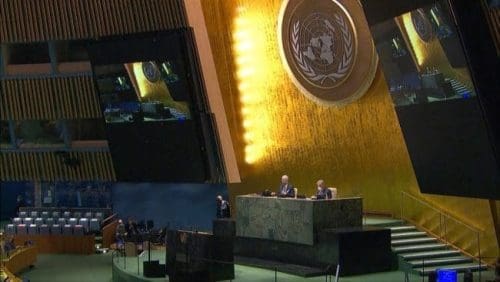
Ghana’s government has imposed strict new restrictions on who can attend the 80th United Nations General Assembly in New York this September, marking a sharp departure from previous years when large delegations traveled to the annual diplomatic gathering.
President John Mahama’s administration announced that all government officials must now receive written permission from the Chief of Staff before participating in any UN-related events. The sweeping directive covers ministers, deputy ministers, civil servants, and heads of state enterprises.
Felix Kwakye Ofosu, spokesperson for the president, said the measure reflects Mahama’s broader “Resetting Ghana” agenda aimed at cutting government spending. Officials who ignore the new rules face disciplinary action under public service conduct codes.
The restrictions extend beyond the main assembly sessions. Side meetings, panel discussions, bilateral talks, and even reception invitations now require advance approval. Any pending or previously accepted invitations have been suspended pending review.
This represents a notable shift for Ghana, which has traditionally sent sizeable delegations to the UN’s flagship annual meeting. The country’s diplomatic presence at international forums has long been viewed as important for maintaining its profile on the global stage.
The timing coincides with Ghana’s ongoing economic challenges and the new government’s emphasis on fiscal discipline. Mahama, who returned to office in January after defeating the previous administration, has repeatedly stressed the need to reduce unnecessary government expenditure.
Only officials specifically cleared by the Chief of Staff will join Ghana’s official delegation to New York. The presidency described the approach as ensuring “lean, coherent, and cost-effective national representation” at the September gathering.
The UN General Assembly typically attracts thousands of officials, diplomats, and business leaders from around the world. Ghana’s scaled-back participation could signal broader changes in how the West African nation approaches international engagement under its current leadership.

