What Could Help Strengthen Power Supply in Ghana’s Coastal Cities?

0

A major fault on Ghana’s national grid triggered widespread outages in July 2026, affecting Accra, Kumasi and parts of northern Ghana and forcing several power plants to shut down. The episode brought dumsor — intermittent power supply — back into public attention. Its effects extended beyond electricity: Ghana Water Limited reported disruptions at treatment plants and pumping stations, temporarily affecting the production and distribution of potable water in several areas.

In such a situation, households face inconvenience, while the cost for businesses is even higher. A World Bank analysis of Ghana’s previous energy crisis found that each additional day of blackout was associated with an average 11% decline in weekly profits. The same study found that almost nine in ten firms experienced power outages, while electricity interruptions represented significant losses in annual sales. The lesson is straightforward: a more resilient power system needs enough dependable generation capacity to meet demand when the system comes under pressure.

For Ghana’s coastal cities, the location of electricity supply is particularly relevant. Accra and Tema concentrate population, commerce, industry and logistics, while coastal ports and industrial facilities depend on reliable power. This makes the coast a relevant setting for examining generation options that could serve major centres of demand.

Ghana already has experience with floating electricity generation. Gas-fired power vessels have operated in the country since the mid-2010s. In 2017, a 470 MW Karpowership replaced an earlier 235 MW vessel and began operating in September. It was subsequently relocated from Tema to the Western Region to use Ghanaian natural gas. This provides a local reference point for the floating-generation model, although a nuclear facility would require a different technical and regulatory framework.

In a floating power facility, generating equipment is installed on a vessel or platform and connected to the local electricity grid. The arrangement can reduce the land required for the generating plant and allow capacity to be located near coastal industrial and population centres. Depending on the design and supporting infrastructure, it may also offer flexibility in where the facility is deployed.

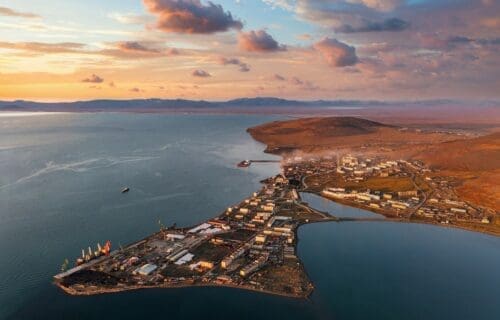
Floating generation is not limited to gas- or oil-fired plants. The model has also been applied to nuclear power, with Rosatom’s Akademik Lomonosov providing an operating example. Equipped with two KLT-40S reactors with a combined electrical capacity of 70 MW, the plant supplies electricity and heat to Pevek and surrounding areas in Russia’s isolated Chukotka power system. By January 2025, it had generated its first billion kilowatt-hours of electricity, according to World Nuclear News.

The plant has also attracted interest from nuclear specialists in Africa. Group Executive: Power and Industry in South African Nuclear Energy Corporation (NECSA) Sengiphile Simelane, who visited the plant, shared: “The introduction of the FNPP has been a welcome relief to the residents and businesses of Pevek, offering benefits such as carbon-free and cheaper electricity, a revival of the mining sector, and a reduction in regional unemployment”.

The experience is being extended. Four additional floating power units are under construction in Russia to provide electricity for the Baimsky mining project in Chukotka. The new units are designed around RITM-200 reactors, with each unit equipped with two reactors. The concept is entering the global market. For example, in June 2024, Russia and Guinea signed a memorandum to consider the possibility of developing such units, while Indonesia explored potential regulatory approaches for their use.

For Ghana, floating nuclear generation would need to be considered within the country’s wider electricity strategy. Renewable energy and storage can contribute to a diversified system, while nuclear power can provide dependable generation. A floating facility would combine that role with a coastal deployment model, making it relevant to discussions about electricity supply for industrial and urban demand centres.

Ghana’s experience with floating gas-fired generation provides a useful starting point for examining what a nuclear version could offer. The operating record of Akademik Lomonosov gives that discussion a practical reference beyond the concept stage. For Ghana’s coastal cities and industrial centres, the next question is how such a facility could fit local demand, grid connections and the country’s developing nuclear framework. Economic, environmental and regulatory assessment would be essential to establishing that fit.
 

Ghana urged to regulate social work after new protection laws

0

Social worker Alhassan Mbalba has urged Ghana to regulate social work by law, arguing that new social protection laws launched on 7 October cannot succeed without trained professionals.

Mbalba, a social protection expert who attended the launch at the Marriott Hotel in Accra, made the case in an article published on 8 October. He said Parliament should create a statutory regulator for the profession and make “social worker” a legally protected title.

The call puts pressure on a Bill that professional bodies have chased for years. Social work has been practised in Ghana since the 1940s, yet no law sets who may practise it, how they are licensed or who disciplines them.

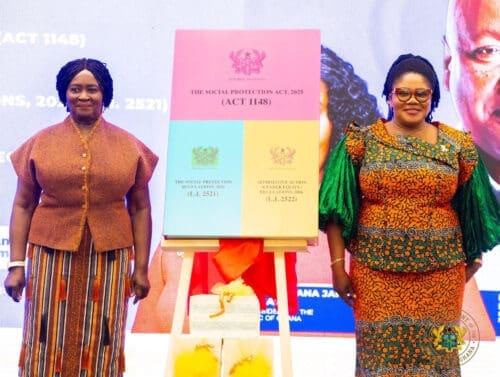
Vice-President Professor Naana Jane Opoku-Agyemang launched three instruments at the event: the Social Protection Act, 2025 (Act 1148), the Social Protection Regulations, 2026 (L.I. 2521) and the Affirmative Action (Gender Equity) Regulations, 2026 (L.I. 2522). The Act creates a coordinated national system covering social assistance, social insurance and emergency support, and provides for a Social Protection Fund. L.I. 2522 puts into effect the Affirmative Action (Gender Equity) Act, 2024.

The Vice-President said the laws must reach the most vulnerable, widen opportunities for women and ensure social protection money reaches intended beneficiaries. She told the audience the framework had to deliver change beyond paperwork, pointing to existing programmes such as the Livelihood Empowerment Against Poverty (LEAP) cash transfer, school feeding, the National Health Insurance Scheme and Free Senior High School. The World Bank and UNICEF commended the government and pledged further support.

Mbalba said the government’s commitment to resetting social protection was clear, but warned that implementing the laws depends on social workers who serve children, older people, persons with disabilities and families in hardship. “A stronger social protection system requires a stronger professional social work workforce,” he wrote.

He noted that Ghana trains social workers at the School of Social Work in Osu, founded in 1945, and at universities including the University of Ghana, Kwame Nkrumah University of Science and Technology, the University for Development Studies and Methodist University, from first degree to doctorate.

He pointed to the United Kingdom, where each of the four nations has its own social work regulator, as a model. In the United States, licensing is handled state by state. Regulation, he argued, would also help Ghanaian social workers seeking jobs abroad have their qualifications recognised, which ties in with the government’s Work Abroad Programme run through the Youth Employment Agency.

A Bill to set up a regulator was introduced in the Eighth Parliament but did not pass. Mbalba said stakeholders are consulting on a similar Bill for the Ninth Parliament.

Practitioners have pressed for the law repeatedly. The Social Workers Association of Ghana called for its passage in March 2023 and again in March 2025, saying licensing would weed out unqualified practitioners. At a World Social Work Day event in March 2024, UNICEF said it and the US Agency for International Development were supporting Ghana to build the missing regulatory framework.

In May 2026, the Ghana Association of Social Workers told Minister for Gender, Children and Social Protection Dr Agnes Naa Momo Lartey that the proposed Social Work Council Bill had reached an advanced stage. The Minister said her ministry was ready to work with stakeholders on the framework.

Stablecoin gift funds borehole for Ashanti farming village

0

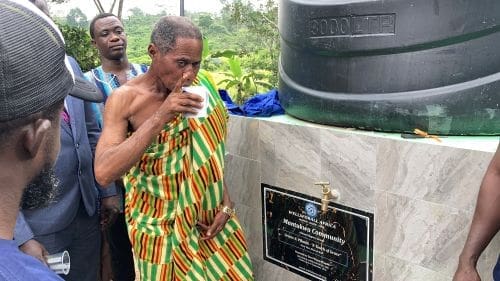
A US family’s US$8,792 stablecoin donation has paid for a borehole in Mantukwa, Ashanti Region, WellsForAll Africa’s first privately funded water project, the non-profit said on 8 October.

The project tests whether a model built inside a cryptocurrency community can draw ordinary donors who want proof their money reached the ground. WellsForAll’s first 25 boreholes were paid for through the Decentralized Hive Fund, a pool on the Hive blockchain where token holders propose, vote on and fund projects. This one came from the Pflaum family, who sent the money in USDT, a stablecoin pegged to the US dollar, in two transfers: US$500 in April and the balance in September.

The donors took no part in Hive’s governance. WellsForAll kept its existing practice of logging the project on the Hive blockchain, posting budgets, construction progress, GPS data, photographs and water test results as a public record.

Founder Samuel Owusu-Boadi said the private gift added a funding stream rather than replacing the old one. “Borehole #26 is not a move away from Hive or the DHF,” he said.

For Mantukwa, the change is practical. The farming community has relied on unprotected streams, rivers and rainwater, with residents, mostly women and children, spending about 30 minutes fetching water, according to WellsForAll. The new system puts a tap within a few minutes’ walk for an estimated 800 to 950 people.

Drillers went down 120 metres and struck the main aquifer at about 35 metres. An electric submersible pump set at 80 metres feeds a 3,000-litre overhead tank that gives the system pressure. WellsForAll said independent tests found no E. coli or coliform bacteria and that other parameters fell within World Health Organization limits. It did not name the laboratory.

Construction cost US$7,850, with US$942 going to programme coordination. The organisation describes that as a 12 per cent coordination cost, which holds against construction; it comes to about 11 per cent of the total. Spread across the people expected to use it, the borehole cost roughly US$9 to US$11 a head.

The village’s chief and elders took part in the project, and a Water Management Committee will run and maintain the system after handover. Broken rural water points are a long-running problem in Ghana, and local committees are the usual answer for keeping pumps working.

Rural Ghanaians remain the worst served. Minister for Works and Housing Kenneth Gilbert Adjei said in January that about 74 per cent of rural residents have basic water services, against 96 per cent in towns and cities, and that only 44 per cent of the national population has safely managed water. He put the number of Ghanaians still relying on unimproved, limited or surface sources at about four million.

The Pflaum family funded the borehole in honour of their daughter, who started a charitable initiative, A Touch of Grace, at the age of 11. The family said being able to follow the project from funding to construction, and check it on the blockchain, gave them confidence their money was used as intended.

WellsForAll says it raised and spent about US$191,000 on water infrastructure between 2022 and 2025, and that its 26 water points now serve more than 20,000 people. It earlier put Hive funding for its first 25 boreholes at about US$150,000.

Borehole 27 is planned for Buoyem in the Bono East Region. The organisation says more than 50 communities are on its waiting list.

MTN Ghana backs SME award winners with Asia trade mission

0

Winners of the 2026 SME Ghana Awards will receive business insurance, mini-MBA training, investor introductions and an Asia trade mission under a package MTN Ghana announced on 10 October.

The package is meant to turn a night of trophies into practical help for growth. MTN and the awards organiser, SME GrowAfrica, presented it at the ceremony in Accra as an answer to four problems that hold small firms back: exposure to operational risk, thin management skills, limited access to finance and few routes into foreign markets.

Star Assurance Group is providing the insurance cover. MTN did not say which Asian country the trade mission will visit, which investors are involved or when the trip will take place.

Queen GAF Enterprise, an agro-processing and cosmetics business, was named SME of the Year and also won the Agri-Business Value Addition and Market Award and the Women Entrepreneur Award. Category winners included Ahodwo Farms Limited for agri-business production, Artivity Limited for creative arts, crafts and design, DemiPearl Company Limited for food, beverage and agro-processing, Binas Prime Enterprise for retail and consumer products, Bubune Africa Limited for product innovation and Excelsa Forestry Renewables Ghana Ltd. for sustainable enterprise and environmental, social and governance practice.

The awards close MTN’s year-long SME Accelerate Programme, which ran business clinics, pitching sessions and mini-MBA classes for participating firms. MTN said at the programme’s launch earlier this year that it had reached more than 400 entrepreneurs through its training clinics and planned to take it nationwide.

The scheme has had an uneven history. SME GrowAfrica has run the awards since 2013, but they returned in 2025 after a five-year break, this time with MTN as sponsor. Last year’s top prize went to Yesli Ice.

Angela Mensah-Poku, MTN Ghana’s Chief Enterprise Business Officer, said supporting small firms was central to the company’s inclusive growth agenda as it marks 30 years in Ghana. She said MTN would keep offering digital infrastructure, fintech products and enterprise support to help businesses work more efficiently.

Margaret Ansei, Chief Executive Officer of the Ghana Enterprises Agency, said small and medium-sized enterprises make up about 90 per cent of businesses in Ghana and called for sustained public and private support. She told the winners their prizes carried obligations. “Trophies need to be celebrated, but they come with their responsibilities as well,” she said.

Kwesi Ofori Jr., Executive Director of SME GrowAfrica, said the organisation would keep working with the winners to secure partners and investment. He urged them to build environmental, social and governance standards into their operations so their businesses could outlast their founders.

Ghana reaches top tier in US human trafficking report

0

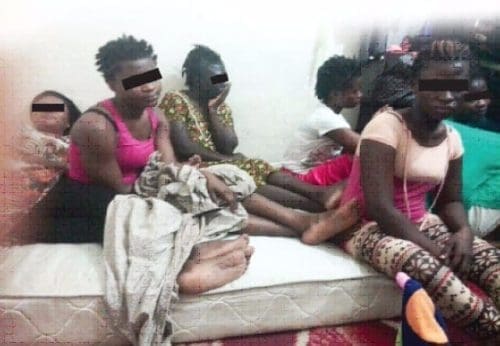
The US State Department has lifted Ghana to Tier 1 in its 2026 Trafficking in Persons Report, published on 8 October, after sharp rises in prosecutions and rescued victims.

Tier 1 is the highest of the report’s four rankings. It means a government fully meets the minimum standards for eliminating trafficking set by US law. Ghana had sat on Tier 2 every year since 2018, when it climbed off the Tier 2 Watch List.

The upgrade puts Ghana among the few African countries with top-tier status and gives Accra a stronger hand with donors and partners on labour migration. The same report dropped Hong Kong and the Republic of the Congo to Tier 3, the bottom ranking, and kept China there.

What changed in Ghana

The report credits Ghana with prosecuting and convicting more traffickers and identifying and referring more victims to care. In 2025, the government investigated 222 trafficking cases, prosecuted 212 suspects and convicted 28 traffickers, the report said.

Officials identified 2,331 victims during the year: 492 of sex trafficking, 1,302 of forced labour and 537 of unspecified forms. That is almost three times the 794 victims identified in 2024. The government also identified and paid to repatriate 567 Ghanaians exploited abroad.

The State Department pointed to more money for anti-trafficking work, extensive training for front-line officers, labour agreements with foreign governments to protect migrant workers and joint operations with INTERPOL against online scam networks.

The ranking marks a goal the government set openly. In July 2025, when Minister for Gender, Children and Social Protection Agnes Naa Momo Lartey inaugurated a new Human Trafficking Management Board, she urged its members to push the country to Tier 1.

Gaps the report flags

The upgrade does not mean the problem has gone. The report said officials lacked the specialised training and equipment to investigate trafficking linked to cybercrime. Shelter space for adult victims remained short, and some officers used their own money to give victims temporary help.

It also noted that Ghanaian law does not bar employers or agents from charging workers recruitment fees, which leaves migrants open to debt and exploitation. Traffickers continued to lure Ghanaians abroad with fake offers of well-paid jobs in security and agriculture.

International Justice Mission (IJM) Ghana, which works on child trafficking on Lake Volta, welcomed the ranking on 9 October but warned that children still face forced labour in fishing, domestic work, street hawking, farming and mining. IJM said Tier 1 status should push the country to strengthen its programmes rather than ease off.

Winners and losers elsewhere

Israel also rose to Tier 1, while Papua New Guinea moved up from Tier 3 to the Tier 2 Watch List. Seychelles fell from Tier 1 to Tier 2.

Hong Kong’s drop to Tier 3 drew an immediate rebuttal. On 9 October, the city’s government rejected the rating as unfounded and said trafficking had never been a prevalent problem there. A spokesman said authorities carried out about 12,100 initial screenings in 2025 and identified 15 victims, all Hong Kong residents deceived by job scams in Southeast Asia. He also accused Washington of double standards.

Hong Kong had already slipped to the Tier 2 Watch List in 2024. The State Department has repeatedly criticised the city’s lack of a stand-alone trafficking law and the rule requiring foreign domestic workers to leave within two weeks of a contract ending.

The other Tier 3 governments named in the report include North Korea, Iran, Russia, Burma, Belarus, Cambodia, Cuba, Laos, Nicaragua, Sudan, South Sudan and Venezuela. Under US law, Tier 3 governments can face restrictions on some American non-humanitarian and non-trade assistance.

Congressional reaction

Representative Chris Smith, the New Jersey Republican who wrote the Trafficking Victims Protection Act of 2000 that created the annual report, said China’s continued Tier 3 ranking reflected Beijing’s use and enabling of forced labour, including against Uyghurs and other minorities. He also cited the report’s finding that a gender imbalance of tens of millions more males than females, a legacy of the one-child policy, fuels demand for sex trafficking and forced marriage in China.

Smith said the downgrades of Hong Kong, the Republic of the Congo and Seychelles should warn those governments, and he singled out Ghana and Israel as proof that stronger enforcement and victim protection produce results. Tier 3, he said, “should serve as a dire warning and a call to action.”

The 2026 report assesses government efforts between 1 April 2025 and 31 March 2026.

Shelter Afrique opens FCFA 60 billion West African housing bond

Shelter Afrique Development Bank (ShafDB) has opened a FCFA 60 billion sustainable bond to West African investors, with subscriptions closing on 30 October 2026, to fund affordable housing.

The Nairobi-based lender wants to finance housing developers in the same currency they earn, which removes the exchange-rate risk that comes with dollar loans. The offer, worth about US$100 million, is the bank’s first bond with a sustainability label.

It comes in two parts: a five-year tranche paying 6.10 per cent and a seven-year tranche paying 6.30 per cent. Subscriptions opened on 7 October. Each tranche carries a two-year grace period on principal repayment, with notes priced at FCFA 10,000 each, according to details the arranger presented to investors at a roadshow in Abidjan in September.

The need is large. ShafDB cites World Bank Group estimates that put the housing shortfall in the West African Economic and Monetary Union (WAEMU) at about 3.5 million units, with roughly 250,000 more homes needed each year as populations grow and cities expand. WAEMU’s eight members, Benin, Burkina Faso, Côte d’Ivoire, Guinea-Bissau, Mali, Niger, Senegal and Togo, share the CFA franc, which is pegged to the euro at FCFA 655.957.

Dakar-based CGF Bourse is lead arranger. The International Finance Corporation (IFC), the World Bank Group’s private-sector arm, and Ecobank Group, through Ecobank Senegal, have signed on as anchor investors. The regional financial markets regulator has approved the issue.

Nabil Mahfoudh, ShafDB’s Director of Treasury, said the bank was “connecting local savings with urgent development needs” by expanding in West African capital markets.

ShafDB is no newcomer to the region. It has tapped the WAEMU market five times before, starting in 2014, when CGF Bourse also served as arranger. Across all markets it has completed 11 bond issues, the most recent a NGN 46 billion (about US$110 million) raise in Nigeria in April 2022.

The bank built its Sustainable Financing Framework with the Global Green Growth Institute. S&P Global Ratings confirmed the framework aligns with the International Capital Market Association’s green and social bond principles and sustainability bond guidelines.

The issue sits within ShafDB’s push to become a full pan-African multilateral development bank. Founded in Lusaka, Zambia, in 1981, it is owned by 44 African countries, and some are increasing their commitment. On 22 July 2026, Côte d’Ivoire’s cabinet approved a US$17 million loan from the Arab Bank for Economic Development in Africa that will lift the country’s stake in ShafDB from 4 per cent to 10 per cent and secure it a permanent board seat.

The bond is large against the bank’s recent lending. ShafDB more than doubled loan disbursements to US$63 million in 2025, while profit rose 20 per cent to US$2.14 million and its net loan portfolio grew 29 per cent to US$174 million. At full subscription, the West African raise alone would equal about 1.6 times what the bank disbursed in the whole of last year.

Managing Director and Chief Executive Officer Thierno-Habib Hann said aligning loan currencies with project revenues would cut borrowers’ exposure to foreign-exchange risk.

East Africa is next. ShafDB plans a US$500 million multi-currency bond in Kenya, Uganda, Tanzania and Rwanda in the first quarter of 2027.

Black Canadians demand enforceable reparatory justice in UN rights declaration

0

Black community groups in Canada want a planned United Nations declaration on the rights of people of African descent to include binding commitments on reparatory justice, not just symbolic recognition.

Amnesty International Canada and the Black Canadians Civil Society Coalition (BCCSC) released their findings at a press conference in Ottawa on 8 October 2026. The report draws on consultations held in Toronto, Wolfville in Nova Scotia, and Ottawa from 17 to 20 February. Those sessions fed community recommendations to the UN Permanent Forum on People of African Descent, which is drafting the declaration.

“Black communities have been clear: recognition without enforcement is not enough,” said Ketty Nivyabandi, Secretary General of Amnesty International Canada’s English-speaking section.

Seven demands for Ottawa

The groups urged the Canadian government to:

  • appoint an independent Black Equity Commissioner with enforcement powers and protection from political interference
  • collect race-based data under community-controlled governance
  • recognise the collective rights of historic Black communities, including African Nova Scotians’ claims to ancestral lands
  • fund Black-led institutions and legal defence over several years
  • regulate artificial intelligence (AI) and surveillance technology to remove anti-Black bias, including through independent audits
  • teach Black Canadian history in schools
  • remove barriers facing Black newcomers in immigration, housing and the recognition of qualifications

Participants said they were tired of government pledges with no timelines or consequences. They want the final declaration to be binding, specific and drafted together with people of African descent.

Lerato Chondoma, a director of the BCCSC, said communities had taken part knowing that past consultations often ended without action. The coalition called on Canada to set out publicly, with timelines and benchmarks, how it will act on the recommendations.

The report’s release coincides with the final days of a visit to Canada by Ashwini K.P., the UN Special Rapporteur on contemporary forms of racism. Her visit runs from 28 September to 9 October.

Momentum led from Africa

The push for reparations has gathered pace at the UN this year. On 25 March 2026, the General Assembly adopted a Ghana-led resolution, backed by the African Union and the Caribbean Community, recognising the trafficking and chattel enslavement of Africans as the “gravest crime against humanity”. It also described reparatory justice as a concrete step towards remedying historical wrongs. The resolution passed with 123 votes in favour and three against, from the United States, Israel and Argentina. Fifty-two countries abstained, including the United Kingdom and all 27 European Union members.

The draft declaration being prepared by the Permanent Forum is meant to guide states in tackling racial discrimination and the lasting harms of colonialism and slavery.

Angola, Nigeria, Kenya most attacked in EMEA, Check Point says

0

Organisations in Angola, Nigeria and Kenya faced more cyber attacks in September 2026 than those in any other country in Europe, the Middle East and Africa (EMEA), according to the Israeli-American security firm Check Point Software Technologies.

Its research arm, Check Point Research, said in its monthly threat report released on 9 October that the average organisation in Angola faced 5,967 attacks a week, up 96 per cent on a year earlier. Nigerian organisations recorded 5,740 attacks a week, more than double the previous year’s level, and Kenyan organisations 4,303, a 43 per cent rise. In South Africa, the figure was 2,499, up 22 per cent.

Across Africa, organisations averaged 3,701 attacks a week, second only to Latin America. That is up from 3,335 in August. Government, financial services, and energy and utilities were the most targeted sectors on the continent.

Worldwide, the average organisation faced 2,803 attacks a week in September, up 16 per cent from August and 48 per cent from a year earlier. Education was the most attacked sector globally, at 6,656 attacks per organisation a week, as the new academic year began.

Ransomware eases from August peak

Check Point counted 824 publicly reported ransomware attacks in September, 53 per cent more than a year earlier. That is down from 1,042 in August.

The most active group was The Gentlemen, which accounted for 13 per cent of published attacks. The group is behind a breach at MIP Holdings, a South African software supplier to insurers, that exposed customers of about 45 insurance companies. MIP’s Chief Executive Richard Firth confirmed the company paid a ransom after the June attack in return for a promise that the stolen data would be destroyed, TechCentral reported. The attackers instead began extorting insurers directly and published policyholder records, including names and identity numbers, on a dark web leak site.

Lorna Hardie, Check Point’s Regional Director for Africa, said the figures showed “cyber risk increasing in both volume and breadth”. She urged organisations to adopt security that blocks threats before they cause disruption, rather than relying on separate, disconnected tools.

The report also flagged a rise in phishing and growing exposure of sensitive data through staff use of generative artificial intelligence (AI) tools. In August, Check Point found that one in every 43 enterprise prompts to generative AI tools posed a data-exposure risk.

B2B trade could drive Africa’s stablecoin boom, says GSN chief

0

Business payments, not remittances, could become the main use of stablecoins in Africa, according to Ryan Kirkley, Chief Executive of the digital settlement firm Global Settlement Network (GSN). He warned, however, that faster transfers will not cut costs unless banks and liquidity providers can reliably convert the money at either end.

Stablecoins are digital tokens pegged to a currency, usually the United States (US) dollar. Their use by businesses is growing fast. Consultancy McKinsey estimated in February that business-to-business stablecoin payments reached about US$226 billion a year, based on December 2025 activity. That is roughly 60 per cent of genuine stablecoin payment volume, though still a tiny share of global business payments.

“I think B2B trade has the potential to become one of the largest sources of stablecoin payment volume in Africa,” Kirkley said in written responses to NewsGhana.

A dollar problem, not a technology problem

For African firms, Kirkley said, demand comes down to access to foreign currency. He gave the example of a Nigerian electronics importer buying stock from Shenzhen. The importer may have customers waiting and enough naira in the bank, but still face weeks of delay obtaining the dollars to pay the supplier.

He expects the biggest disruption in the chain of correspondent banks that sits between a bank in Accra and a supplier’s bank in Guangzhou. Each extra account in that chain, he said, adds liquidity costs, reconciliation work and another possible delay. The Bank for International Settlements (BIS) has documented a long decline in correspondent banking relationships, which has left some smaller economies with limited access to international payments.

Other parts of the system will stay. “What remains essential is trade credit, FX liquidity, sanctions screening and local-currency access,” Kirkley said. A letter of credit still protects a supplier against non-payment, and a bank still has to check the customer and the underlying trade.

Savings depend on the exchange rate

Kirkley said the real cost of cross-border payments often lies in currency conversion, not in the transfer itself. He used a Ghanaian importer paying US$300,000 to a supplier in Dubai as an example. A 1 per cent spread on that payment costs US$3,000, however cheaply the stablecoin transfer settles.

“A provider with limited liquidity can easily absorb the savings through its conversion spread,” he said. For businesses, he said, three things matter: the final amount the supplier receives, a guaranteed exchange rate, and the time the payment takes to complete.

Scale also matters. A provider quoting a good rate on US$1,000 may not have the depth to move US$500,000 without the price slipping, he said. That is why he argues banks and liquidity providers must commit funds in advance against defined settlement obligations.

Risks for small firms

Kirkley cautioned smaller businesses against assuming a stablecoin payment is safe simply because the token holds its dollar value. He listed several risks: the receiving provider may lack the liquidity to convert the funds; the issuer may have weak reserves or limited redemption rights; and a payment sent to a compromised wallet usually cannot be reversed. Different countries also regulate payment providers in different ways.

He added that a firm earning in cedis but holding dollar stablecoins remains exposed to movements in the cedi-dollar exchange rate. Before moving large sums, he said, he would want verified counterparties, clear redemption rights, institutional custody and a compliant banking route in place.

A role for banks and regulators

Kirkley said African banks could become infrastructure providers in their own right, not just intermediaries. They could supply local-currency liquidity, issue tokenised deposits backed by their balance sheets and settle directly with banks in markets such as the United Arab Emirates. He pointed to the BIS’s Project Agorá, which is testing how tokenised bank deposits and central bank money can support cross-border payments.

He said central banks must be involved from the start. If importers move a large share of their working capital into dollar stablecoins, he warned, it could reduce demand for local-currency deposits and limit central banks’ view of capital flows.

Ghana has started to set rules. Its Virtual Asset Service Providers Act, 2025 (Act 1154) requires firms promoting virtual assets to register with both the Bank of Ghana and the Securities and Exchange Commission. In February 2026, the central bank barred providers from mass advertising of virtual asset and stablecoin products without express permission, and ordered billboards in Accra taken down.

Kirkley expects adoption to concentrate first in established trade corridors with China, India, the UAE and Europe, where importers struggle to obtain dollars. By 2031, he said, a meaningful share of business payments in Africa’s main trade corridors could settle through stablecoins and tokenised bank money.

GSN, which builds settlement infrastructure for digital assets, raised US$11 million in pre-seed funding in May 2026 and says it has secured more than US$125 million in committed settlement liquidity.

Infantino urges more chances for African players at CAF summit

0

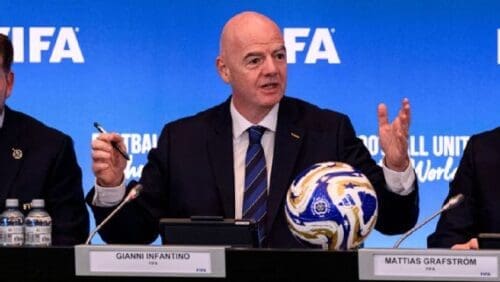
FIFA President Gianni Infantino said on Thursday, 8 October 2026, that young African footballers should not have their careers limited by where they were born. He was speaking at the opening of the Confederation of African Football’s (CAF) strategy conference on Cabo Verde’s Sal Island.

“African talent has shaped and is increasingly shaping the world,” Infantino told delegates in Santa Maria, the Cabo Verdean news agency Inforpress reported. He said FIFA had invested about US$1 billion in African football through its Forward development programme over the past decade.

His appeal came on the same day CAF President Patrice Motsepe pledged the backing of Africa’s 54 football associations for Infantino’s bid for a fourth term. The vote takes place in Rabat, Morocco, in March 2027. Africa is the largest voting bloc in FIFA’s 211-member Congress, and its support matters more now that UEFA, the Asian Football Confederation and CONCACAF have withdrawn theirs. Those three confederations turned against Infantino after his abandoned plan to sell up to 20 per cent of FIFA tournament rights to private investors.

The three-day conference, which ends on Friday, brings together CAF member association presidents, national team coaches and experts. They are reviewing African teams’ performances at the 2026 World Cup and planning for 2030.

Motsepe said the meeting gave each association more time to raise concerns than CAF’s general assemblies allow, and to identify where African football must improve. He called for closer cooperation between football associations, governments and sports ministries.

Infantino praised the hosts’ national team. On their World Cup debut, Cabo Verde’s Blue Sharks went unbeaten in a group that included Spain and Uruguay and reached the knockout stage.

Cabo Verde Football Federation President Mario Semedo said hosting the conference reflected international recognition of the islands’ football development and would promote Cabo Verde as a destination for tourism and international events.