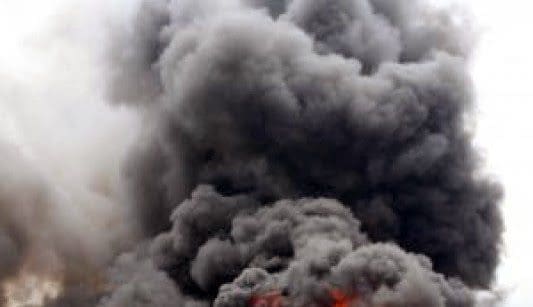
Riyadh airport attack kills 12 as Saudis vow response

0

An attack on Riyadh’s main airport killed 12 people and injured 309 on 10 October, Saudi authorities said, tripling the week’s death toll from strikes on Saudi airports.

Saudi Arabia’s General Authority of Civil Aviation (GACA) said the attack hit a passenger terminal at King Khalid International Airport on Saturday afternoon, according to a statement carried by China’s Xinhua news agency. The dead were four Saudi citizens and eight foreign residents: two Bangladeshis and one person each from the United States, Egypt, Jordan, Syria, Palestine and Sudan. Some of the injured were in serious condition, and operations at the airport were suspended for damage checks.

The scale matters for anyone flying through the Gulf. Before Saturday, Houthi-claimed attacks on Saudi airports had killed six people in four days. A Sudanese national was killed and eight people wounded at King Khalid airport, while two women from Morocco and Algeria were killed and 28 wounded at Abha airport in the south-west, in attacks on 6 and 7 October. On 8 October three Saudi citizens were killed in two attacks on the Riyadh airport, one of which struck a Saudia aircraft. Among the dead was Saudia pilot Captain Hamoud Ali Alkalthami.

Major General Turki al-Malki, spokesperson for the Saudi-led coalition fighting the Houthis, said on X early on Sunday that the coalition would respond firmly to what he called a terrorist attack, within the bounds of international humanitarian law. He later said coalition forces had shot down a ballistic missile and a drone fired from Yemen towards the kingdom.

Houthis warn airlines again

Houthi military spokesperson Yahya Saree on Sunday repeated the group’s warning to airlines, aviation staff and travellers. He said all Saudi airports and airspace, apart from those serving Mecca and Medina, remained open to attack. The group would keep up its policy of “airport for airport, blockade for blockade and escalation for escalation” until it met its aims, he said.

After Saturday’s attack, the Houthis also said they were ready to agree reciprocal steps with Riyadh to keep airports, seaports and other humanitarian facilities out of the fighting, Xinhua reported.

Airlines have already pulled back. The European Union Aviation Safety Agency advised carriers on 9 October to avoid more sections of Saudi airspace. Etihad Airways cancelled eight Abu Dhabi to Riyadh flights on 9 and 10 October, and Cirium data showed 169 of 378 scheduled departures from the Riyadh airport were cancelled or listed as not flying on one day of disruption.

Washington weighs its role

US President Donald Trump told reporters at the White House on Saturday that the United States might join Saudi strikes on the Houthis and would decide quickly, according to Xinhua. That would mark a shift. Trump has so far held back from expanding US military involvement and has not ordered American forces to resume strikes on the group. Reuters reported in September that he had turned down Saudi requests for direct US military intervention.

UN Secretary-General António Guterres on Sunday condemned the Riyadh attack, saying strikes on civilians and civilian infrastructure breach international law and must stop.

Fighting inside Yemen

The airport strikes run alongside a ground and air war in Yemen. Houthi-run al-Masirah TV said Saudi Arabia launched a fresh wave of strikes on Saturday on Sanaa International Airport, areas near the Bab al-Mandab Strait and several northern provinces. Yemeni government forces, backed by Saudi air power, began a large offensive on 5 October to retake Houthi-held territory.

The current round began in July. On 13 July Saudi Arabia struck Sanaa airport to stop an Iranian plane carrying a Houthi delegation home from Ali Khamenei’s funeral from landing there. The Houthis answered with missiles and drones on Abha airport, their first claimed attacks on Saudi Arabia since an unofficial truce took hold in March 2022.

The Houthis seized Sanaa in late 2014. A Saudi-led coalition entered the war in 2015 to back Yemen’s internationally recognised government, which now operates from Aden.
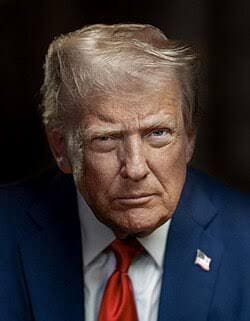

Trump says he is still weighing Hasan execution livestream

0

US President Donald Trump said on 10 October he had not decided whether to livestream Fort Hood gunman Nidal Hasan’s execution, though he suggested showing it might deter copycats.

His remarks to reporters, carried by Fox News, open a gap between the White House and Defense Secretary Pete Hegseth, who announced Thursday that Hasan’s death by firing squad would be public. Trump said there were arguments on both sides and that the final decision rested with him. “I know what the military would like to do,” he said.

The outcome matters because a livestream would have no modern precedent. The planned execution would be the first U.S. military execution since 1961, and the first public execution in the country since 1936. Hasan is set to become the first person to be executed by firing squad by the U.S. military since 1945.

Trump’s position has moved over two days. On 9 October he appeared to leave open the possibility that the federal government won’t livestream the execution, but also told reporters at the White House that he had approved it. A senior White House official, speaking on condition of anonymity, said Trump does not oppose the idea of livestreaming the execution but could change his mind.

Hasan, a former Army psychiatrist, was convicted in July 2013 of 13 counts of premeditated murder and 32 counts of attempted murder. He started shooting at the medical processing centre at Fort Hood, firing at troops who were collecting medical checks before they deployed. In his remarks on Saturday, Trump put the number of wounded at more than 20; the court record lists 32.

Pentagon spokesperson Sean Parnell said Hegseth recommended the firing squad and Trump approved it, with the order signed on 2 October. Acting Secretary of the Army Adam Telle set the execution for 3 December at 1pm local time at Fort Hood. Hegseth said the choice of a Thursday at 1pm, the approximate time, day of the week and location of the 2009 shooting, was obvious.

Opposition has crossed party lines. Republican Senator Thom Tillis of North Carolina said Hasan deserved to die but condemned the plan to stream the execution. Vice President JD Vance cast doubt on whether the Pentagon will livestream the execution and said he would not watch if it did. A senior US Catholic bishop and a US evangelical Christian leader voiced opposition to the plan, as did the UN human rights office, which said it would breach international law.

Federal Communications Commission chairman Brendan Carr said on CNBC that the potential livestream falls outside the commission’s regulatory power and that he would defer to Hegseth. Andrew Jay Schwartzman, an FCC specialist at the Benton Institute for Broadband & Society, said there is no legal basis for the commission to intervene in a broadcaster’s decision on whether to air a live execution.

Hasan’s side has also objected. His lawyer argued, according to ABC News, that televising the execution would subject Hasan to deliberate psychological degradation.

The date may still slip. Hasan could put the procedural steps on hold, potentially for years, with a habeas corpus appeal in the civilian federal court system. Army regulations require at least two media outlets to be selected as witnesses to a military execution. The Pentagon on Friday declined to say whether families of those killed would be invited to attend, as is common practice in US civilian executions.

SMEGA 2026 winners get insurance, training and Asia trade mission

0

Winners of the SME Ghana Awards (SMEGA) 2026 in Accra will receive insurance cover, mini-MBA training, introductions to international investors and a place on an Asia trade mission, organisers and MTN Ghana said.

The package moves the awards beyond a single night of trophies. It offers follow-on support to a group of businesses that make up about nine in 10 firms in Ghana and still struggle to raise finance and reach markets abroad.

Queen Gaf Enterprise, an agro-processing and cosmetics company led by Fuseini Gafaratu, was named SME of the Year. It also took the Agri-Business Value Addition & Market Award and the Women Entrepreneur Award. Gafaratu said she believes the business will one day grow into a conglomerate.

Other winners included Ahodwo Farms Limited (Agri-Business Production), Artivity Limited (Creative Arts, Crafts & Design), DemiPearl Company Limited (Food, Beverage & Agro-Processing), Binas Prime Enterprise (Retail & Consumer Products Trade), Bubune Africa Limited (Product Innovation) and Excelsa Forestry Renewables Ghana Ltd (Sustainable Enterprise & ESG Excellence).

Star Assurance Group will provide comprehensive business insurance to the winners. The organisers did not name the investors, the mini-MBA provider or the trade mission’s destination country.

SME GrowAfrica organises the awards. They close MTN Ghana’s year-long SME Accelerate Programme, which ran business clinics, pitching sessions and management training. At the launch of this year’s edition, MTN said the programme had reached more than 400 entrepreneurs and that the awards would cover 18 categories. SMEGA returned in 2025 after a five-year break.

Margaret Ansei, Chief Executive Officer of the Ghana Enterprises Agency (GEA), said small and medium-sized enterprises (SMEs) account for about 90 per cent of businesses in Ghana. She asked the winners to treat their awards as an obligation as well as a reward. “Trophies need to be celebrated, but they come with their responsibilities as well,” she said.

At the launch, Ansei listed limited access to finance, digital skills gaps, restricted market access and regulatory bottlenecks as the obstacles small firms still face. In June 2025, the GEA said such businesses made up 92 per cent of registered firms in Ghana and contributed about 70 per cent of gross domestic product.

Angela Mensah-Poku, Chief Enterprise Officer at MTN Ghana, said support for small businesses was central to the company’s plans as it marks 30 years in Ghana. She said MTN would keep providing digital infrastructure, fintech services and enterprise support to help them work more efficiently. MTN Ghana’s operating company, Scancom PLC, is listed on the Ghana Stock Exchange.

Mohammed Abubakari Siddiq, Senior Manager for SME Sales, Partnerships and Business Broadband at MTN Ghana, said a jury assessed the winners. He described the ceremony as the end of a year of training designed to sharpen their pitches and raise their profile with potential partners.

Kwesi Ofori Jr., Executive Director of SME GrowAfrica, said the package was designed to make the winners ready for investment. He urged them to build environmental, social and governance standards into their operations so their businesses can outlast their founders.

Noah Tumfo, Chief Director of the Ministry of Trade, Agribusiness and Industry, said the ministry was working to help small firms sell beyond the Ghanaian market. He said digitalisation was becoming central to business growth.

Some winners used the platform to press for more. Shadrach Ansah, Managing Director of Ahodwo Farms, a cassava grower and processor, said recognition mattered to workers in rural areas. He called on government agencies to adopt policies that support the sector and urged financial institutions, particularly the Bank of Ghana, to prioritise funding for industrialisation.

Africa’s Growth Will Shape Global Health to 2100, Lancet Finds

0

Economic growth in sub-Saharan Africa, especially the Sahel, will profoundly shape the world’s health for the rest of the century, according to a Lancet Commission published on 11 October 2026.

The Lancet Commission on 21st Century Global Threats to Health examines 17 interlinked threats across 204 countries and territories and estimates how many years of healthy life each could cost humanity by 2100. The list runs from pandemics, obesity and antimicrobial resistance to conflict, mental health and artificial intelligence (AI).

For African governments facing heavy disease burdens and tight budgets, the Commission’s advice is to stop fighting each danger on its own. Dr Christopher Murray, Director of the Institute for Health Metrics and Evaluation and Co-Chair of the Commission, told NewsGhana in written responses that countries should invest in surveillance, routine data and “preparedness capabilities that can address multiple risks rather than treating each threat in isolation.”

Why Africa sits at the centre

Murray said the Commission estimates that “global health will be profoundly affected by what happens to economic growth in sub-Saharan Africa, particularly in the Sahel.” He added that every country faces significant risks, but their scale and distribution will vary, and that people in resource-limited settings and marginalised communities are likely to bear the greatest burden of future harm.

The Sahel already sits at the sharp end of several threats on the list. Mali, Niger and Chad rank among Africa’s least peaceful countries in the 2026 Global Peace Index, published by the Institute for Economics and Peace.

Murray said poverty, inequality and low educational attainment shape how vulnerable people are to other threats. He pointed to income inequality and low education, alongside obesity, as areas with particularly large scope to prevent health loss.

Longer lives, more years in poor health

The Commission projects that global life expectancy will keep rising, but healthy life expectancy will improve more slowly. In practice, Murray said, “people may live more years with chronic disability as populations age and non-communicable diseases increasingly dominate the burden of disease.”

That shift will put pressure on health budgets designed mainly around infectious disease and acute care. Murray said health systems must prepare for the burden of chronic illness and disability, not just for longer lives.

Obesity tops the avoidable burden

Obesity is projected to become one of the largest health burdens of the century. The Commission estimates that 23.1 billion years of healthy life lost by 2100 could be avoided through policies and interventions that reduce obesity risk.

“Obesity stands out as an area where there is particularly large scope for action,” Murray said. He said proven medicines, health technologies and public policies already exist and can be scaled up, and that countries should keep funding innovation where existing tools fall short.

Pandemics have not gone away

Moderate pandemics have become less frequent, but the Commission finds no comparable decline in catastrophic ones. Murray said countries need stronger preparedness before the next major outbreak, including better surveillance and the ability to stop risks before they become crises. That, he said, requires “sustained political commitment and predictable financing,” along with investment in technologies that can speed up vaccine development.

Nuclear war and AI carry extinction risk

The Commission names nuclear conflict and malicious use of AI as the two threats with the potential to wipe out humanity. It estimates that preventing nuclear conflict could avert around 133 million deaths, while reducing malicious AI risk could avert 10.4 billion years of healthy life lost by 2100.

Murray cautioned that because no historical precedent exists for events on this scale, “these estimates carry much greater uncertainty than those for other threats.” The nuclear figures rest on structured expert judgement rather than statistical modelling. For AI, the Commission examined three pathways: the use of AI to help create biological weapons, system failures including errors in clinical decision-making and autonomous weapons, and the possible loss of human control over advanced AI systems.

The rest of the list

The other threats include antimicrobial resistance, poor mental health, high blood pressure, childhood malnutrition, smoking, unhealthy ageing, inequality and low educational attainment. Murray said all 17 met the threshold to be classed as catastrophic, and that governments should not narrow their focus to a short list because several threats amplify one another.

What governments should do first

The Commission sets out three priorities: build readiness, back breakthroughs and keep tracking threats as they change. Murray said the first step is to “create and fund threat-ready health systems with dedicated capacity for foresight, prevention, preparedness and protection.” Next, governments should invest in innovation such as antibiotic discovery, climate technologies and AI-enabled tools, with rules to ensure they are used safely and fairly. Finally, they should monitor threats continuously so emerging risks are caught early.

“The key message is that the future is not predetermined,” Murray said.

The Commission will present its findings at the World Health Summit, and Murray will lead a virtual media workshop on the findings and methodology on 12 October from 09:00 to 10:30 GMT.

Shatta Wale says TikTok live gifts earned him US$45k

0

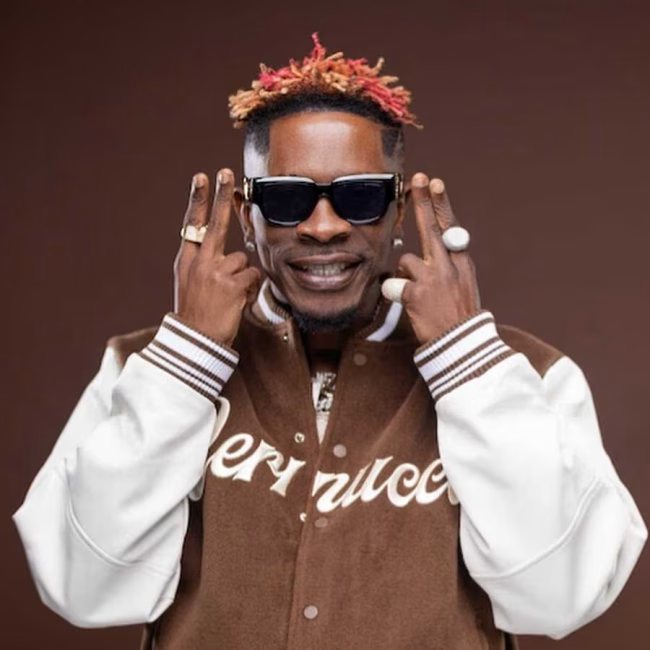
Dancehall star Shatta Wale has said he has earned about $45,000 (about GH¢527,000) from fans’ gifts on TikTok live streams, a platform he first dismissed as one for Gen Z.

The musician, whose real name is Charles Nii Armah Mensah Jr, gave the figure on rapper YPee’s podcast, The Real Ones, in a clip published by GhanaWeb. He did not say over what period he earned the money.

He told YPee he used to stream on Facebook Live. Content creator Jackline Mensah and others then pushed him to try TikTok. He said he was doubtful at first and asked himself, “what am I doing with TikTok? I’m not a Gen Z.”

Gifts from viewers during his streams soon became a regular source of income, he said. That money now sits alongside his fees for live performances and his other earnings from social media.

On TikTok, viewers buy virtual gifts with in-app coins and send them to creators during live streams. TikTok converts the gifts into Diamonds, which creators can cash out after the platform takes its share. Shatta Wale did not say whether $45,000 is the value of the gifts sent to him or the amount he received after TikTok’s cut.

The figure also sits awkwardly beside an earlier claim. In a previous Facebook post, Shatta Wale said he had made $35,856 in gifts from a single TikTok live session in which he discussed an online row between fellow musicians Stonebwoy and Sarkodie. On that account, one stream brought in about four-fifths of the total he has now given for all his TikTok activity. He did not explain the difference on the podcast.

He also advised young musicians that steady self-promotion is essential if they want to make money from their work. Anyone who wants to succeed in music, he said, has to keep promoting their own products.

This is not the first time he has made his online income public. In 2020 he told Peace FM that YouTube paid him between GH¢70,000 and GH¢85,000 every three months, an amount he said fell short of what he spent on music videos.

Nollywood’s Harry B hails Mahama during LilWin film shoot

0

Nigerian actor Harry B Anyanwu has called President John Dramani Mahama the best leader in Africa while on set for A Journey to Africa, a Ghana-Nigeria film produced by Kumawood star LilWin.

The veteran actor and musician made the remarks in a video recorded on set as cast and crew marked his 67th birthday. In the clip, Anyanwu urges other African leaders to follow Mahama’s example. “He’s doing what other presidents are supposed to do,” he said. He also praised Ghana’s hospitality.

In the same video, LilWin, whose real name is Kwadwo Nkansah, surprises Anyanwu with a gift of US dollar notes as cast and crew cheer.

Mahama, the leader of the National Democratic Congress, took office in January 2025 after winning the December 2024 election. He had previously served as president from 2012 to 2017.

Anyanwu is one of several Nollywood names working on the film. Patience Ozokwor, Kanayo O. Kanayo, Mike Ezuruonye, Zubby Michael and Destiny Etiko arrived at Kotoka International Airport in Accra on 30 September. Anyanwu joined them later. The Ghana News Agency also listed Charles Awurum among the arrivals.

The film is produced under LilWin’s Wezzy Empire banner and is set in Nzulezu, the stilt village in Ghana’s Western Region. It is his second cross-border project after A Country Called Ghana, which also featured Nigerian actors and premiered at the National Theatre in Accra in April 2024.

The casting has drawn debate at home. LilWin told bloggers he chose mainly Nigerian actors because they usually respond to his scripts within hours, while some Ghanaian actors take a week or more. He also said Nollywood stars bring a larger fan base for international releases.

LilWin has said he plans to premiere A Journey to Africa in Accra before screening it across Ghana and abroad. No release date has been announced.

Rapper Guru says Ayawaso, Nkoranza MPs cannot beat him

0

Rapper and former University of Ghana student leader Guru has said that Members of Parliament (MPs) in Ayawaso, Nkoranza South and Nkoranza North would lose if he contested their seats.

The musician, whose real name is Maradona Yeboah Adjei, made the remarks in a radio interview published by GhanaWeb. He has not declared a bid for any seat. Ghana’s next general election is due in December 2028.

He said that if he ran in any of the three areas, “the MPs there should resign because they will not win.” He said his social and development work in those communities had built him enough support for voters to back him over anyone else.

He did not say which Ayawaso constituency he meant. Greater Accra has four. One of them, Ayawaso West Wuogon, is held by actor John Dumelo, who won it in the 2024 election. Nkoranza South and Nkoranza North are in the Bono East Region.

Guru rested his case on his one-year term as president of the University of Ghana Students’ Representative Council (SRC). He said that during that term he provided food for students, drilled boreholes to ease water shortages on campus, and took the university to court to push for a 25 per cent cut in fees. He also said many of his policies were still in progress when his term ended. If he could do that much for students in one year, he argued, a four-year term in Parliament would bring constituents far more.

GhanaWeb’s report did not include any independent check of those claims. Reports from his time in office show he publicly opposed a 20 per cent rise in Residential Facility User Fees on campus.

His route to the SRC presidency was contested. The SRC’s vetting committee disqualified him in 2024 because he did not live in a university hall, which the council’s constitution required of candidates. The university’s Appeals Board later reinstated him, and a student filed a suit at the Adentan Circuit Court challenging that decision. Guru and his running mate, Jeffery Adu-Yeboah, went on to win with 50.7 per cent of the vote, or 9,455 of 18,659 ballots cast.

During that campaign, Guru said he was a member of the New Patriotic Party (NPP). He rose to fame in 2011 with the hit Lapaz Toyota.

He would not be the first entertainer to move into national politics. Actress Dzifa Gomashie represents Ketu South and serves as Minister for Tourism, Culture and Creative Arts. Dumelo is Deputy Minister for Food and Agriculture.

Ayra Starr brings Afrobeats to NFL London half-time stage

0

Nigerian singer Ayra Starr will become the first African artist to headline a half-time show at a National Football League (NFL) international game when she performs in London on Sunday.

The 24-year-old performs at Tottenham Hotspur Stadium during the game between the Philadelphia Eagles and the Jacksonville Jaguars. Kick-off is at 2.30pm UK time (1.30pm GMT) on 11 October. It is the Eagles’ first game in London since they met the Jaguars at Wembley in 2018.

Her set is one of a record seven half-time shows the NFL is staging at its 2026 international games, across seven countries and four continents. The league is using global music stars to grow its audience outside the United States. Tim Tubito, the NFL’s senior director of global game presentation, music and entertainment, said the half-time show had become one of the biggest moments of the London games. He called Starr a generational talent with a real following in the city.

Starr told BBC Newsbeat that the performance “itself is a message”. She said artists speak for their culture and for the people who listen to them, and should use such platforms to represent those people.

Her remarks come eight months after Puerto Rican star Bad Bunny used his Super Bowl half-time show in February to celebrate Latin American culture. He was the first act to perform the show entirely in Spanish.

Starr kept most details of Sunday’s show private. She confirmed it will include songs from Starrgirl, her third studio album, released on 14 August. The 16-track record features Nigerian singers Wizkid and Rema, British singer Zayn and US singer Leon Thomas. She told the BBC she was still in rehearsals.

Born Oyinkansola Aderibigbe, Starr broke through with her debut album, 19 & Dangerous, in 2021. The NFL puts her global streams at more than seven billion. According to the BBC, she was the first African woman to win best international act at the Mobo Awards and the first Nigerian woman to pass one billion video views on YouTube.

Starr has a degree in political science and international relations. She said her studies shape how she speaks out on women’s rights, equality and the welfare of children, and that freedom runs through her music.

She also said Afrobeats remains dominated by men. She wants women in the genre to get more room and the same privileges as their male peers. The music has long been popular in Africa, she said, and the rest of the world is only now catching up. She hopes it will become one of the leading genres in the world.

In the UK, the half-time show will be broadcast live on free-to-air Channel 5 and on Sky Sports. The Jaguars return to London on 18 October to play the Houston Texans at Wembley.

Africa air cargo rates jump 31% as global prices climb

Africa’s air cargo rates ran 31 per cent above last year in the two weeks to 4 October 2026, trailing only the Middle East and South Asia, WorldACD figures show.

The data, which track average rates including surcharges on shipments by origin region, also show African rates rising faster than anywhere else in the short term. They climbed 6 per cent in the two weeks to 4 October compared with the previous two weeks. The worldwide average rose 2 per cent over the same period.

The increase is not coming from a shortage of space. Capacity out of Africa was 8 per cent higher than a year earlier, and flown tonnage, measured by chargeable weight, was up 7 per cent. Shippers are paying far more per kilogramme even though airlines are flying more cargo space out of the continent.

Worldwide, the average rate reached US$3.14 a kilo in the week of 28 September to 4 October, up from US$3.01 five weeks earlier and against US$2.50 in the same week of 2025. Rates in the latest two weeks were 26 per cent higher than a year ago, while global volumes slipped 2 per cent from the preceding fortnight and capacity fell 1 per cent.

The Middle East and South Asia led the year-on-year rise at 53 per cent. Rates from Asia Pacific and Europe were each up 25 per cent, North America 18 per cent and Central and South America 7 per cent. Asia Pacific recorded the sharpest short-term drop in volumes, down 6 per cent, yet its rates still rose 5 per cent.

The figures, published by WorldACD Market Data on 8 October 2026, are drawn from more than 500,000 transactions a week.

Fuel costs and the aftermath of conflict in the Gulf help explain the gap with 2025. The International Air Transport Association (IATA) said on 29 September that jet fuel prices in August were 79.2 per cent higher than a year earlier. Its chief economist, Marie Owens Thomsen, said strong demand and fuller aircraft let airlines “recoup some of the exceptionally high fuel costs”.

IATA data show demand rose 4.4 per cent year on year in August while capacity edged down 0.1 per cent. Gulf-linked corridors remained disrupted by the Middle East conflict, and Europe–Middle East traffic fell 12.1 per cent, its sixth consecutive monthly contraction.

African airlines grew demand by 3.0 per cent in August while expanding capacity by 14 per cent, the widest gap of any region in IATA’s figures.

Rates surged in March after US and Israeli attacks on Iran and Iran’s retaliatory strikes cut capacity across the region. Even after five weeks of near-steady gains, the latest worldwide average remains below the US$3.23 a kilo WorldACD recorded in late May.

John Boadu vows no pampering as NPP rebuilds for 2028

0

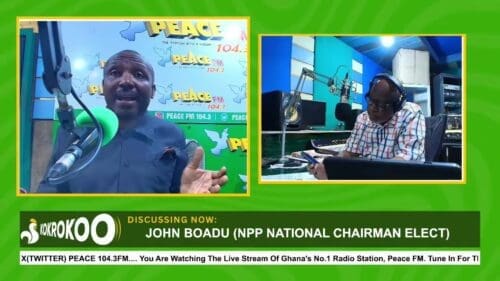
New Patriotic Party (NPP) National Chairman John Boadu has told Peace FM he will take decisions that anger party members if they help the opposition party win power in 2028.

“I’m not going to pamper anyone,” Boadu told host Kwami Sefa Kayi on the station’s Kokrokoo morning programme.

He said the NPP had to reorganise and rebrand, and that its leadership should act boldly and fairly even when choices proved unpopular, because winning power would benefit every member. He warned that another defeat would hand the party’s rivals room to widen their political reach.

The remarks set a hard tone for a chairman who took office without a majority of delegates behind him. Boadu won with 47.19 percent of the votes cast at the congress held at the Baba Yara Stadium in Kumasi, polling 2,888 votes to beat his closest contender, Boakye Kyerematen Agyarko, who got 2,408 (39.35 per cent). Paul Afoko, who was attempting a return to the chairmanship after his earlier term was cut short by a suspension in 2015, got 790 votes, and Sammy Crabbe had 41. Crabbe had announced a late withdrawal from the contest to back Boadu.

His radio message is sharper than the one he issued after the vote. In a statement on Monday, 5 October 2026, Boadu said the party now had no winners or losers and pledged to lead with humility, consultation and reconciliation. On Peace FM, he made clear that concern over upsetting members would not stop decisions he considered necessary to win.

The new leadership takes charge as the NPP seeks to reorganise its structures following its defeat in the 2024 general election. At the same Kumasi conference, the party altered its constitution to make the flagbearer the leader of the party. Former Vice-President Mahamudu Bawumia is the NPP’s flagbearer.

Boadu will work alongside General Secretary Justin Frimpong Kodua, who beat him for that post in 2022. Kodua was re-elected with 4,486 votes, the highest tally of any contestant in the 2026 national executive elections. Boadu served as General Secretary from 2018 to 2022.

Boadu has said the new executive team will work with Bawumia to strengthen the NPP’s organisational and financial structures, particularly at constituency level.

Developing nations’ debt crisis already here, says Jubilee USA’s Caliari

Developing countries are already in a debt crisis, even though few of them are defaulting, a senior official of the debt relief campaign Jubilee USA Network has told NewsGhana.

Aldo Caliari, Senior Director of Policy and Strategy at Jubilee USA, said governments were choosing to keep paying creditors at heavy cost to their own people rather than face a restructuring system he called inefficient and unpredictable. He gave his assessment in written answers to NewsGhana ahead of the International Monetary Fund (IMF) and World Bank Annual Meetings, which run in Bangkok from 12 to 18 October.

“We may not have a ‘debt crisis’ as scores of countries defaulting,” he said, “but we have something more serious: a social and development crisis.”

A crisis without defaults

Caliari said the average developing country now spends 45 percent of its revenue on debt payments, and that 75 countries spend more than a third. He said both figures were higher than in the 1990s, when the debt burden led to the Heavily Indebted Poor Countries initiative and the Multilateral Debt Relief Initiative.

For countries the IMF and World Bank judge to have a short-term cash squeeze rather than unpayable debt, the main tool is the “3-pillar approach” launched in 2024. It combines domestic reforms, more official lending and incentives for private creditors to keep lending, so that debtors can keep paying while their economies grow. Caliari said the approach works only if the institutions correctly identify which countries do not have a deeper problem, and only if the growth rates it assumes are achievable. “There is a big question mark on that,” he said.

He added that no public list exists of the countries eligible for the approach or using it, so its results cannot be judged. Jubilee expects progress in Bangkok on transparency and on clearer measures of success.

Senegal as the test case

For countries whose debt cannot be paid, Caliari said the G20 Common Framework had failed to provide timely or sufficient relief. He added that only a small share of the countries that arguably need a restructuring have applied for it. Chad, Ghana, Zambia and Ethiopia all went through the framework.

The G20 has since endorsed a Restructuring Playbook and a revised blueprint for agreements between debtors and creditors, both meant to make the framework faster and more transparent. Senegal will be the first country to go through the new process. On 1 September, Senegal reached a staff-level agreement with the IMF on a 36-month loan of about US$2.2 billion and said it would seek treatment under an enhanced version of the framework, keeping debt denominated in CFA francs outside the deal. Prime Minister Ahmadou Al Aminou Lo has told lawmakers the country will reprofile its debt rather than restructure it.

“The proof will be in the pudding,” Caliari said.

Vulture funds and New York

On private creditors, Caliari pointed to contract reforms that make it harder for a minority of creditors to block a deal, and to efforts to extend those rules from bonds to commercial bank loans.

He singled out New York’s champerty bill, which would stop investors who buy distressed sovereign debt cheaply and then sue for full repayment. New York law governs more than half of sovereign bonds. The state Senate passed the bill on 2 June, but its companion bill never reached the Assembly floor before the session ended. Caliari said the bill had enough votes to pass the Assembly had the Speaker allowed a vote. The Managed Funds Association and six other financial industry groups opposed it, arguing in a joint letter that it would raise borrowing costs for sovereign borrowers and drive debt issuance to rival financial centres.

More lending without new money

Caliari said the World Bank could lend significantly more. Its lending arm for middle-income countries, the International Bank for Reconstruction and Development, had lent more than US$800 billion since its founding on capital of less than US$20 billion, he said. He argued that its equity-to-loan ratio, above 21 percent last year, could safely fall to 18 percent or lower.

He said reforms to the International Development Association (IDA), the World Bank’s fund for the poorest countries, could expand its reach without new donor money. He named changes to the rules on when countries graduate out of IDA, transfers from the bank’s other lending arm and tools for mobilising private investment. He said higher donor contributions were still needed.

On Special Drawing Rights (SDRs), the IMF’s reserve asset, he said a new allocation was unlikely to win the necessary support. Because SDRs are shared out according to each country’s IMF quota, developing countries receive only about a third of any allocation. He saw more room in passing existing SDRs from rich countries to poorer ones through development banks, noting that the African Development Bank and the Inter-American Development Bank have led that effort.

Energy shock and El Niño

Caliari said developing countries face more than six months of high oil prices linked to the Middle East conflict. Even if conditions return to normal soon, he said, the recovery will trail by months. Scarce, expensive fertiliser is only beginning to feed through to food prices, and he warned it could combine with El Niño to push them up for at least the next three years.

He said the countries hit hardest would be those whose per capita income has barely moved in 15 years.

AI and what Africa should watch

On artificial intelligence, Caliari cited Pope Leo XIV’s encyclical Magnifica Humanitas, published in May. He said AI should remain a tool under human control, with the dignity of work put first. He said the IMF, World Bank and G20 could help through advice, training and financing, but nothing would replace country-owned development strategies.

He urged African governments to watch three things in Bangkok. The first is whether reforms to the IMF and World Bank debt sustainability framework for low-income countries give borrowers a bigger say in the assessments. The second is whether development banks increase concessional and emergency lending. The third is whether they steer private capital to the countries that need it most rather than to the easiest markets.

His longer-term priorities are a rapid solution to the current debt crisis, safeguards to prevent the next one, and a rules-based framework for resolving sovereign debt crises that works the way bankruptcy works within national economies.

The Governing Council of the Borrowers’ Platform, a United Nations-backed forum for debtor countries launched in April, will hold its first meeting in Bangkok.

COCOBOD Debut Cocoa Note Sale Falls 15 Percent Short

0

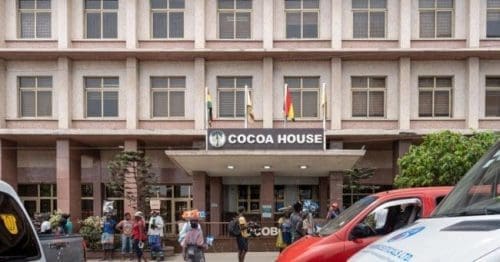
COCOBOD has raised GH¢3.39 billion from its debut local debt sale, 15 percent below target, an early test of whether domestic lenders can replace foreign banks in financing cocoa.

The money matters most at the farm gate. Ghana’s cocoa season opened on September 25, but licensed buying companies warned they would not buy beans with their own cash and then wait months for repayment. The new funds should let COCOBOD start disbursing money to those buyers so purchases can pick up.

The first sale

Cocoa Capital PLC, the special-purpose vehicle the cocoa regulator set up for the programme, issued the commercial paper on October 5 at a yield of 11 percent. The paper matures on June 28, 2027. The sale raised about GH¢604 million less than the GH¢4 billion presented to investors. That figure was indicative, however, and the amount COCOBOD accepted may not reflect everything investors offered.

The vehicle is new. Cocoa Capital was incorporated on August 7, 2026, with paid-up capital of GH¢5 million, and holds Securities and Exchange Commission (SEC) approval to borrow on the domestic market.

A long way still to go

The first sale is only a small part of what COCOBOD needs. The programme aims to raise GH¢14 billion in commercial paper to buy cocoa this season, issued in three tranches: GH¢4 billion, another GH¢4 billion and a final GH¢6 billion. A further GH¢2.3 billion in medium- to long-term bonds will refinance older COCOBOD debt.

By NewsGhana’s calculation, the first sale covers about 24 percent of the commercial paper target, leaving roughly GH¢10.6 billion to raise in the next two rounds.

Not all of the first tranche will reach farmers. About 14 percent of the funds raised will go towards COCOBOD’s legacy debts. Proceeds may also repay a bridge facility linked to that older debt.

How investors get paid

Repayment depends on cocoa sales. Receivables from selected forward sales contracts are assigned to Cocoa Capital and paid into ring-fenced accounts. Even so, the commercial paper is classed as senior unsecured debt, meaning holders do not have a direct claim on specific assets.

That puts weight on the size of the harvest. COCOBOD expects production to fall by at least 16 percent in the 2026/27 season.

The backdrop investors were weighing

The sale opened two weeks after a cross-border investigation put COCOBOD’s past finances under scrutiny. Ghana Business News, working on the China Capital project led by the International Consortium of Investigative Journalists (ICIJ), reported that the London branch of the Industrial and Commercial Bank of China (ICBC) placed COCOBOD on a watchlist on February 9, 2023. The outlet also said that loss figures in some of the Board’s annual reports did not match its audited accounts.

The regulator’s latest reported results look stronger, but they rested on conditions that have faded. The State Interests Governance Authority (SIGA) recorded a GH¢5.11 billion profit, driven largely by exchange-rate gains. In that year COCOBOD sold cocoa at an average of $5,174 a tonne. For the new season, it has announced a realised free-on-board (FOB) price of $2,650 a tonne.

Old bills still unpaid

The Chamber of Cocoa Marketers Ghana says COCOBOD owes licensed buying companies nearly GH¢4 billion. It warned that the arrears make it hard for them to secure fresh credit while they keep servicing loans taken out for earlier purchases. COCOBOD has acknowledged the outstanding payments but said such balances are not unusual at the end of a season and do not signal that it cannot meet its obligations.

To stop the problem spreading to farmers, COCOBOD has barred buying companies from taking cocoa on credit and warned that repeat violators risk losing their licences.

The new price

Farmers are being paid GH¢42,400 a tonne this season, or GH¢2,650 per bag, a rise of GH¢1,008 a tonne. That equals 71.18 percent of the realised FOB value, above the 70 percent minimum guaranteed by the Ghana Cocoa Board Act, 2026 (Act 1182). The same law bars COCOBOD from quasi-fiscal activities.

COCOBOD’s Public Affairs Department acknowledged questions sent by NewsGhana on the watchlist report, the discrepancies in its accounts, the arrears and the financing programme. On September 29 it said the questions had been forwarded to the relevant office for review, but it had not provided answers by October 10.

The second GH¢4 billion tranche of commercial paper is next in the programme.

Joseph Gordon-Levitt says AI firms, not machines, are the danger

0

Actor Joseph Gordon-Levitt says the real risk from artificial intelligence (AI) lies with the companies building it, warning that chatbots are being designed to win users’ affection.

Gordon-Levitt made the case in a video interview with The New York Times, recorded as he travelled to the United Nations. Since March 2026 he has served as the UN’s first Global Advocate for Human-centric Digital Governance. He said AI models were being “trained to hijack your intimacy”, built to befriend users and even get them to fall in love. People should worry less about AI itself, he argued, and more about the people building it.

His warning sharpens a theme he has pushed for more than a year. At Fortune’s Brainstorm AI conference in December 2025, drawing on conversations with New York University psychologist Jonathan Haidt, he warned of “synthetic intimacy”. He argued that chatbots offer children a fake form of connection built to serve advertising rather than to help them develop.

In the new interview, he rejected the idea that the main fear should be AI wiping out humanity. He said the risk was real but reduced a dense set of problems to a single frightening soundbite. What worried him more, he said, was the decline of democracy and of human empathy, and the ambition of AI companies to take over the entire economy, which he said would amount to totalitarianism.

Gordon-Levitt began by telling viewers not to take an actor’s word for it. He pointed them instead to Stuart Russell’s book “Human Compatible”, the work of the computer scientist Yoshua Bengio, and researchers in AI safety and policy. He said fast-moving businesses should not be left to design the future in the interests of their own profits while the public stays confused or apathetic.

He argued that the term “artificial intelligence” was itself misleading. AI, he said, is human-produced data recombined by algorithms, and calling it artificial pushes people out of the picture and conjures up the machines of science fiction.

His campaigning has reached lawmakers. He spoke out about Meta’s AI chatbots and child safety in September 2025, backed a Utah bill on AI and child safety in January 2026, and called for the repeal of Section 230, the US law that shields online platforms from liability for user content, in February 2026.

Not everyone in the industry accepts his case. At the Fortune event, Stephen Messer of the analytics firm Collective[i] argued that his position fell apart in a room full of AI specialists. Gordon-Levitt countered that opponents of regulation often cherry-pick bad laws to argue against all laws, and has said he is not pessimistic about technology itself.

He is also set to direct a thriller about AI for Rian Johnson and Ram Bergman’s production company, T-Street.

Portugal federation opens disciplinary case against Ronaldo over walkout

0

The Portuguese Football Federation (FPF) has opened disciplinary proceedings against Cristiano Ronaldo and suspended him from national team duty after the captain walked out of camp in Copenhagen.

The federation confirmed the decision on 10 October. Its disciplinary council has classified the case as urgent and will keep the investigation confidential until it concludes. The FPF also imposed a preventive suspension, separate from the automatic suspension that already applied to Ronaldo under its rules. It has not announced a final sanction.

The case will decide whether the 41-year-old, Portugal’s record goalscorer, plays for his country again before next year’s matches. Article 160 of the FPF’s disciplinary regulations covers players who leave or skip national team activities without justification, and provides that walking out triggers an automatic preventive suspension. A Portuguese sports lawyer told A Bola the minimum penalty is one month’s suspension and a €510 fine, which the council could halve to 15 days and €255. The lawyer said the time already served under the automatic suspension would count against any sanction, so Ronaldo could be free for Portugal’s next international window.

The dispute began in Oslo, where coach Jorge Jesus left Ronaldo on the bench for the whole of Portugal’s 2-1 Nations League win over Norway. Gonçalo Ramos, who started in his place, scored the winner. Jesus said keeping Ronaldo out was a tactical decision.

On 30 September, the eve of the Denmark match, Jesus told reporters that Ramos would start again and that Ronaldo’s role would depend on how the game went. Ronaldo left the camp shortly afterwards. He said on Instagram that he made the decision after the coach’s news conference and a conversation with FPF President Pedro Proença.

In a long letter published on 6 October, Ronaldo accused Jesus of breaking promises about his playing time. He said they had agreed that the coach would explain his omission against Norway publicly before the Denmark match, and that Jesus did not do so. “A broken word has, for me, a defining impact,” he wrote. He said he had not demanded to play.

Ronaldo apologised to his teammates for leaving and to supporters for not joining the squad in thanking the fans after the Norway match. He said the federation should assess and punish his conduct, and that he remained available to play for Portugal once he had served any sanction.

Jesus coached Ronaldo at the Saudi club Al-Nassr and took charge of Portugal in July 2026, after the team’s exit in the World Cup round of 16. Portugal have won all three Nations League matches played under him that have been reported, including a second 2-1 win over Norway in Lisbon on 4 October without Ronaldo.

Trump says Ukraine needs new president after diesel deal row

0

US President Donald Trump said on 10 October it was time for Ukraine to get a new president, after Volodymyr Zelensky condemned a US deal easing sanctions on Russian diesel.

Speaking to reporters outside the White House, Trump accused Zelensky of making problems for the world by continuing to authorise drone strikes on Russian oil refineries. “He’d better damn well stop,” Trump said, adding that Ukraine should find a leader who could make a deal.

The attack came a day after Trump confirmed an agreement with Moscow to suspend sanctions on Russian diesel exports until 7 April. The deal meets a condition Russian President Vladimir Putin set at the Valdai forum on 1 October. Putin said then that Russia had enough diesel but would not supply global markets while sanctions on its oil and oil products stayed in place. He also said Ukraine’s refinery strikes had cost Russia about one percent of its economic output.

Zelensky said the deal would give Moscow fresh money to buy weapons and keep fighting, and called it a gift to Putin. He accused Russia of reading the deal as permission to keep bombing cities, after new deadly strikes on Zaporizhzhia, and spent 10 October calling allies. Downing Street said UK Prime Minister Andy Burnham offered his full solidarity, and that the two leaders agreed Russia should accept an immediate energy ceasefire and stop attacking shipping in the Black Sea.

Under the deal, Trump said, Russia would first release 300,000 tonnes of diesel onto American and global markets, with more to follow depending on the condition of its refineries. Kirill Dmitriev, Putin’s investment envoy, welcomed Trump’s remarks and said Ukraine needed leadership focused on peace.

Diesel has become a political liability for Trump ahead of November’s midterm elections. The war with Iran has effectively closed the Strait of Hormuz, and Russia, the world’s second-largest diesel exporter, has banned exports after Ukrainian drones damaged its refineries. US diesel prices rose to a record of more than $6.50 a gallon earlier this month.

Trump has pressed Kyiv for weeks to stop hitting Russian refineries. On 14 September, he announced that the two sides had agreed to halt strikes on each other’s energy sites. Zelensky said no deal had been reached and that Ukraine would stop only if its partners guaranteed Russia would do the same.

Europe is moving the other way. EU foreign policy chief Kaja Kallas criticised the suspension, saying it would give Moscow more revenue to wage war. She has also said EU foreign ministers will approve the bloc’s largest sanctions package since Russia’s full-scale invasion when they meet on Monday. In March, she called an earlier US easing of Russian oil sanctions a dangerous precedent.

Trump called for elections in Ukraine last December. Ukraine has been under martial law since February 2022, which suspends national elections.

State asks court to make Adu-Boahene open his defence

0

The Attorney-General has asked the High Court to reject former National Signals Bureau chief Kwabena Adu-Boahene’s submission of no case and order him to open his defence.

The prosecution filed its response on 9 October, as directed by the court, in the trial of Adu-Boahene, his wife Angela Adjei-Boateng and their co-accused over a US$7 million cyber-defence contract. The state argues it has produced enough evidence to establish a prima facie case, the legal threshold for requiring the accused to answer the charges.

A submission of no case asks the judge to end a trial before the defence calls any witnesses, on the ground that the prosecution’s evidence is too weak to justify one. If Justice Francis Apangabuno Achibonga upholds it, the accused will be acquitted at this stage. If he dismisses it, they must give evidence in their own defence.

In its written submission, the prosecution set out the evidence it says it presented during the trial. It argued that the defence’s cross-examination of its witnesses was largely off the point and failed to shake the documents at the heart of its case.

The accused have pleaded not guilty to 11 counts, including stealing, defrauding by false pretences, wilfully causing financial loss to the state, using public office for profit and money laundering. The state alleges that GH¢49.1 million meant for a cyber-defence system ordered in 2020 from the Israeli firm ISC Holdings was diverted through private companies. It says the system was never delivered.

The prosecution’s evidence has included testimony that Adu-Boahene opened a bank account in his private company’s name on the day the first cheque was issued, and that only GH¢9.54 million, about US$1.75 million, reached ISC Holdings.

The defence disputes the state’s figures. Lead counsel Samuel Atta Akyea has argued that the amount in question is GH¢38.15 million, not GH¢49.1 million. He has also accused the state of trying the case in the media and has called the allegations against his client sordid. He had earlier objected that the 14 days the court allowed the defence to file its submission were too short, given the volume of documents.

With both sides’ papers now filed, the court will rule on the submission on 5 November 2026.

Ampofo Ankrah took no World Cup visa money, lawyer says

0

The lawyer for suspended National Sports Authority (NSA) Director-General Yaw Ampofo Ankrah says his client received no money from anyone over the alleged 2026 World Cup visa scheme.

Jerry Avenorgbor said Ampofo Ankrah had been attending interviews at the Criminal Investigations Department (CID) headquarters over the past week and had neither collected money from visa applicants nor taken part in any visa transactions. “My client has not received a penny from any individual,” he said.

The denial comes as pressure on the case widens beyond one official. The NPP Minority in Parliament alleges that about US$623,000 was collected from people seeking help to travel to the tournament in the United States and Canada, and is now demanding the dismissal and prosecution of Sports Minister Kofi Adams and the Chief Executive of the Ghana Tourism Authority (GTA). Neither the amount nor the Minority’s account of the arrangement has been established.

Avenorgbor said the police were handling the investigation well and should be allowed to establish the facts. If his client were found culpable, he said, the law would take its course.

President John Dramani Mahama suspended Ampofo Ankrah on 1 October pending the outcome of the CID investigation, and appointed Professor Emmanuel Osei Sarpong as Acting Director-General. The letter from the Presidency described the suspension as an administrative measure and said it was not a finding of wrongdoing. The Bureau of National Investigations is also looking into the matter.

The case began with a petition to the CID on 8 September, alleging that people connected to the NSA took money from prospective travellers on the promise of arranging visas and travel. The NSA has said its partnership with TRIBE Culture Fest, a FIFA-licensed fan-experience company, never authorised anyone to collect money for visas. The Minority says the arrangement grew out of a Memorandum of Understanding between the NSA and TRIBE signed on 2 June 2025, and that visa processing was costed at US$3,000 per person for the United States and US$2,000 for Canada.

Ampofo Ankrah told JoySports after his suspension that he was disappointed he had not been given a chance to explain his side.

On 8 October, his lawyers said he would not appear before Parliament on the allegations until the CID investigation was complete, arguing that testifying earlier could prejudice the inquiry. They said he would respond to the substance of the allegations once the police findings were made public.

NCCE turns violent extremism campaign to Ghana’s southern borders

0

The National Commission for Civic Education (NCCE) is extending its violent extremism awareness work to Ghana’s southern border communities, saying years of northern-focused programmes have left a gap.

Samuel Asare Akuamoah, the NCCE’s Deputy Chairman in charge of Operations, made the case at a national dialogue in Accra on 7 October on sustaining post-election peace and building resilience against emerging security threats in southern border communities. The dialogue opens a series of community engagements in those areas.

Akuamoah said most efforts to prevent violent extremism had concentrated on the north, partly because that was where development partners chose to fund work. The record bears this out. The European Union-funded Preventing and Containing Violent Extremism project, run by the NCCE, covered 75 districts in the Northern, North East, Savannah, Upper East, Upper West, Oti, Bono and Bono East regions. It followed an earlier project aimed specifically at the northern border regions.

NCCE Chairperson Kathleen Addy, in a speech read on her behalf, said security concerns were often associated with the north, but the southern and coastal borders were increasingly becoming hotspots for cross-border crime, including violent extremism, narcotics and disinformation.

Akuamoah said the campaign belonged to the commission’s post-election programme, and warned that the period after a vote carries its own risk. “This is the time when people’s complacency can set in,” he said. He noted that some neighbouring countries had suffered attacks by extremist groups, and that in some of them democratic government had collapsed.

The threat he described has moved steadily towards the coast. Al Qaeda’s Sahel affiliate, Jama’at Nusrat al-Islam wal-Muslimin (JNIM), has expanded from Burkina Faso and Niger into northern Benin and Togo. Togo suffered its first deadly militant attack in May 2022, when eight soldiers were killed. Benin recorded 155 attacks in 2024, up from five in 2021. Ghana has not suffered a confirmed attack.

Dr Mustapha Abdallah, a Senior Researcher at the Kofi Annan International Peacekeeping Training Centre (KAIPTC), told the dialogue that tighter border control would not be enough on its own. He urged the authorities to tackle the economic hardship that makes vulnerable communities along the southern borders open to recruitment.

The NCCE plans to follow the dialogue with sensitisation sessions in southern border communities to help residents recognise and report warning signs.

NPP supporters greet Baffour Awuah in Kumasi after GH¢10m bail

0

Hundreds of New Patriotic Party (NPP) supporters greeted MP Nana Agyei Baffour Awuah at Kumasi’s airport on his first return since his arrest and GH¢10 million bail.

Video of the arrival at Prempeh I International Airport, published by GhanaWeb, shows party supporters waving NPP flags, wearing campaign shirts and chanting as the Manhyia South MP arrived. It was his first visit to Kumasi since the Economic and Organised Crime Office (EOCO) detained him.

The reception shows how the case has become a political rallying point for the opposition. Baffour Awuah, a lawyer, has called the prosecution a witch-hunt, while EOCO and the Attorney-General’s office say they are pursuing an ordinary criminal investigation.

On 3 October, an Accra High Court sitting on a Saturday granted him GH¢10 million bail with two sureties, the MPs for Bosome Freho and Effia. He pleaded not guilty to conspiracy to commit a crime, intentionally causing a financial loss of GH¢9.85 million to the state, and money laundering. The money laundering charge relates to an alleged GH¢1 million transfer to the then Managing Director of SIC Life in 2024. The court, presided over by Justice Charity Akosua Asem, ordered him to surrender his passport and to make himself available to EOCO whenever required.

The charges arise from work his former law firm, Sarkodie Baffour Awuah & Partners, did for SIC Life Savings and Loans in trying to recover money from Equity Savings and Loans. His lawyer, Samuel Atta Akyea, says his client’s role came from legitimate legal work for SIC Life. The allegations have not been tested in court.

Speaking after his release, Baffour Awuah challenged the prosecution to prove its case before the court. “No dirt can stick on me,” he said.

His arrest followed a confrontation on 23 September at the Accra High Court, where EOCO officers tried to detain him after he appeared in an unrelated bail hearing. EOCO said he had not honoured two invitations in February 2026. His lawyers replied that the letters were addressed to him as a senior partner of the firm and that he had referred them to the Clerk to Parliament because he had since become an MP. He took refuge in Parliament, and the NPP Minority accused EOCO of abusing its power. A High Court then issued a warrant for his arrest, and he surrendered to EOCO on 1 October.

The case returns to court on 26 October and 2 November 2026.

Blast reported at Riyadh airport as Houthi strikes escalate

0

Several people were injured on 10 October after a blast at Riyadh’s King Khalid International Airport, news agencies reported, the latest in a run of Houthi-claimed strikes on Saudi airports.

Reuters and AFP reported that the airport was evacuated after a loud explosion. Reuters cited an eyewitness who saw more than a dozen ambulances heading to the site, and AFP quoted a hospital source as saying dozens were wounded. Saudi authorities had not commented on the incident. The airport told passengers to check with their airlines before travelling, Western embassies warned their citizens to stay away, and several Gulf carriers cancelled flights, including Kuwait Airways, which cited the security situation.

The airport, which handled 37 million passengers in 2024, has now been hit or targeted repeatedly in five days. Saudi Arabia’s General Authority of Civil Aviation said attacks on 6 and 7 October on King Khalid and on Abha International Airport in the south-west killed three people and injured 36. A Sudanese man died in Riyadh, and a Moroccan woman and an Algerian woman died in Abha.

On 8 October, the Houthis claimed a further ballistic missile strike on the Riyadh airport. Saudi Arabia did not confirm it, and the Saudi-led coalition said it had intercepted two missiles fired towards the capital. The disruption that day was already severe: 169 of 378 scheduled departures, or 44.7 percent, were cancelled or did not operate, according to the aviation analytics firm Cirium. Lufthansa Group suspended Riyadh flights until 16 October, and Air India and Air India Express until 10 October.

The Houthis, an Iran-backed movement that controls much of north-western Yemen, say they are retaliating for Saudi support of Yemen’s internationally recognised government. They have also warned international airlines to stop using Saudi airspace, except over Mecca and Medina.

The fighting has intensified since the Houthis seized a stretch of Red Sea coast along the Bab al-Mandab Strait, the narrow channel between the Red Sea and the Gulf of Aden that carries a large share of global shipping. Government forces, backed by Saudi air power, have launched an offensive to retake the territory, and the coalition says it has struck dozens of Houthi military sites in response to the airport attacks. More than 200,000 Yemenis have fled their homes as the fighting has escalated.

Saudi Arabia built a military coalition in 2015 to stop the Houthis taking over Yemen. A truce in 2022 largely halted the fighting after years of war that killed hundreds of thousands of people, but it began to break down in July this year, when the Houthis resumed missile and drone attacks on Saudi airports, oil facilities and Red Sea tankers.

Verify before you speak, Chief Justice tells record 1,568 lawyers

0

Chief Justice Paul Baffoe-Bonnie has told 1,568 newly called lawyers, the largest cohort in Ghana’s history, to check facts before commenting publicly, warning against the pull of viral claims.

He gave the charge at the 63rd Call to the Bar ceremony in Teshie, Accra, speaking as Chairman of the General Legal Council. He told the new lawyers that a message shared on WhatsApp could cross borders before anyone established whether it was true. Videos, headlines and repeated claims, he said, lead thousands of people to form opinions on facts they have neither checked nor witnessed, and lawyers had to behave differently.

His advice was to pause, read carefully and cross-check before speaking, and to recognise when professional restraint required them to say nothing until the facts were clear.

“The most important currency of a lawyer is not money, not even knowledge,” he said, naming integrity instead. He warned that a reputation built over years could be lost in a short time.

The Chief Justice told the lawyers they were not above the law. He urged them to refuse bribes and not to let political loyalties override their professional principles. Youth and inexperience, he said, would be no excuse for turning up to court unprepared. He also advised them to manage their money carefully and to build their reputations patiently.

The size of the cohort marks a sharp jump. At the previous October ceremony, on 10 October 2025, 824 lawyers were called to the Bar. The previous record, 1,097, was set at the 60th ceremony in 2023 and was then described as the largest single enrolment since Ghana began training lawyers.

The intake has grown as the legal education system has changed. Earlier this year, Baffoe-Bonnie abolished the long-standing split between the “main call” and the smaller “mini call”. Candidates can now be enrolled at either an October or a March ceremony, and he said no hierarchy should exist between them.

Akosua Achiaa Sarpong won the John Mensah Sarbah Award for the best all-round performance in the Professional Law Examination. She was also named the best student in Civil Procedure.

Government puts 2026 health recruitment at 16,500, above earlier target

0

Deputy Chief of Staff Nana Oye Bampoe Addo says the government plans to recruit 16,500 health professionals in 2026, 500 more than the figure the Health Ministry has cited all year.

Speaking at the Ghana Health and Labour Summit 2026 at the University of Ghana, Legon, she said financial clearance had been secured before recruitment so that no new hire would work unpaid.

That promise answers the most damaging episode in the sector’s recent history. Health Minister Kwabena Mintah Akandoh has said 13,500 nurses, midwives and other professionals recruited in 2024 began work without financial clearance. Many went close to a year without pay. The Coalition of Unpaid Nurses and Midwives marched on the Finance and Health ministries in October 2025 and later threatened to strike over 11 months of arrears. Akandoh has since said more than 99 percent of the group have been paid.

The new figure does not match the ministry’s earlier statements. In April, the Health Ministry said about 16,000 professionals would be engaged in 2026, with clearance secured for roughly 8,000 posts and approval for the rest still being sought. Akandoh later told Parliament the 16,000 intake was part of a drive covering 2026 to 2028, and said clearance for the second 8,000 would be obtained before those recruits were hired.

Recruitment opened on 16 April under a clearance that expires on 31 December 2026. The ministry is working through graduating classes in order. The 2021 batch of nurses and midwives came first, the 2022 batch is due to be absorbed before the end of the year, and the 2023 batch will follow, subject to clearance from the Finance Ministry.

Bampoe Addo told the summit that hiring alone would not stop trained workers leaving. She said the country had to build workplaces where professionals wanted to stay and build careers.

Chief Labour Officer Dauda Ibrahim Braimah, speaking for the Minister for Labour, Jobs and Employment, said pay was only part of that decision. “Ultimately, retention depends on quality of life, including housing, security, transportation, and workplace culture,” he said.

He said the Labour Ministry was working with employers and unions to update labour laws and institutions for changing workplaces, including new technology, and to improve working conditions and access to decent jobs.

All recruitment under this year’s clearance must be completed by 31 December 2026.

UP urges private funding for expressway to pay teachers’ arrears

0

The United Party (UP) has urged the government to bring private investors into the Accra-Kumasi Expressway, freeing part of the US$2 billion set aside for the road to pay teachers’ arrears.

Dr Nana Yaw Adutwum, the party’s Director of Policy, made the case on Channel One TV’s The Big Issue on 10 October. He called the expressway commendable but said the way it is being financed leaves no room to meet other urgent bills. “Why don’t you invite the private sector to bear part of that cost,” he said.

The proposal runs against a choice the government has made deliberately. Finance Minister Cassiel Ato Forson has pledged to fund the road without borrowing “a pesewa”, and President John Dramani Mahama has stressed that the money comes from taxpayers, not lenders.

The sums are large and growing. Ato Forson told Parliament in his 2026 mid-year budget review that US$1.7 billion had been deposited in a dedicated expressway account at the Bank of Ghana as of 22 July. He said the money was ring-fenced and would be released only after the main construction contract was awarded. By 14 September, Mahama put the balance at US$2 billion, and Ato Forson has said the full amount will be ready by December 2026. The six-lane road is estimated to cost about US$4 billion and is due for completion in 2028.

Adutwum’s objection is to that idle balance. He said holding more than US$2 billion in reserve while waiting for a contract to be awarded was the wrong priority when teachers were still owed money.

Teachers’ pay has been the government’s most pressing labour dispute this autumn. The Ghana National Association of Teachers (GNAT), the National Association of Graduate Teachers (NAGRAT) and the Pre-Tertiary Teachers Association of Ghana (PRETAG) declared an indefinite strike on 25 September. Their demands covered promotion-related arrears, a delayed new Collective Agreement and the 20 percent deprived-area allowance. GNAT had insisted that an agreement reached with the Education Ministry on 31 August, which committed to placing all promoted teachers on their new salary scales by the end of September, be honoured before any return to work.

Private investment in large roads usually comes through a public-private partnership, in which investors recover their money from tolls or government payments over many years. Adutwum did not say which model he favoured.

NDC’s Fieve rejects galamsey emergency call; activist cites water fears

0

Julius Fieve, a National Democratic Congress (NDC) communications team member, has rejected calls for a state of emergency on illegal mining, saying the government needs time to intensify its crackdown.

Speaking to Isaac Addae on Starr FM’s Morning Starr, Fieve said he respected the Ghana Catholic Bishops’ Conference, which has led calls for emergency powers, but did not share its view. “I don’t, in a very humble way, agree on declaring a state of emergency,” he said.

His position matches the line President John Dramani Mahama has held for more than a year. At his media encounter on 10 September 2025, Mahama said existing laws already gave the government enough power to fight illegal mining, known locally as galamsey, and called a state of emergency a last resort. He has said he would declare one if the National Security Council advised it.

Fieve made the same argument. He said security agencies and other state institutions were best placed to judge when emergency powers became necessary, and that the President would act on their advice. He described the Catholic bishops as one of the few institutions that bring Ghanaians together across religious and social lines, and said he found it hard to oppose them.

The bishops have pressed the case repeatedly. In a communiqué issued in November 2025 at the end of their plenary assembly in Damongo, they urged a state of emergency in high-risk mining zones. They cited figures showing Ghana lost more than 5,252 hectares of forest reserves to illegal mining that year, that 44 of the country’s 288 forest reserves are now degraded, and that an estimated 75 percent of its rivers are polluted, largely by the mercury and cyanide used in unregulated mining.

On the same station, Awula Serwah, Executive Director of Eco-Conscious Citizens, attacked what she saw as misplaced sympathy in the debate. She said too much was said about the livelihoods of illegal miners and too little about the peasant farmers and fishermen whose land and rivers the miners destroy.

She warned that the damage reaches well beyond mining areas. Food sold in city markets may be grown on polluted land, she said, and residents of Accra could not know whether chemicals such as cyanide had reached their tap water, since the substances are colourless. She did not cite test results for Accra’s water supply.

Not everyone backs emergency powers. The Small-Scale Miners Association has called the demands politically motivated, while the Institute of Economic Affairs (IEA) warned in September 2025 that the scale of the destruction was pushing Ghana towards the point where a declaration would become unavoidable.

Under Article 31 of the 1992 Constitution, the President may declare a state of emergency in any part of the country, acting on the advice of the Council of State.

GRA apologises to airport traveller, says customs duty was paid

0

The Ghana Revenue Authority (GRA) on 9 October apologised to a traveller who alleged extortion at Accra International Airport, saying the GH¢807.68 duty she was charged reached its account.

The traveller, Gifty Osei Bonsu, had accused customs officers of extortion. In a statement, the GRA said a preliminary investigation found the money had been properly accounted for. It said an outage on its Integrated Customs Management System (ICUMS) delayed both the payment and her official receipt.

The authority’s own account shows how the money moved during that outage, and that is now the focus of its procedural review. With the system down, Bonsu handed GH¢600 in cash to the officers and a friend added GH¢200. The officers covered the remaining GH¢7.68 from their own pockets, the GRA said.

According to the statement, Bonsu arrived on an EgyptAir flight at 12:48 pm on 3 October. After risk selection and scanning, she was directed to the Red Channel for a closer examination of her luggage. Officers found 20 pairs of new women’s shoes, nine new women’s dresses, 18 new men’s shirts and four new wigs, and assessed duty on the shoes only.

Bonsu told officers she had a connecting flight to catch, the authority said. Once ICUMS came back online, the full GH¢807.68 was paid into the GRA’s revenue account at Ecobank Ghana at about 4:57 pm, a little over four hours after she landed, and a receipt was issued in her name.

The GRA said the officers acted in good faith. It apologised to Bonsu for the long wait.

It said it had since put in place alternative procedures for handling payments during system outages. It is also reviewing the rules governing how customs officers deal with passengers, focusing on how they communicate, how duty is assessed and collected, and how transactions are documented. A passenger-facing process to explain customs requirements, concessions, payments and complaint channels is being developed, alongside wider public education on dutiable goods and how charges are calculated.

The authority urged travellers carrying dutiable goods to ask for an assessment notice, pay only through approved channels and insist on an official receipt.

The case adds to a run of complaints over customs at the airport, which was renamed from Kotoka International Airport in February 2026. In December 2025, the GRA rejected extortion claims from a traveller charged GH¢12,690.63 on 18 undeclared phones, saying the duty had been processed through ICUMS and receipted. In October 2025, a customs officer stationed at the airport appeared before the Adenta Circuit Court charged with extorting GH¢2,000 from a businessman. He pleaded not guilty.

Short Prophet recounts jail term linked to late boss’s shop

0

Social media comedian Daniel Amartey, known as Short Prophet, says he spent nearly four years in Nsawam prison after investigators seized stamps and documents from his late employer’s workplace.

Amartey, who was an apprentice at the business, gave his account on the Convo with the Face podcast. A clip of the interview was later shared on X by @askghmedia. He said he was deputy captain of the Black Giants, Ghana’s national amputee football team, when he was convicted and sentenced to five years at the Nsawam Medium Security Prison. He maintains he knew nothing about the items.

By his account, the case began in 2015. His employer had died, and about a month after the funeral the family asked him to reopen the shop so it could earn money for the children left behind.

Four weeks later, he said, officers from the Economic and Organised Crime Office (EOCO) arrived with a handcuffed associate of his late boss. He told them his employer was dead, and they searched the premises.

The search reached a cabinet that he said had stayed locked since his boss died. He had no key, so the officers forced it open and removed documents, stamps and other materials they said were used to forge certificates. With the owner dead, Amartey said, he was the one arrested and later put before the court.

He said he was detained for a week before being granted bail. He blamed his conviction on a lack of money and poor legal representation during the trial. He said he served three years and eight months of the five-year term before his release.

He also accused the officers involved of knowing he had nothing to do with the forgery. “The EOCO officials knew I was innocent in all this,” he said. He said that about a month after his release, he met one of the officers, who told him the decision had come from a superior. He did not name the officer.

EOCO has not publicly responded to his claims.

Since his release, Amartey has built a following with comic skits on social media.

FBI says more than 130 held in Ghana scam takedown

0

More than 130 people have been arrested or detained in Ghana in a scam takedown linked to nearly US$10 million in losses, FBI Director Kash Patel said on 8 October.

The figure is not a count of suspects. In his post on X, Patel said the number included victims who will be sent back to their home country. He did not say how many of those held were alleged scammers and how many were trafficked workers. Investigators have so far identified 89 victims of the fraud and seized more than 300 devices, and the investigation is continuing.

The raid is part of Operation Blackout, which the FBI describes as a global effort against scam compounds that defraud Americans. Patel has described those compounds as fortified sites where trafficked workers are allegedly forced to run fraud against victims abroad.

The case fits a pattern Ghanaian authorities have uncovered repeatedly over the past year: young Nigerians lured to Accra with job offers, then held in rented apartments and made to run romance scams.

In January 2026, raids at East Legon Hills, Afienya, Kwabenya, Weija and Tuba led to the arrest of nine Nigerian nationals as suspected key actors and the rescue of 44 others considered victims. Officers found the rescued group working on laptops inside apartments. In October 2025, police rescued 57 Nigerians aged between 18 and 26 and arrested five suspects accused of trafficking them into the country. Nigeria’s Diaspora Commission has said its anti-trafficking agency would give medical care and rehabilitation to returnees from one earlier handover.

The losses are mounting at home as well. Online fraud, including romance scams, accounted for GH¢12.87 million in losses reported to the Cyber Security Authority (CSA) between January and September 2025, about 47 percent of all cybercrime complaints the authority received in that period.

Patel has put the wider operation’s results at roughly US$17 billion seized, hundreds of alleged scammers arrested and thousands of trafficked workers freed. He closed his post on the Ghana case by saying more was to come.

Ablakwa says BRICS bid will not cost Ghana Western ties

0

Foreign Affairs Minister Samuel Okudzeto Ablakwa said on 10 October that Ghana’s bid to join the BRICS bloc of emerging economies would widen its economic choices without breaking ties with Western partners and lenders.

Speaking on TV3’s KeyPoints programme, Ablakwa said the decision rested on national interest and the need to spread Ghana’s economic relationships beyond its existing development partners. “It’s freedom of choice,” he said.

The case he is making will be tested on two fronts. Ghana is four months into a 36-month Policy Coordination Instrument (PCI) with the International Monetary Fund (IMF), whose Executive Board approved the programme on 27 July 2026. And Washington has already warned off countries drifting towards the bloc: in July 2025, United States President Donald Trump threatened an extra 10 percent tariff on any country aligning with what he called the anti-American policies of BRICS.

Ablakwa said Ghana would keep its traditional alliances while giving itself more options, describing the approach as consistent with the country’s non-aligned foreign policy. He said the government wanted to maximise opportunities, not commit to any one geopolitical camp.

He also pointed to trade settled in local currencies as one benefit, citing arrangements with China as proof that Ghana had already begun reducing its reliance on the dollar.

That shift is under way at the banking level. At the Bank of Ghana’s 132nd Monetary Policy Committee briefing, Governor Johnson Pandit Asiama said Stanbic Bank Ghana was piloting a service that lets importers pay Chinese suppliers from cedi accounts, with Ghana Commercial Bank (GCB) preparing a similar product. The Stanbic service runs on China’s Cross-Border Interbank Payment System, and the supplier receives yuan. Dollar payments remain available, and the yuan route covers only eligible transactions.

Ablakwa first disclosed the Cabinet decision on 6 October at a joint press briefing in Accra with India’s External Affairs Minister, Subrahmanyam Jaishankar. Ghana had already asked India for help with the application. Jaishankar said India supported Ghana’s aspirations but stressed that membership would need the collective agreement of BRICS members.

Brazil, Russia, India and China founded the bloc in 2009, and South Africa joined the following year. It has since expanded to include Egypt, Ethiopia, Iran, Indonesia and the United Arab Emirates. India hosted this year’s summit in New Delhi.

The government has said it will submit the formal application and canvass existing members for support. No date has been announced.

NDC, NPP communicators trade jabs over John Boadu’s election

0

A National Democratic Congress (NDC) communicator has dismissed John Boadu’s election as New Patriotic Party (NPP) National Chairman, saying he poses no threat to the governing party in 2028.

Hamza Suhuyini, a lawyer on the NDC communications team, made the remarks on Tamale-based Saganai TV, MyNewsGh.com reported. He pointed to Boadu’s record as General Secretary, a post Boadu lost in 2022 when delegates chose Justin Kodua Frimpong.

The exchange offers an early look at a line both parties are likely to test before the 2028 polls: whether losing an internal contest, or a national election, should rule a party official out of leadership.

Suhuyini said the NPP had been politically finished for a long time and that the new executives could not revive it. “They think the executives they have elected can resurrect the dead NPP,” he said. He added that some NPP supporters were unhappy with the new leadership and doubted it could return the party to power.

Haruna Mohammed, a member of the NPP communications team, said the NDC was in no position to make that argument. He noted that Johnson Asiedu Nketiah was NDC General Secretary when the party lost the 2016 general election, yet the party later elected him National Chairman.

Both records are more mixed than either side allowed. Asiedu Nketiah served 17 years as General Secretary, a period in which the NDC also won the 2008 and 2012 elections, before beating incumbent chairman Samuel Ofosu Ampofo by 5,574 votes to 2,892 in 2022. The NDC returned to power in the 2024 election with him as chairman.

Boadu, for his part, was NPP General Secretary from 2018 to 2022, which covered the party’s victory in the 2020 general election.

He won the chairmanship on 3 October 2026 at the Baba Yara Sports Stadium in Kumasi, polling 2,888 votes against 2,408 for former Energy Minister Boakye Kyerematen Agyarko, 790 for former chairman Paul Afoko and 41 for Sammy Crabbe. He succeeds Stephen Ayesu Ntim, who did not seek re-election. Kodua retained the General Secretary post with 4,486 votes, the highest tally of any candidate at the conference.

Flagbearer Mahamudu Bawumia has since congratulated the new executives and said no member should be left out of the 2028 campaign, whether they won or lost in Kumasi. In a statement on 5 October, Boadu pledged to reconnect the party with young people, including by restoring its presence on tertiary campuses.

He has said the new executive will work with Bawumia to strengthen the party’s organisation and finances, particularly at constituency level.

Israel has not banned preaching about Jesus, records show

0

Israel has not banned preaching about Jesus, despite a video shared online saying otherwise. The bill behind the claim was filed in January 2023 and stalled within weeks.

The difference matters for pilgrims, church groups and mission organisations with links to Israel. Talking about faith there is legal. Two narrower acts are crimes, and both have been on the books since 1977.

What the 2023 bill proposed

The proposal came from Moshe Gafni and Yaakov Asher, members of United Torah Judaism, one of the six parties in Prime Minister Benjamin Netanyahu’s governing coalition. They submitted it on 9 January 2023, seeking to prohibit soliciting a person directly to change religion. The text set out one year in prison for an adult conversion and two years where a minor was involved, and its explanatory notes singled out Christian missionary groups.

The bill drew little attention until March. Anger among pro-Israel evangelicals followed a report by the Christian outlet All Israel News, and a former United States religious freedom ambassador, Sam Brownback, publicly opposed it.

On 22 March 2023, Netanyahu posted on Twitter, now X: “We will not advance any law against the Christian community.” Gafni then said the bill had been tabled at the start of each Knesset session as a matter of procedure. It never progressed beyond the proposal stage.

The video gets the timeline wrong. It dates the bill to 2020 and says it was presented to the president before being blocked. Neither happened.

A bill filed again and again

The 2023 text was not new. Gafni has proposed anti-missionary bills in one form or another at the start of every Knesset since 1999. An earlier attempt went further. In 1998, Labour lawmaker Nissim Zvili sponsored a bill criminalising written proselytising material, then withdrew it after dozens of evangelical groups publicly pledged not to carry out missionary work in Israel.

What Israeli law already bans

The existing limits sit in the 1977 Penal Law. Anyone who gives or promises money or another material benefit to induce a person to change religion faces up to five years in prison. The United States State Department’s 2022 religious freedom report states that proselytising to anyone under 18 without the consent of both parents is illegal.

Beyond those two limits, sharing faith with adults is lawful. Tamar Hofnung, a visiting scholar at the University of California, Los Angeles, told USA Today that no legal prohibition on preaching Christianity exists in Israel and that free speech protects it. Benjamin Beit-Hallahmi, a psychology professor at the University of Haifa, said he was not aware of anyone being charged under the penal code for proselytising.

Legal is not the same as welcome

The law and daily life do not always match. The same 2022 State Department report recorded that Christian clergy and pilgrims said ultra-Orthodox Jews regularly harassed and spat at them, and that some Jews regard missionary work aimed at Jews as religious harassment.

Other errors in the video

The speaker says Jesus was born in Nazareth, in Palestine. The Gospels of Matthew and Luke place his birth in Bethlehem, in the occupied West Bank. Nazareth, where he grew up, is in northern Israel.

The video also credits King Solomon with building the Western Wall. The wall is a retaining wall from King Herod’s expansion of the Second Temple compound in the first century BC.

A 2026 legal guide to Israeli law lists verbal sharing of faith, personal testimony and most distribution of religious literature as legal, with targeting minors without parental consent still an offence.