

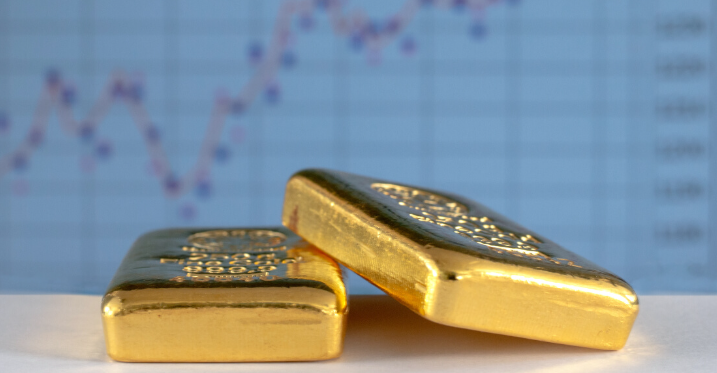
Precious metal reaches unprecedented levels after US jobs data revision shows 911,000 fewer positions created than previously estimated.
Gold surged to a record high of $3,673.95 per ounce on Tuesday, driven by mounting expectations that the Federal Reserve will cut interest rates following a significant downward revision to US employment data and signs of cooling labor market conditions.
The Bureau of Labor Statistics reported that US employment through March 2025 was revised downward by 911,000 jobs, representing a 0.6 percent correction that highlights weaker-than-expected hiring trends. This follows a previous benchmark revision that reduced job estimates by 818,000 for the period through March 2024, marking consecutive years of substantial employment data corrections.
The labor market revisions have intensified market speculation that the Federal Reserve will implement at least one interest rate cut at its upcoming policy meeting, with traders widely anticipating a 25 basis point reduction. Lower interest rates typically benefit gold by reducing the opportunity cost of holding non-yielding assets.
Supporting the precious metal’s rally, the US dollar has weakened to near seven-week lows while Treasury yields have declined, making gold more attractive to investors seeking safe-haven assets. The unemployment rate has increased to the highest level since 2021, adding to concerns about economic momentum.
Gold has surged more than 34 percent in 2025, reaching unprecedented levels above $3,527 per ounce in what analysts describe as one of its strongest rallies in recent years. The current surge surpassed the previous peak reached in April, establishing new territory for the precious metal.
Spot silver also benefited from the precious metals rally, rising 0.3 percent to $40.79 per ounce after hitting its highest level since September 2011. Silver has gained approximately 40 percent year-to-date, reflecting broad-based demand for precious metals as inflation hedges.
Geopolitical tensions and uncertainty over trade policies continue providing additional support for gold demand. A risk-off mood has set in across financial markets, with equities declining and bond yields surging as budget concerns in developed countries resurface.
Goldman Sachs analysts have suggested gold prices could potentially reach $5,000 per ounce if Federal Reserve independence comes into question and investors shift Treasury holdings into precious metals, though such scenarios remain speculative.
The employment revisions underscore challenges facing US economic policymakers as they balance growth objectives with inflation concerns. Private sector jobs were revised down by 880,000 positions, while government jobs were reduced by 31,000 in the latest benchmark adjustments.
For Ghana, where gold exports constitute a major source of foreign exchange earnings, the precious metal’s rally could translate into higher export revenues and enhanced mining sector performance. Local investors may also find opportunities in bullion trading and gold-related investments as global market dynamics influence domestic pricing.
The Federal Reserve’s next policy meeting, scheduled for mid-September, will likely prove crucial for gold’s trajectory. Market participants are closely monitoring economic indicators and Fed communications for signals about the central bank’s monetary policy direction amid evolving labor market conditions.
Central banks worldwide have increased gold purchases in recent years as part of reserve diversification strategies, providing additional demand support for the precious metal. This institutional buying complements retail investor interest driven by economic uncertainty and inflation concerns.
The current gold rally reflects broader investor concerns about economic growth prospects, monetary policy effectiveness, and geopolitical stability. As traditional safe-haven assets, gold and silver often benefit during periods of market uncertainty and currency weakness.
Technical analysts suggest gold could face resistance at current levels, though continued economic weakness and dovish Federal Reserve policies could support further gains. The precious metal’s momentum will likely depend on upcoming economic data releases and central bank policy decisions.

