

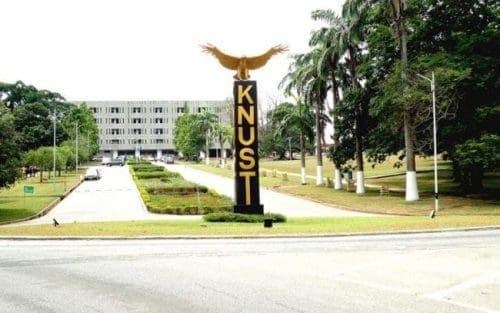
The Kwame Nkrumah University of Science and Technology is set to partner with the Ministry of Food and Agriculture to design and manufacture agricultural machinery locally, part of a wider push to cut Ghana’s reliance on imported farm equipment, officials said Friday.
Deputy Minister for Food and Agriculture John Dumelo said government should direct more contracts to Ghanaian universities to develop homegrown solutions rather than continuing to import equipment. “We should be able to change the norm to allow most of our university students to come up with designs that we can expand on to reduce importation,” he said during a meeting with KNUST Vice-Chancellor Professor Christian Agyare, proposing that the university’s engineering departments lead the design and production of farm machinery for deployment to farmers nationwide. Agyare called the proposal a “laudable initiative,” saying it aligned with the university’s push to convert research into practical solutions.
The meeting also advanced a second collaboration: the development of locally manufactured smart traffic lights for Dumelo’s Ayawaso West Wuogon constituency. Professor Eric Tutu Tchao, Scientific Director of KNUST’s DIPPER Lab, said the project would draw on both the College of Engineering and the College of Science. Dumelo, who holds a civil engineering degree from KNUST, recalled that students at the university had previously built traffic lights and said he wanted to revive that model. “We would like to explore the possibility of engaging KNUST students and faculty to design and manufacture systems that could be deployed within the constituency,” he said, adding that the project could become a template for similar locally built traffic systems elsewhere in Ghana.
The traffic-light proposal follows Dumelo’s earlier, more limited interventions in his constituency: he had a traffic signal controller installed at Okponglo Junction with the Department of Urban Roads last year after the lights there malfunctioned, and the system needed a further restoration in April. The KNUST-led project would aim to build a more durable, locally engineered system rather than relying on repeated repairs to existing equipment.
KNUST said the DIPPER Lab would lead technical implementation of the traffic-light project, with Agyare pledging the university’s support for both initiatives.

