

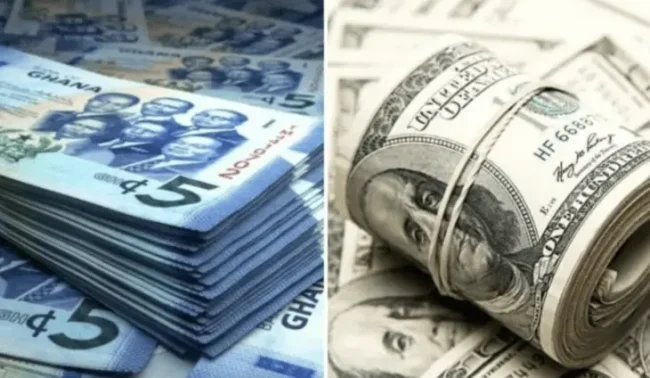
The World Bank has joined international financial institutions in warning Ghana against relying on heavy-handed currency interventions, saying such moves threaten to undermine the country’s economic transformation despite providing temporary relief to anxious markets.
The Bank advised Ghana to resist premature re-entry into international bond markets while maintaining fiscal discipline and avoiding excessive foreign exchange interventions, according to its newly released 2025 Policy Notes titled “Transforming Ghana in a Generation.”
The International Monetary Fund (IMF) flagged earlier this year that the Bank of Ghana’s (BoG) forex market footprint continued to increase, with large-scale interventions reaching $1.4 billion in the first quarter of 2025 alone. That figure surpassed the central bank’s entire intervention for 2023, raising eyebrows among development partners about the sustainability of Ghana’s approach to currency stability.
Rather than burning through scarce reserves to prop up the cedi artificially, the World Bank argues that Ghana’s real priority should be establishing credible fiscal foundations. The institution emphasized that while dumping dollars into the market might calm nerves temporarily, it ultimately chips away at competitiveness, strangles long-term growth prospects, and derails the structural changes Ghana desperately needs.
The warning carries particular weight given Ghana’s track record. After the Heavily Indebted Poor Countries (HIPC) debt relief initiative brought temporary stability, the country quickly slipped back into familiar boom-and-bust patterns because underlying fiscal discipline never truly took root, the Bank noted.
What’s needed instead, according to the World Bank’s assessment, is a sustained commitment to achieving primary fiscal surpluses before debt payments. That approach would send powerful signals to markets, businesses, and ordinary citizens that public debt sits on a sustainable path and that Ghana has genuinely broken with past cycles of excess and crisis.
The BoG has since pulled back considerably, with foreign exchange forward sales dropping to $822.8 million in July 2025, representing a 53.6% decline from June levels. The central bank was notably absent from the market on July 25 and 29, marking its first absence since April.
The practical consequences of artificial currency support play out in real time across Ghana’s economy. When the cedi appears stronger than fundamentals suggest, imports look cheaper temporarily. But when reserves inevitably run low, the currency crashes harder, prices spike, and households watch their purchasing power evaporate. Traders face unpredictable costs, transport operators get squeezed by unstable fuel prices, and the cycle repeats.
Dr. Johnson Pandit Asiama assumed office as Governor of the Bank of Ghana in February 2025, inheriting the challenge of balancing market stability with the institutional warnings from both the IMF and World Bank about intervention risks.
The debate reflects a broader tension in Ghana’s economic management: short-term political pressure to defend the currency versus long-term institutional credibility. Development partners argue the latter ultimately matters more for attracting investment, controlling inflation, and building the foundation for sustained prosperity.
Ghana’s choice comes down to whether it’s willing to endure near-term volatility in exchange for building lasting economic credibility, or whether it’ll reach for the quick fix that international lenders warn could make things worse down the road.

