

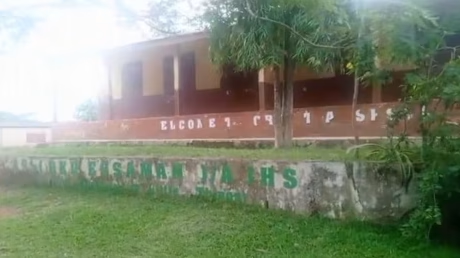
A basic school in Ghana’s Western Region has been shuttered by community members protesting education authorities’ refusal to name the institution after their traditional leader, highlighting tensions over local participation in school governance.
The Assorko community in Shama District closed the school they helped build following a prolonged dispute with the Ghana Education Service over the facility’s official designation. Community leaders want the school named after Chief Nana Brekrom II, while education officials have designated it “Assorko Essaman Model Basic School.”
The closure reflects broader frustrations with municipal education management that community representatives have detailed in a petition to regional education authorities. Bankole Chambers, representing the traditional authority and residents, has submitted formal complaints about the local education directorate’s operations.
According to community accounts, residents contributed significantly to constructing the school under their chief’s leadership with the expectation it would be named “Nana Brekrom Model Basic School.” However, Municipal Director of Education Raphael Aidoo-Taylor assigned the current name without consulting local leadership.
The naming controversy forms part of wider allegations against the municipal education directorate, including claims about declining academic performance and inadequate community consultation. The petition cites concerns about the municipality’s Basic Education Certificate Examination results, which reportedly rank among the region’s lowest.
Community representatives allege that educational mismanagement has undermined trust between local authorities and school administration. The petition claims some headteachers formed alliances with education officials that resulted in unauthorized fee collections from parents.
The dispute illustrates ongoing tensions between traditional authorities and government institutions over community participation in public service delivery. Many Ghanaian communities expect recognition for their contributions to infrastructure development, particularly when they provide substantial local resources.
School naming conventions in Ghana typically reflect geographic locations or honor significant national figures, though communities sometimes seek recognition for local leaders who contribute to educational development. The Ghana Education Service maintains standardized naming policies across the country.
The Assorko situation has disrupted education for local students while the standoff continues. Community action reflects determination to secure what residents view as appropriate recognition for their investment in the school’s construction.
The petition calls for investigations into municipal education management, including financial audits and restoration of community participation in school governance. It also demands the education director’s transfer and the school’s renaming to honor the chief.
Educational governance in Ghana involves multiple stakeholders, including traditional authorities, parent-teacher associations, and government officials. Effective coordination among these groups is considered essential for successful school management and community support.
The Western Regional Education Directorate has not publicly responded to the petition’s allegations or indicated how it plans to address the community’s concerns. Resolution of the dispute appears necessary before normal school operations can resume.
Similar conflicts over community participation in educational governance have occurred elsewhere in Ghana, where traditional authorities maintain significant influence over local affairs while operating within modern governmental structures.
The standoff highlights challenges facing decentralized education management, where local communities expect meaningful participation in decisions affecting schools they help establish and maintain through various contributions.
Students remain affected by the closure as community leaders and education officials work toward resolution. The situation demonstrates how administrative disputes can directly impact educational access and quality at the local level.
The outcome may influence how similar disputes are handled elsewhere in Ghana, where community investment in educational infrastructure often creates expectations about local input in school management and recognition.

