LATEST ARTICLES

Ghana’s Tier 1 trafficking status faces its first test in 2027

0

Ghana’s new Tier 1 ranking in the US Trafficking in Persons Report runs for one year. Keeping it will depend on a national anti-trafficking plan that expires in December and on money for survivor services that civil society groups say is still too thin.

The State Department lifted Ghana to Tier 1 in its 2026 report, published on 8 October, after the government investigated 222 cases, prosecuted 212 suspects and convicted 28 traffickers in 2025, and identified 2,331 victims, almost three times the 794 found in 2024. Tier 1 means a government fully meets the minimum standards set by US law. It is reassessed every year.

Rankings can fall

The same report shows how quickly the status can slip. Seychelles dropped from Tier 1 to Tier 2 this year. Ghana itself spent years on Tier 2 and on the Tier 2 Watch List before this upgrade.

The 2027 report will assess what Ghana does between April 2026 and March 2027. Figures that look strong now become the baseline the country must match or beat.

A plan running out

Ghana’s Human Trafficking National Plan of Action covers 2022 to 2026. It sets out how agencies share the work of prevention, prosecution and protection under the Human Trafficking Act, 2005 (Act 694). No successor plan has yet been published. Gender, Children and Social Protection Minister Dr Agnes Naa Momo Lartey, who chairs the Human Trafficking Management Board, set Tier 1 as the board’s goal when it was reconstituted in July 2025.

Where the gaps are

The State Department identified weaknesses that could pull Ghana back. Officers lack the training and equipment to investigate trafficking tied to cybercrime and online scams. Shelter space for adult victims is short, and some officers have used their own money to support survivors. Ghanaian law still allows employers and agents to charge migrant workers recruitment fees.

International Justice Mission (IJM) Ghana, which works on child trafficking on Lake Volta, welcomed the upgrade on 9 October but called for more investment in survivor services and specialised training to tackle technology-enabled trafficking. It said resources for anti-trafficking work in rural communities remain inadequate and that children are still exploited in fishing, domestic work, street hawking, farming, mining, quarrying and herding.

Anita Budu, Director of IJM’s West Africa Programme, said thousands of children and vulnerable adults remain at risk. IJM urged the government to treat the ranking as a reason to fund frontline agencies properly, not as a sign the fight is won.

What to watch

The State Department expects identification and convictions to hold up and protection to improve. That makes the next national plan, its budget, shelter capacity for adults and a cybercrime investigation unit with proper tools the measures on which Ghana’s 2027 ranking will turn.

Ghana’s transformer targets keep rising as grid faults persist

0

Energy Minister Dr John Abdulai Jinapor has put 3,000 new transformers at the top of his 2027 priorities, the latest in a series of rising targets that began at 1,500 in March. The bigger risk to Ghana’s power supply this year, though, has come from further up the system.

Jinapor set out the goals after a review of the 2026 performance of agencies under the Ministry of Energy and Green Transition, directing them to improve efficiency and accountability and deliver measurable results. His priorities include more transformers, a more reliable supply and keeping domestic oil refining going.

For households and businesses, the measure is simple: fewer outages, steadier voltage and lower costs. On that test, 2026 has been mixed.

A moving target

The transformer programme has grown with each announcement. At the launch of the Electricity Company of Ghana’s (ECG) corporate strategy in March, Jinapor said about 1,500 new units would be in place by the end of that month. By late April the plan had become 2,500, with about 200 installed that month and another 140 on the way. He has also described a rollout of about 2,000 distribution transformers. The 2027 figure is 3,000.

The reason is not in dispute. In April, Jinapor said demand had almost doubled in recent years and that many transformers were obsolete and overloaded after years of underinvestment, causing overloads, low voltage and erratic supply. Some units being replaced in Accra had been in service for 22 years. ECG has been fitting larger units, moving from 20 kVA to 30 kVA and above, and upgrading primary substations at Adenta, La, Teshie-Nungua, Nmai Dzorn, Baatsona and Lashibi.

What has been harder to track is delivery. The ministry promised a nationwide replacement timetable in May. Progress figures have come in fragments, and there is no public count of how many of the promised units are now in service or where.

The faults upstream

New transformers address local problems: the street that browns out every evening, the shop whose fridge fails on low voltage. They do not prevent the kind of failure that hit the whole country twice this year.

On 29 July, a disturbance on the national transmission system tripped several power plants at once and cut supply to Accra, Kumasi and much of the north. On 20 August, a fault on the Akosombo-Volta transmission line knocked out the Akosombo units and some thermal plants. Both outages began on the network run by the Ghana Grid Company (GRIDCo), not on ECG’s distribution lines. The Institute for Energy Security has demanded publication of the technical report into the July blackout, which had not been released by the time of the second.

A credible 2027 plan therefore needs a transmission line item and a public account of what went wrong in July and August, alongside the transformer count.

The money question

Reliability also depends on whether the sector can pay its way. ECG’s losses through technical faults, theft and weak collection leave it short of cash to pay generators and fuel suppliers, and the Treasury fills the gap. Jinapor has acknowledged that Ghana’s programme with the International Monetary Fund requires quarterly tariff adjustments to reflect the cost of power, and has told ECG it may disconnect government agencies that do not pay their bills.

His call for accountability will be judged on whether those losses fall, not on how many units are installed.

Refining: restarted, not yet proven

The Tema Oil Refinery (TOR) resumed crude processing on 19 December 2025 after more than six years of inactivity and a three-month overhaul of its crude distillation unit. President John Dramani Mahama commissioned the refurbished unit on 1 August 2026, as the refinery received Ghana’s own Jubilee crude for local processing. TOR also took in a million-barrel cargo of Nigerian Bonga crude through its tolling partner.

The refinery runs at about 28,000 barrels per stream day and aims to reach its nameplate 45,000 once a new furnace is integrated. The test for 2027 is whether it can secure crude and working capital steadily enough to avoid the stop-start record that kept it idle from 2018.

Ghana’s film industry struggles to turn movies into money

0

Ghanaian filmmakers can make films. Getting paying audiences to watch them is the harder part, and without that, investors will not come.

That was the message from producers and regulators at the launch of the second Peruvian Film Festival at the University of Media, Arts and Communication (UniMAC) in Accra on 8 October 2026. It lands five months after the government launched a GH¢20 million Film Development Fund to revive the industry, of which only a quarter had been released by May.

The festival, organised by the Embassy of Peru with the National Film Authority (NFA) and UniMAC, was billed as a cultural exchange. The panel discussion turned instead to money: who distributes Ghanaian films, who watches them, and how anyone can tell.

A market without numbers

Producer, screenwriter and film educator Yaw Firempong Boakye said the industry’s shortage of reliable data was holding back private investment. Investors want to know how many people watch a film, where and what it earns. Without consistent records of cinema attendance, streaming figures and box office revenue, a producer pitching a project has little to show beyond enthusiasm.

That gap affects more than producers. Every film that fails to recover its costs means less work for the actors, writers, editors and camera crews who depend on the next one getting made.

Filmmaker and creative director Epiphania Sarah Ama Ablorde said she thinks about the market from the start. “I’m very particular how marketable the film is,” she said.

Too few screens

Kafui Danku-Pitcher, who heads the NFA, acknowledged problems with distribution, production quality and access to audiences, and called for a more coordinated system to move Ghanaian films into cinemas and onto digital platforms. Promoting the distribution and exhibition of local films is part of the authority’s legal mandate.

Cinemas remain scarce outside the big cities. James Gardiner, the NFA’s deputy head, outlined plans to bring screenings closer to communities, though such schemes need steady operating funds and a reliable supply of films people want to see.

Streaming offers another route, but uploading a film does not guarantee an income. Producers still need distribution deals, marketing and clear reporting of viewing and earnings to know whether an online release pays.

The fund’s first test

Finance Minister Dr Cassiel Ato Forson announced the GH¢20 million Film Development Fund in the 2026 Budget, presented on 13 November 2025, as seed money to revive an industry including Kumasi’s Kumawood productions. A separate GH¢20 million went to a Creative Arts Fund.

The NFA launched the film fund on 20 May 2026 at Silverbird Cinemas in Accra and inaugurated a committee to manage it. At the time, the authority said the government had released GH¢5 million. The fund is meant to support research, training, infrastructure and eligible projects, and licensed filmmakers and companies are expected to pay a levy into it.

NFA Board Chair Ivan Quashigah warned at the launch that the fund was not a bonanza and said the industry’s future lies in audience development and market expansion. Producer Kofi Asamoah urged that the money go into production rather than workshops.

The panel in Accra suggested the two aims are linked. Films financed by the fund will face the same question as every other Ghanaian production: whether anyone can show they made money.

Looking abroad

Jonathan Quevedo, Peru’s Deputy Ambassador to Ghana, said conversations at festivals can lead to co-productions, academic exchanges and lasting partnerships between film communities. Peruvian director and lecturer Rossana Díaz Costa, who joined from Madrid, offered a more sober note. “You need a lot of patience if you want to be a filmmaker,” she said.

Matilda Ntiriwaa Kyei, the embassy’s cultural promotion officer, moderated the discussion. The festival runs at UniMAC’s South Legon campus.

Banks could sue Controller over unpaid loan deductions, Atuahene says

0

Banks could sue the Controller and Accountant-General’s Department (CAGD) over loan repayments deducted from public workers’ salaries but not passed on, banking consultant Dr Richmond Atuahene has said.

His comments raise the stakes in a dispute that could cut off credit to hundreds of thousands of teachers, nurses, doctors and other government employees. The Ghana Association of Banks (GAB) has warned that its members may stop new lending to workers paid through the CAGD payroll within weeks unless the backlog is cleared.

GAB Chief Executive John Awuah said deductions for loan repayments had already been taken from workers’ pay but not remitted to lenders, and that the arrears stretched back three months as of October. Banks, he said, were being forced to book impairments on debts that should have been settled.

The pressure comes as the Bank of Ghana pushes lenders to bring their non-performing loan ratio down to 10 per cent. Unremitted deductions show up on banks’ books as unpaid loans, even though borrowers have had the money taken from their salaries.

Atuahene said the CAGD’s role is to deduct repayments and pay them over to lenders, and that holding on to money already taken from workers raises questions of contract and accountability. He questioned how deductions could be made without the funds reaching the banks and asked whether the delays were deliberate. Banks could consider legal action against the CAGD and possibly the Finance Minister, he said.

Whether such a claim would succeed would turn on the agreements governing payroll deductions, the CAGD’s statutory duties and evidence of what was deducted and what remains unpaid. Naming a minister or official as a defendant would not on its own establish personal liability.

Atuahene said the delays had already cost lenders. He cited an unnamed savings and loans company that he said wrote off about GH¢6 million in 2024 because expected repayments never arrived. The money at risk ultimately belongs to depositors, he said, and bad loans rise when it is withheld. “If you don’t pay, what is it? The non-performing goes up,” he said.

He urged President John Dramani Mahama’s government to step in, warning that the delays threaten lenders’ balance sheets and could restrict credit to public sector workers who rely on salary-backed loans.

Payroll remittance delays are not new. Graphic Business reported in 2014 that the CAGD owed public workers about GH¢300 million in pension contributions it had deducted but not paid over, a gap a senior official at the time blamed on government liquidity problems.

The CAGD has not publicly responded to the banks’ complaint. GAB has not said when it will decide on suspending lending.

Kasapreko forecasts record 2026 profit as Mahama tours factory

0

Kasapreko PLC expects record revenue, sales volumes and profit in 2026, Chief Executive Richard Adjei said on 8 October as President John Dramani Mahama toured its Spintex factory.

The forecast is the first full-year signal from the beverage maker since it joined the Ghana Stock Exchange (GSE) in June, and it gives shareholders a yardstick for the company’s first annual results as a listed firm. “We will record our highest revenue, our highest volume of sales, and our highest profits,” Adjei said.

The numbers so far point that way. Kasapreko’s revenue rose to GH¢3.5 billion in 2025 from GH¢660 million in 2020, and profit after tax reached GH¢341.8 million. First-quarter 2026 profit climbed 55 per cent year on year to GH¢73 million. The company’s prospectus projected net income of GH¢439 million for 2026, which would be about 28 per cent above last year.

Its initial public offering (IPO) sought GH¢700 million by selling 583.3 million new shares at GH¢1.20 each and drew bids worth about GH¢1.72 billion, roughly US$150 million at June exchange rates, from more than 18,000 investors. Because the offer was more than twice oversubscribed, the board allotted shares pro rata and raised the GH¢700 million it targeted. Kasapreko listed on the GSE main market on 15 June with 4.13 billion shares valued at GH¢4.96 billion. Its offer followed an oversubscribed IPO by Zen Petroleum Holdings in March.

Most of the IPO money is going into a new factory at Adeiso in the Eastern Region. The company says the plant will be about three times the size of its Spintex site, with high-speed lines for water, juices and carbonated soft drinks able to fill about 250,000 bottles an hour between them. It expects the project to create about 1,000 direct and indirect jobs and to strengthen its reach into West African markets under the African Continental Free Trade Area. For comparison, the four lines Kasapreko opened at Spintex in 2015 were built for 110,000 bottles an hour.

The company also plans to move into agro-processing to add value to Ghanaian produce and cut its reliance on imported raw materials.

Mahama, who commissioned the US$70 million Spintex lines during his first presidency in December 2015, called Kasapreko a proud Ghanaian brand and pointed to its exports to the United States, South Africa and East Africa. He said a relatively stable cedi, falling interest rates, tighter fiscal management and rising foreign direct investment made this the right time for businesses to invest.

He also praised Trade, Agribusiness and Industry Minister Elizabeth Ofosu-Adjare for engaging closely with manufacturers. His government is targeting a rise in manufacturing’s share of gross domestic product to at least 15 per cent by 2030.

Founded in 1989 in Nungua with five employees, Kasapreko makes alcoholic bitters, gins and liqueurs as well as water, juices and soft drinks, and runs a second factory at Tanoso in the Ashanti Region.

Oil ends higher as hurricane outweighs Trump’s Iran pledge

Brent crude settled 44 cents higher at US$104.72 a barrel on 9 October as Hurricane Isaias shut more than 70 per cent of US Gulf of Mexico output, erasing earlier losses.

US benchmark West Texas Intermediate (WTI) finished 36 cents up at US$91.85. Both contracts were on course for a weekly gain, Reuters reported, after a week in which fears over the US-Iran war and a storm bearing down on American oil platforms pulled prices in opposite directions.

For importers, including Ghana, the week settled nothing. Brent has held above US$100 since early September, and every swing feeds through to fuel import bills and pump prices.

Prices fell early on Friday after President Donald Trump said Washington was holding “productive discussions” with Iran and would not attack before the 3 November midterm elections. He spoke after media reports that he was weighing a strike before then. PVM Oil Associates analyst Tamas Varga said Trump’s pledge and China’s resumption of fuel product exports were weighing on the market.

The selling faded as the hurricane moved towards the northern Gulf of Mexico. Producers had shut in about 1.3 million barrels a day, or 62.9 per cent of current Gulf output, by Thursday, according to the US Marine Minerals Administration. Sources told Reuters the figure had passed 70 per cent by Friday. Operators had evacuated 121 of the Gulf’s 371 manned platforms by Thursday, and any storm damage would keep that oil offline for longer than routine safety checks.

The Friday settlement followed a 4.1 per cent jump on Thursday, when Brent closed at US$104.28. That rally came as Iran stepped up attacks on tankers in the Strait of Hormuz, Houthi fighters fired ballistic missiles at the Saudi capital Riyadh, and an adviser to Iran’s supreme leader said the strait would stay closed until outstanding issues were resolved.

Before the war, about a fifth of the world’s oil and fuel passed through the strait. Iran’s Tasnim news agency reported that Foreign Minister Abbas Araqchi was reviewing a US response to Tehran’s proposal to reopen the waterway within seven days, with a reply expected within days.

Washington has kept up economic pressure regardless. It is maintaining a naval blockade of Iranian ports and has imposed new sanctions on individuals, networks and 17 vessels accused of carrying Iranian crude, fuel and petrochemicals.

Trump told reporters in September that oil prices were unlikely to fall until after the midterms. The conflict, now in its eighth month, pushed Brent back above US$100 on 9 September for the first time since July.

Traders now await Tehran’s reply on the Hormuz proposal and the Marine Minerals Administration’s damage assessments once Isaias makes landfall.

Supreme Court ruling warns buyers off unreleased State land

0

Land buyers who pay a stool or family for plots the State has compulsorily acquired, betting that the government will hand the land back, get nothing, the Supreme Court has ruled in a judgment now being enforced at Borteyman near Tema.

On 8 October 2026, Sino Africa Development Company Limited issued a public notice warning people not to buy, lease or accept grants of the disputed land from its opponents in the case. It asked anyone who acquired and built on the land before 3 June 2026 to contact the company or its solicitors within 30 days, with copies of their title documents, to clarify how the ruling affects them.

The notice follows the court’s 3-2 decision on 3 June in Sino Africa Development Co. Ltd v. Royal Bell Investments Ltd & Ors (Civil Appeal No. J4/44/2025). The judgment overturned a majority ruling of the Court of Appeal from 27 March 2025 and carries a warning for anyone dealing in land along Accra’s fast-growing eastern fringe.

How the dispute arose

The colonial government compulsorily acquired about 2,570 acres of Nungua Stool land at Borteyman, known as Nungua Farms, in 1940 for animal husbandry. That acquisition vested the land in the government and extinguished the stool’s interest.

Decades later, the government agreed to release part of it. A lease executed on 12 August 2010, with effect from 16 April 2009, returned about 974.53 acres to the Nungua Stool.

Before that release, between 1996 and 2000, the stool had already made grants of portions of the land. Sino Africa took two subleases from the stool on 16 August 2010, days after the release, with Lands Commission consent. The two disputed parcels cover about 328.877 acres.

What the court decided

Writing for the majority, Justice Bartels-Kodwo held that from 1940 until the release took effect in April 2009, the Nungua Stool had no title to the land and so could not grant it to anyone. The court applied the long-standing rule that a person cannot give what he does not have, and its earlier ruling in Memuna Moudy v. Antwi that compulsory acquisition destroys all competing interests in the land.

The grants made in that period were therefore invalid. The government’s later release did not cure them, and neither did any later government recognition of those deals. The court held that the State could not make lawful by recognition what the law had already treated as unlawful.

Why ‘feeding the estoppel’ failed

The earlier grantees argued for the doctrine of feeding the estoppel, under which a person who sells land he does not yet own may be bound to pass the title once he later acquires it.

The majority said the doctrine has limits. The original grant must clearly assert that the seller holds the title. It gives way to a later buyer who paid in good faith without notice of the earlier deal. And the person relying on it must have acted in good faith.

The earlier grants failed on all three counts, the court found. Some of the documents openly recorded that the government had not yet released the land and that the families approached the stool only because a release was expected. In the court’s view, the buyers knew the stool had no title and went ahead anyway, and equity will not protect someone in that position.

Justice Tanko Amadu, concurring, said parties cannot deal in State land before its release and then rely on equity to validate those transactions.

Sino Africa, by contrast, bought after the release and with Lands Commission consent. The court found no concrete evidence that it knew of the earlier grants and treated it as a buyer in good faith.

What the orders say

According to Sino Africa’s notice, the court declared title in the company’s favour except for the parcel claimed by Royal Bell Investments Limited and Terraform Development Limited, the first and second defendants. The company’s right to recover possession is also subject to those two firms’ possessory rights. The court imposed a perpetual injunction on the five other defendants and anyone claiming through them.

Anyone who now deals in the land through those parties does so with full notice of the judgment “entirely at his or her own risk”, the notice said.

The wider lesson

The principle reaches well beyond Borteyman. Large areas around Accra and Tema were compulsorily acquired decades ago and have been partly released, informally occupied or resold. The ruling means a grant made before an official release is worthless, however confident the parties were that the land would come back, and buyers who ignore that risk losing their plots to a later purchaser who waited for the release.

Sino Africa said a certified copy of the judgment and a site plan are available for inspection at its solicitors’ offices.

California law forces big firms to disclose slavery ties

0

Large companies in California must search their records for slavery-era transactions and swear to the results under a law Governor Gavin Newsom signed on 30 September 2026.

The Truth in Disclosure Act, Assembly Bill 2599, makes California the first US state to require such corporate disclosures, and the findings will be published in a public database. It does not create any compensation scheme for descendants of enslaved people.

The law covers companies doing business in the state with more than US$100 million in annual worldwide gross receipts that existed, or had a predecessor that existed, on or before 31 December 1964. They must search their own records and those of related entities for evidence that they bought or sold enslaved people, used them as collateral for loans, financed their purchase or insured them.

Where records turn up, companies must disclose the names of enslaved people and slaveholders they find, along with evidence of transactions that generated profit from slavery. Executives must file affidavits under penalty of perjury confirming the search was done. The state’s Civil Rights Department is to build the searchable platform where the affidavits and records will appear.

Nothing happens until the Legislature funds it. For companies doing business in California on 1 January 2028, the first affidavits fall due on 15 January 2029, or later if the platform is not ready.

Assembly member Isaac Bryan, a Culver City Democrat who wrote the bill, has argued that private corporations across the United States grew rich on the free labour of enslaved people. He told CalMatters he expects financial-sector firms to be among those filing.

Newsom, speaking in an interview with civil rights lawyer Bryan Stevenson cited by Fox News Digital, described records of insurance policies written on enslaved people and of human beings pledged as collateral. “Accountability, as Bryan said, starts with the truth,” he said.

The state’s Reparations Task Force, set up under a law Newsom signed in 2020, issued more than 100 recommendations in 2023 covering possible compensation as well as housing, education, policing and health. Its report pointed to JPMorgan Chase, which apologised in 2005 after research found two predecessor banks in Louisiana had accepted about 13,000 enslaved people as loan collateral and took ownership of about 1,250 when borrowers defaulted. Newsom has so far declined to back direct cash payments.

The insurance industry pushed back. Several insurer groups told the state Senate Judiciary Committee the bill largely duplicates a 2000 law that already required insurers to research and report slavery-era policies to the California Department of Insurance.

Republicans also criticised the measure. Republican National Committee Press Secretary Natalie Baldassarre told Fox News Digital that California should focus on affordability instead. The Alliance for Reparations, Reconciliation and Truth and the California chapter of the Council on American-Islamic Relations welcomed the law.

The state Senate passed AB 2599 on 27 August. Supporters say it is the 15th reparations-related bill passed since the task force reported.

Fire destroys shops at Kumasi Central Market near Aboabo

0

Fire destroyed several shops at the Kumasi Central Market near Aboabo Station on 9 October 2026, with residents fighting the flames before fire crews arrived.

Ghana National Fire Service (GNFS) personnel later took over at the scene, according to footage aired by Kumasi radio station Zuria FM and shared online. Videos show the fire tearing through a row of shops while traders carried out what goods they could reach.

The cause of the fire is not yet known. The fire service has not given a figure for the number of shops destroyed, the value of goods lost or whether anyone was hurt.

For traders, the timing is harsh. Many stock goods on credit, and a fire wipes out both their wares and their means of repaying suppliers.

The Kumasi Central Market, opened in 1924 and among the largest open-air markets in West Africa, has burned repeatedly. About 50 shops were destroyed on 30 July 2020, and more than 20 in April 2021, when the Ashanti Regional fire command blamed illegal and unprotected electrical wiring. Fire officers have also pointed to cooking with gas cylinders and stoves inside the market, and to the burning of rubbish, as recurring risks.

Kumasi has had other large market fires this year. In January 2026, more than 100 wooden and metal stalls burned at Anloga Market, the city’s second major fire in 24 hours. The fire service said congestion and poor stall layout had hampered firefighting there.

The GNFS is expected to begin investigating the cause once the fire is fully put out.

Teacher unions suspend strike on pledge of October arrears

0

Ghana’s three teacher unions suspended their nationwide strike on 9 October 2026 after the government promised to pay promotion arrears to 51,000 teachers by 16 October.

Teachers are expected back in public school classrooms on Monday, 12 October, ending a walkout that began on 25 September and kept pupils at home for about two weeks.

The Ghana National Association of Teachers (GNAT), the National Association of Graduate Teachers (NAGRAT) and the Pre-Tertiary Teachers Association of Ghana (PRETAG) called off the action after talks involving the Council of State and the Fair Wages and Salaries Commission (FWSC). The unions insist the dispute is not settled.

“Negotiations have not ended or concluded,” GNAT General Secretary Thomas Musah said on Citi TV’s Eyewitness News, adding that the unions would keep negotiating until every issue was resolved.

Under the commitments reached, the first batch of promotion arrears goes to 51,000 teachers by 16 October, with remaining payments due by the end of the month. A digital support allowance is to be paid in November and the continuous professional development allowance in December. The 20 per cent deprived-area allowance for teachers in rural postings is due to start in January 2027, with details to be agreed by November or December.

The unions have asked for copies of the agreements to be lodged with the Council of State, a step aimed at holding the government to its timetable. Promises that were not kept triggered the strike in the first place.

The Ministry of Education welcomed the suspension in a statement, describing it as a step towards resolving the outstanding concerns through dialogue in the interest of teachers and learners.

The unions walked out after a 24 September deadline passed without a settlement. They accused duty bearers, particularly the FWSC, of long delays and broken promises, and said the grievances had stirred anger among their members. Their demands included placing teachers who passed promotion examinations in December 2025 and February 2026 on their correct salary scales, payment of arrears dating from January 2026, the deprived-area allowance and a new Collective Agreement.

That agreement expired in June 2026. GNAT says it submitted proposals for its renewal in August 2025, but talks with the FWSC had made little progress. A NAGRAT official in the Western Region said earlier this month that of almost 60,000 teachers who received promotion letters, only a little over 6,000 had been placed on the right salary scale.

Education Minister Haruna Iddrisu and Finance Minister Dr Cassiel Ato Forson had urged the unions to return to class while talks continued. The unions refused, saying teachers wanted to see the money on their payslips rather than fresh assurances. Talks with the FWSC on 6 October ended without agreement, with the commission promising new grades for all promoted teachers on or before 30 October.

Negotiations on the new Collective Agreement are set to continue with the commission.

GRA plans backup Customs payments after airport receipt row

0

The Ghana Revenue Authority (GRA) will introduce backup payment procedures for system outages after a traveller left Accra International Airport without a receipt on 3 October.

The passenger, Gifty Osei Bonsu, paid GH¢800 towards Customs duty but departed before an official receipt could be issued, prompting allegations of extortion on social media. In a statement on 9 October, the GRA apologised to her, denied any wrongdoing by its officers and said it would change how Customs handles payments when its systems fail.

The case goes to the heart of a long-running complaint from travellers at Ghana’s main gateway: cash changing hands with no paper trail. GRA’s standing advice is that every duty payment should come with an official receipt, and this one did not.

According to the GRA, Bonsu arrived on an EgyptAir flight at 12:48 p.m. Her luggage was pulled for further checks after scanning, and officers found 20 pairs of new women’s shoes, nine new dresses, 18 new men’s shirts and four new wigs. They assessed duty of GH¢807.68 on the shoes.

The Integrated Customs Management System, which processes all Customs transactions, was down when the assessment was raised, the Authority said. Bonsu told officers she had a connecting flight, paid GH¢600, and a friend added GH¢200. She left before the system came back.

The officers covered the remaining GH¢7.68 from their own pockets, the GRA said, and the full GH¢807.68 was paid into its revenue account at Ecobank at about 4:57 p.m. the same day. A receipt was later generated in her name. The Authority said its preliminary investigation found the duty “was duly accounted for”.

The GRA nonetheless accepted that Bonsu had waited too long and said a system failure should not leave passengers facing uncertainty. It is also reviewing how Customs officers deal with travellers at entry points, with a focus on professional conduct, clear explanation of duty assessments and proper records of payments.

The Authority said it is preparing guidance on which goods attract duty, how charges are calculated, and how passengers can challenge an assessment or report an officer. Details of the new procedures and complaint channels will be published later. Until then, it urged travellers with dutiable goods to insist on an assessment notice, pay only through approved channels and collect an official receipt for every payment.

Bonsu’s public account of the encounter has not been independently reviewed by NewsGhana.

It is not the first time the GRA has had to answer extortion claims at the airport. In December 2025, it rejected allegations from a traveller charged GH¢12,690.63 on 18 undeclared mobile phones, saying the duty was assessed through the Customs system and an official receipt issued.

Mahama defends trotro preaching rule as clerics split over ban

0

President John Dramani Mahama has said Ghana has not banned preaching in vehicles, only in moving ones, as pastors split over a road traffic rule carrying jail terms.

The clarification came as Citi News reported that the government had suspended enforcement of the provision while it consults further following a public backlash. The government has not issued an official statement on the scope of the suspension or what happens next.

The dispute centres on Regulation 141 of the Road Traffic Regulations, 2026 (L.I. 2519), which Parliament passed in May. It makes it an offence to cause or permit a nuisance, including preaching and hawking, in a public or commercial vehicle while it is moving. Offenders face a fine of 10 to 50 penalty units, which comes to GH¢120 to GH¢600 at GH¢12 a unit, up to eight months in prison, or both.

The restriction itself is not new. Regulation 116 of the 2012 Road Traffic Regulations already banned preaching and hawking in moving commercial vehicles, with a maximum of 30 days in prison, but it was rarely enforced. The 2026 rules raise the penalties, and the Ministry of Transport has been running public education on them alongside other reforms, including automated enforcement and a demerit-point system for drivers. Preachers using megaphones at lorry stations and markets are not covered.

Mahama said the rule applies to everyone regardless of faith and exists to protect drivers and passengers from distraction. Preachers can still address passengers when a vehicle is parked, he said. “It is not true that we have banned preaching in vehicles,” he said.

Religious leaders have reacted sharply. Rev. Dr Kwadwo Boateng Bempah, Head Pastor of Holy Hill Chapel of the Assemblies of God, told his congregation in a sermon that circulated widely online that the restriction was an attempt to gag the church and would fail. He asked why preaching on buses should be singled out when others use loudspeakers in public early in the morning.

Prophetic Hill Chapel founder Nigel Gaisie said in a Facebook post on 8 October that he would soon preach on buses and lorries and dared the authorities to arrest him, GhanaWeb reported.

Prophet Telvin Sowah Adjei, speaking in an interview with broadcaster Nana Romeo, argued that a sermon was no more of a nuisance than passengers making phone calls, playing music or watching videos. He suggested the government’s real concern may be preaching that turns into arguments, which drivers may not want on board, according to GhanaWeb.

Prophet Kumchacha took the opposite view. He said pastors should obey the law and take their objections through proper channels rather than threaten defiance, arguing that the Bible teaches respect for the law, GhanaWeb reported.

Supporters of the rule say passengers should not be subjected to unwanted sermons during a journey and that a preacher standing in a moving bus aisle is a safety risk. Opponents say evangelism is a religious duty protected by freedom of worship.

The Central Charismatic Baptist Church has separately called for the provision to be reviewed.

In Togo, women turn to their hairdressers long before health professionals, new study finds

0

Bluemind Foundation’s Trust Study, conducted with 576 women, examines an overlooked part of mental health systems: trust.

When facing a difficulty, 30% of women surveyed in Togo say they first turn to their hairdresser. Fewer than 1% name a health professional.

The findings come from the Trust Study, released today by Bluemind Foundation ahead of World Mental Health Day on Oct. 10, which this year focuses on lived experience. The exploratory mixed-methods study involved 576 women (205 clients and 371 hairdressers) in Lomé, Kara, Sokodé and Dapaong between April and June 2026. It asks a question often missing from debates about the mental health treatment gap: what happens before someone reaches the health system, and whom do they trust enough to speak to first?

Manuela Siakou, Heal by Hair ambassador, Lomé, 2026.

Among the findings

  • 30% of clients surveyed turn first to their hairdresser, after family (41%) and ahead of friends (11%). Fewer than 1% turn first to a health professional.
  • 89% of clients interviewed in depth say they tell their hairdresser things they say nowhere else.
  • 100% of hairdressers interviewed say they have noticed a client was struggling before she put it into words.
  • 99% of clients surveyed would accept, or consider, a referral to professional support from their hairdresser (69% yes, 30% maybe).
Whom clients turn to first when facing a difficulty. Source: Bluemind Foundation, Trust Study 2026.

The study does not suggest that hairdressers should become therapists. It identifies what makes some everyday relationships matter for mental health: repeated contact over time, discretion, nonjudgment, and a degree of distance from family and close friends. Close, but not too close.

That relationship over time also makes change visible. A hairdresser may notice that a regular client is quieter, more withdrawn or different from usual, sometimes before she says anything.

“Women often already know who they trust enough to speak to first. The question for health systems is what happens next. Trust can make speaking possible, provide an initial form of support and, when more help is needed, open a path toward care. But a referral is only as useful as the care available at the other end.”
— MARIE-ALIX DE PUTTER, FOUNDER AND PRESIDENT OF BLUEMIND FOUNDATION

Trust already exists. Training changes what can be done with it.

Since 2021, Bluemind Foundation’s Heal by Hair program has trained hairdressers to listen without judgment, keep confidences, recognize signs of distress, respond safely to difficult disclosures, including violence, understand the limits of their role, and refer women to identified professionals.

The Trust Study does not measure the impact of Heal by Hair. It examines the relationship the program is built on. Heal by Hair does not create that relationship; it changes what hairdressers can do with it.

Marie-Alix de Putter, founder and president of Bluemind Foundation, with Heal by Hair ambassadors, Kara, 2026.

Beyond the salon

For health systems, the implications reach well beyond hair salons. Where does trust already exist in communities, and what role can those relationships play in making support, and when necessary formal care, easier to reach?

The question matters most where specialist care is scarce. Nearly 150 million people in Africa live with a mental health condition, and fewer than one in ten receive any form of support. Togo has fewer than ten psychiatrists for more than 9 million people, according to the World Health Organization.

Trust alone cannot close that gap. Bluemind Foundation argues that community-based pathways must be developed alongside investment in professional services, referral systems and the mental health workforce.

“The goal is not to medicalize everyday relationships. It is to understand the human infrastructure that already exists around people, and to connect it safely to stronger systems of care.”
— MARIE-ALIX DE PUTTER

Research from Africa, for a global question

Mental health research remains scarce in francophone Africa and underrepresented in the global literature. The Trust Study starts from the opposite direction: documenting a relationship observed in Togo, testing what can be learned from it, acknowledging what cannot be generalized, and asking whether similar mechanisms exist elsewhere.

The study is exploratory and descriptive. It does not measure therapeutic impact or establish causality. Its central proposition is one for further research: mental health systems may need to understand not only where care is delivered, but the human relationships through which people first become able to seek support.

Mental health is health.

When Insult Becomes the Medium: Reading Ghana’s Public Speech

Ghana’s public insults are not just bad manners. They are a signal of institutional stress — and a state that polices the language without hearing the grievance risks treating the symptom as the disease. The danger, then, is not simply that Ghanaians are insulting one another. It is that society may gradually lose the ability to disagree without destroying the possibility of living together.

Ghana’s communication environment is undergoing a significant shift in the character, function and political economy of public speech. What was once isolated abusive language in newspapers, radio phone-ins and political commentary has become an organising mechanism of public engagement.

I call this phenomenon the Insult Medium: a communicative environment in which insult, ridicule, profanity, humiliation and antagonistic speech no longer function merely as content carried by the media. They have become a medium in their own right — one through which political grievances, social identities, institutional distrust and struggles for visibility are negotiated.

The argument builds on my own media-monitoring work, which began in 2005. That July, research by the Centre for Media Analysis (CMA) challenged the tendency to blame the media for negative reportage, arguing that the media reflects the feelings and thinking of society. A 2006 CMA assessment went on to identify 368 insults across 47 newspaper columns in the first two quarters of that year alone. This essay returns to that early observation under radically changed technological conditions.

Drawing on Marshall McLuhan, Mikhail Bakhtin, bell hooks, Frantz Fanon, Jürgen Habermas, James C. Scott, Gloria Anzaldúa, Homi Bhabha, Shoshana Zuboff and Lauren Berlant, I propose five connected concepts: Public-Voice Weaponry (PVW), the Public-Truth Filter (PTF), Public-Expectations Deficiency (PED), Lingual-Desertification and the Digital Coyote.

My argument is that public insults in Ghana should be neither romanticised as democratic resistance nor dismissed as social indiscipline. They form a stratified phenomenon whose political meaning depends on the target, the truth content, the power relationship, the gendered character of the attack and its place in the economy of attention.

Understanding insults is not defending them

One boundary must be set before going further. This essay does not advocate insults. It supports President John Mahama’s call at a public forum in the USA , for the Ghana Journalists Association (GJA) and civil-society organisations to open a dialogue on the scale of insults in Ghana’s public space.

It does not defend personal abuse, defamation, harassment, threats, incitement or speech that creates a genuine national-security risk. Nor does it argue that citizens should be immune from the legal consequences of demonstrably harmful speech simply because that speech grows out of political frustration.

The argument is analytical, not celebratory. Asking why are people insulting? is a question of sociology, political communication and intelligence. Arguing that people should be allowed to insult without consequence is a question of law and public policy. Confusing the two is a serious analytical error.

The central proposition is therefore twofold:

  • An insult may be socially significant without being legally legitimate.
  • An insult being offensive does not automatically make it a security threat, or establish defamation.

The rest of the framework depends on that distinction.

Three kinds of insult: expression, defamation and threat

Ghana’s current debate on insults routinely collapses three different categories: insult as political and social expression, insult as defamation, and insult as a personal or national-security threat. They can overlap in a given case, but they should never be treated as the same thing.

Dimension Political / social expression Defamation Personal or national-security threat
Primary function Expression, protest, ridicule, anger Injury to reputation through an actionable falsehood Intimidation, coercion, violence or destabilisation
Main question What grievance is being expressed? Is a damaging factual claim false and legally actionable? Does the communication signal credible harm or serious security risk?
Typical target Public policy, institution, politician Individual or organisation Individual, institution, critical infrastructure or the state
Relevance of truth May carry a legitimate grievance Central to whether it is defamatory Bears on the credibility and seriousness of the threat
Public-interest dimension Often substantial May or may not exist Potentially substantial
Security significance Usually low on its own Not inherently a security issue Potentially very high
Appropriate response Engagement, verification, political accountability Legal remedy where applicable Threat assessment and a proportionate security response

The point of the table is simple: the same word can fall into entirely different categories depending on its context, target, factual content, intent and consequences.

  1. The medium is the malice

Tune into a Ghanaian morning radio show, join a political discussion online or scroll through social media, and one feature of the national conversation is hard to miss: the public insult has become a normal mode of engagement.

That deserves more attention than the usual explanation that Ghanaian public discourse has simply become “indisciplined”. The insult has been transformed. It is no longer only something communicated through the media. Increasingly, it is communicated as the media.

This is where Marshall McLuhan’s famous dictum, “the medium is the message”, becomes useful. The platforms still matter, but the deeper change lies in the logic of communication itself. Radio, television, Facebook, TikTok, X, YouTube and WhatsApp supply the infrastructure; antagonism, ridicule and insult increasingly supply the grammar. The result is the Insult Medium.

The Insult Medium is not the same as profanity, and not every harsh political statement is abuse. It describes an environment in which insult becomes the vehicle for attracting attention, challenging authority, venting frustration, humiliating opponents, mobilising political identities, generating algorithmic engagement, building celebrity, policing gender and forcing neglected grievances into view.

The phenomenon is older than the digital environment. In July 2005, the Centre for Media Analysis, which I then led, publicly challenged the tendency to blame the media for negative reportage, arguing that the media reflects the feelings and thinking of society. That reverses the direction of causality: the media does not simply manufacture social toxicity — it can also reveal it.

The Insult Medium therefore needs a double reading. It is both a producer of social toxicity and a diagnostic instrument for measuring accumulated frustration. The real question is not why are Ghanaians insulting one another? but what social, political, economic and technological conditions make insult an increasingly useful language of public participation?

  1. From negative media to the Insult Medium

This argument extends an earlier line of inquiry rather than announcing a new discovery. By 2005, the Centre for Media Analysis was already examining the relationship between negative media content and wider social attitudes. Its July 2005 report, Media Not to Blame, urged society and corporate institutions to stop blaming the media for negative reportage, because the media reflected what society felt and thought.

That was an important epistemological move. It positioned media content as a social mirror. The question was not only whether journalists were responsible for negativity, but what the prevalence of negativity revealed about the society being represented.

The data that followed reinforced the point. In October 2005, CMA research found that 82 percent of public comments in a sampled period were uncomplimentary. In 2006, a CMA study of private media recorded 368 insults across 47 newspaper columns in the first two quarters of the year.

These findings matter because they show that the phenomenon predates TikTok, Facebook and algorithmic culture. The technology has changed; the underlying social impulse has not gone away. What has changed is the velocity, scale, monetisation and visibility of antagonistic speech.

The 2005 question was: what does negative media content reveal about Ghanaian society? Today’s question is: what does the normalisation of insult reveal about the psychological, political and institutional condition of Ghanaian society? Part of the answer, I suggest, lies in eroding public expectations, declining institutional trust and a rupture in communicative restraint.

III. From obuo to talking back

Ghanaian public communication has long placed great cultural value on obuo: respect, deference and appropriate speech toward elders and people in authority. That order has real social value. It preserves cohesion, regulates relationships between generations and discourages needless humiliation.

But it also carries a political contradiction. The language of respect can become a language of unequal power when some citizens are always expected to speak respectfully to institutions that do not return that respect through effective governance. Today’s insult represents, in part, a movement from deference to defiance.

bell hooks’s idea of “talking back” is useful here. Speech becomes politically meaningful when people who were expected to stay silent refuse to. The Ghanaian citizen who says, in effect, I will not speak to power in the language power has prescribed for me, is performing a communicative rupture.

That rupture can be democratic. It can also be destructive. The ambiguity is the point: the Insult Medium is neither inherently liberating nor inherently pathological. It is a contested public sphere.

  1. Has the polite public sphere collapsed?

Ghana’s public sphere has not collapsed, but it has changed. Jürgen Habermas imagined the public sphere as a space where citizens engage one another through rational-critical debate. Ghana’s experience points to a messier reality: that ideal space was never equally open to everyone — not until technology diluted the power of the gatekeepers.

Citizens without formal education, political connections, institutional authority or elite linguistic fluency may hold perfectly legitimate grievances yet lack the vocabulary that earns those grievances a hearing. The Insult Medium changes that equation by lowering the linguistic threshold of entry. No policy terminology is needed to say this hospital has no medicine, or you broke your promise. No bureaucratic register is needed to voice anger over unemployment, galamsey, corruption, bad roads or the rising cost of living. The insult becomes an extreme form of political accessibility.

James C. Scott’s notion of the “hidden transcript” is relevant here. Private resentment that once lived in taxis, tro-tros, drinking spots, markets, homes, workplaces and informal political talk can now enter the visible public transcript. The digital environment has opened the backstage.

Yet this democratisation is deeply paradoxical. Everyone has entered the room, but the room is becoming uninhabitable. Now that citizens themselves hold the gate, the space can only be made liveable again through genuine social and political negotiation.

  1. Not all insults are equal

The common analytical mistake is to treat every insult as equivalent. The Insult Medium contains distinct layers of intention, power and truth. I identify four.

Stratum I: Systemic public interrogation

This is the accountability layer. The language may be aggressive, crude or culturally shocking, but its target is an identifiable public failure: galamsey, corruption, unemployment, poor healthcare, abandoned infrastructure, energy insecurity, failing schools, procurement abuses or economic hardship.

Here the insult works as what I call Public-Voice Weaponry (PVW). The vulgarity is the wrapper; the grievance is the payload. The right response is not necessarily censorship — it is investigation.

This is where the Public-Truth Filter (PTF) becomes essential for separating truth from falsehood and legitimate from illegitimate claims. The question to ask is: what share of this abusive statement contains a verifiable public grievance? A citizen can make a legitimate complaint in illegitimate language. When that happens, the state must be able to tell the two apart.

Stratum II: Partisan foot-soldiering

The second layer is partisan attack. Here the apparent anger of a citizen may in fact be organised political labour. Political actors and their supporters use insult to discredit opponents, shield party leaders, manufacture polarisation, suppress criticism, dominate online conversation and shape electoral perceptions. The danger is that genuine public anger gets captured by competing elites.

Stratum III: Metric-driven abuse

The third layer belongs to the attention economy, where outrage is a business model. The goal is not accountability but a chain: attention, engagement, followers, monetisation, visibility.

Shoshana Zuboff’s analysis of surveillance capitalism is instructive. Digital platforms turn human behaviour into measurable signals, and anger is exceptionally measurable: it drives comments, shares, reactions, watch time and repeat visits. Insult becomes economically productive. A creator may discover that being outrageous pays better than being accurate. At that point the insult is no longer just political speech; it is digital labour.

Stratum IV: Pure garbage and malicious fabrication

At the bottom of the hierarchy is speech with neither meaningful political criticism nor truth value: fabricated allegations, personal humiliation, malicious gossip, threats, sexualised attacks, targeted harassment and deliberate character destruction. Here the Public-Truth Filter finds virtually no accountability value. Degradation is the objective. This is where regulation, platform governance and civic education are most clearly justified.

  1. The feminisation of the target

The Insult Medium is not gender-neutral. Men and women may share the same digital space yet be attacked through very different linguistic mechanisms.

A male politician may be called corrupt, incompetent, stupid, wicked or a thief. A woman can be called all of those things while her body, sexuality, marriage, motherhood, reproductive status and appearance are also turned into weapons against her. The attack shifts from her political performance to her embodied identity. The insult becomes a form of patriarchal social regulation.

This exposes a central contradiction within the counter-public. The same linguistic environment that lets marginalised citizens talk back can reproduce the oppression of other marginalised citizens. The revolt can reproduce the very hierarchy it claims to overthrow.

VII. Bakhtin and the grotesque degradation of power

Mikhail Bakhtin’s concept of grotesque realism offers a productive reading of insults in Ghana’s public space.

Political elites tend to present what might be called the classical political body: polished, controlled, rational, dignified, institutionally protected and wrapped in ceremony. The ordinary citizen meets the opposite reality — polluted rivers, unemployment, overcrowded hospitals, inflation, inadequate infrastructure and insecurity.

The insult performs a symbolic reversal. It drags the elite body downward. The politician who seems untouchable in a convoy becomes, through vulgar speech, a biological human being subject to the same bodily realities as everyone else. The message of this grotesque degradation is: you are not above us.

That can be politically regenerative. But Bakhtin’s grotesque is ambivalent: the same degradation that punctures elite dignity can also become empty cultural pollution. Hence a distinction between two forms:

  • Regenerative grotesque: insult used to expose corruption, hypocrisy, institutional failure, inequality and political arrogance.
  • Degraded grotesque: insult used for clout, misogyny, homophobia, fabricated accusations, monetised outrage and personal destruction.

The first attacks power. The second reproduces toxicity. Perhaps President Mahama’s underlying concern is this: how far is Ghana willing to let the toxicity go?

VIII. Public-Expectations Deficiency and cruel optimism

The escalation of insult can also be read through Lauren Berlant’s concept of cruel optimism: people stay attached to an idealised promise even as the conditions needed to sustain it deteriorate.

Ghanaian citizens are asked to keep believing: work hard; be a participant, not a spectator; vote; stay peaceful; respect authority; trust the political system to respond. But what happens when the promised improvement repeatedly fails to arrive? Hope is exhausted.

I call the resulting condition Public-Expectations Deficiency (PED). The sequence runs:

Hope → cruel optimism → institutional failure → disappointment → PED → rage → the Insult Medium

The insult, in other words, is not necessarily the starting point. It can be the end-stage linguistic expression of disappointment accumulated across the citizenry.

  1. Lingual-Desertification

Lingual-Desertification is the central ecological metaphor of this essay. Galamsey destroys ecosystems by extracting value and leaving degradation behind. The attention economy does something similar to public language: it extracts anger, humiliation, outrage, fear, sexuality and political conflict, monetises those emotional resources, and leaves a depleted communicative environment behind.

A desertified linguistic ecosystem gradually loses empathy, patience, nuance, trust, the habit of listening, intellectual disagreement — and above all the capacity to disagree without dehumanising. In that landscape, every debate becomes a battlefield, every opponent an enemy, every correction an attack and every disagreement a chance to humiliate. Eventually the soil of public language turns infertile, like a river poisoned by mining.

  1. The Digital Coyote and the linguistic borderland

Gloria Anzaldúa’s concept of the borderland and Homi Bhabha’s theory of hybridity offer another lens on Ghana’s Insult Medium. Ghanaian digital speech increasingly lives between English, Twi, Ga, Ewe, Hausa and Pidgin; between political jargon, popular culture, memes, profanity and religious language. The result is neither purely traditional nor purely Western. It is hybrid.

Out of this borderland emerges a new kind of power: the Digital Coyote. The coyote metaphor describes citizens who cross linguistic and institutional boundaries to carry suppressed information into spaces that conventional communication cannot reach. A citizen may blend English political terminology with vernacular insult and popular idiom precisely because the mix carries force — it commands public and political attention and can mobilise people toward change.

The Digital Coyote is, in this sense, a linguistic smuggler. But the metaphor carries an ethical warning and should not be romanticised. The coyote may smuggle truth. It may just as easily smuggle toxicity.

  1. Fanon and the cathartic insult

Frantz Fanon’s analysis of colonial violence adds another dimension. Insult can be a response to structural domination. When the channels for expressing frustration seem blocked, pressure on the tongue looks for an outlet. The Insult Medium becomes one such outlet, allowing citizens to symbolically reverse a perceived humiliation through catharsis.

Catharsis matters, but a society cannot insult its way into good governance. Anger can expose the wound; it cannot, on its own, heal it. The political question is what follows the catharsis. Does the insult lead to investigation, reform, accountability, collective organisation or policy change? Or does it simply produce another insult?

That question leads to the need for a verification mechanism — what I call the Public-Truth Filter.

XII. The Public-Truth Filter

A modern democratic state needs a way to separate offensive language from the information it contains. The Public-Truth Filter (PTF) should assess at least five dimensions:

Dimension Question to ask
1. Target Is the speech aimed at a public institution, a public official, a private citizen, a protected identity, or an identifiable vulnerable person?
2. Verifiability Can the underlying allegation be independently tested?
3. Public interest Does it concern public money, public services, corruption, governance, safety or institutional performance?
4. Intent Is the speaker trying to expose, mobilise, persuade, monetise, humiliate or fabricate?
5. Harm Does it produce legitimate political pressure, reputational damage, targeted harassment, incitement, threats or discrimination?

The filter separates two things that are routinely conflated: linguistic offensiveness and public-information value. A statement can be highly offensive and carry high public-truth value. Another can be mildly worded and carry none at all. Any public sensitisation effort must keep the two apart.

XIII. The way forward: from insults to narrative intelligence

The stakes reach beyond media studies, into national intelligence and governance. The 2005 monitoring approach read media content as an indicator of social attitudes. Contemporary narrative intelligence can extend that model by treating public language as societal sensor data.

Rather than simply counting insults, an intelligence system should track insult frequency, thematic concentration, target categories, geographic distribution, linguistic forms, sentiment, political affiliation, gendered attack patterns, misinformation, grievance themes, institutional targets and the speed of escalation.

A sudden rise in insults aimed at a particular institution can then serve as an early-warning indicator:

Rising insult frequency → recurring grievance → institutional distrust → declining legitimacy → social mobilisation → possible instability

The insult is not necessarily the threat. It may be the signal of the threat. A state that reads public insults only as evidence of indiscipline risks an intelligence error. A state facing declining institutional trust, economic frustration, political polarisation, gendered conflict, corruption allegations, youth unemployment, environmental destruction and falling expectations cannot restore stability merely by policing the language in which citizens describe those conditions.

The tongue may be the first diagnostic instrument. The question is whether the state listens before the signal becomes confrontation.

XIV. Policy implications

The answer to Ghana’s Insult Medium is not a simple campaign for “respectful speech”. Respect cannot be legislated into existence while institutional disrespect persists. A credible response needs at least six elements:

  1. Establish public-truth monitoring. Government and civil society should build independent systems to identify the substantive grievances embedded in hostile speech.
  2. Separate insult from threat. Not every insult is a security threat. Threat assessment must distinguish offensive expression, political criticism, harassment, incitement and credible threats of violence.
  3. Create institutional grievance feedback loops. When thousands of citizens repeatedly complain about the same issue, the state should treat that pattern as policy intelligence.
  4. Develop gender-sensitive speech monitoring. Monitoring must capture sexualised attacks on women and other forms of identity-based harassment.
  5. Challenge algorithmic incentives. Platforms, regulators and civil society should examine how engagement systems reward outrage and controversy.
  6. Restore the social contract. The most effective antidote to toxic public speech is not censorship but credible governance. Where institutions work, citizens have less reason to channel every grievance through rage.

Conclusion: the street is no longer asleep

The rise of the Insult Medium should not be read simply as proof that Ghanaians have forgotten how to behave. That reading is too shallow. The phenomenon has a longer genealogy: the media monitoring of 2005 already traced a link between media negativity and the wider social mood, and the documented insults that followed showed that antagonistic speech was measurable long before today’s platforms existed.

What has changed is the architecture. The smartphone has democratised publication. The algorithm has monetised attention. The political party has professionalised polarisation. The influencer has commodified outrage. And the citizen has discovered that an insult travels further than a policy paper.

So the Ghanaian insult must be read on several levels. Sometimes it is garbage. Sometimes it is political theatre. Sometimes it is misogyny, partisan propaganda or digital entrepreneurship. But sometimes, beneath the vulgarity, there is a fact: a broken hospital, a polluted river, an unfinished road, a missing public service, a stolen opportunity — a citizen who has spoken politely for too long.

That is why the right response is neither celebration nor blanket condemnation. It is interpretation. The central challenge for Ghanaian democracy is to recover the information buried beneath the toxicity without reproducing the toxicity itself. That is the purpose of the Public-Truth Filter, and it is why Lingual-Desertification matters. Galamsey destroys rivers by extracting value without restoring the ecosystem. The attention economy can do the same to language, extracting attention from anger until the communicative environment itself turns barren.

The danger, then, is not simply that Ghanaians are insulting one another. It is that society may gradually lose the ability to disagree without destroying the possibility of living together.

The insult is the smoke. The question for intelligence, governance and democratic scholarship is: what is burning? The answer lies less in the insult itself than in the institutional conditions that made it necessary, profitable or powerful.

Messan Mawugbe, PhD, is Lead Consultant at TRT Intelligence & Institute of Brands Narrative Analysis. He can be reached at [email protected], [email protected], [email protected]

Youth delegates adopt Accra communique on Agenda 2063 goals

0

Young delegates from six African countries adopted the Accra Youth Communique on trade, governance and security at a symposium held in Accra from 19 to 23 August 2026.

The organisers, Youth Arise Organization, now plan to send the document to youth ministries across the continent and set up a central registry to track whether its recommendations are acted on. Ghana’s capital hosted the Africa We Want Symposium as part of the Orange Youth Festival.

Delegates came from Ghana, Benin, Côte d’Ivoire, Kenya, Nigeria and Liberia. Through discussions and policy lab sessions, they built their recommendations around the African Union’s Agenda 2063, the continent’s 50-year development blueprint adopted in 2015.

The communique covers intra-African trade and economic integration; governance, political participation and accountability; peace, security and social cohesion; African culture, identity and heritage; and people-driven development, including gender equality and inclusion.

It calls for fewer barriers to trade and free movement across African borders, better infrastructure and digital connectivity, and a greater role for young people in governance. The delegates also asked for tougher anti-corruption measures, responsible digital citizenship, support for African creative industries, protection of indigenous languages and heritage, and more inclusive development.

The international delegations pledged to promote the communique in their home countries.

Moses Baffour Awuah, Global Chief Executive Officer of Youth Arise Organization, said the document would go to youth-focused ministries and other stakeholders across Africa for implementation. He said the registry would record initiatives and commitments arising from the recommendations so that progress could be measured.

Youth Arise did not say when the registry would be launched or which ministries would receive the communique first.

Russia’s Africa summit tests whether partnership pays both ways

0

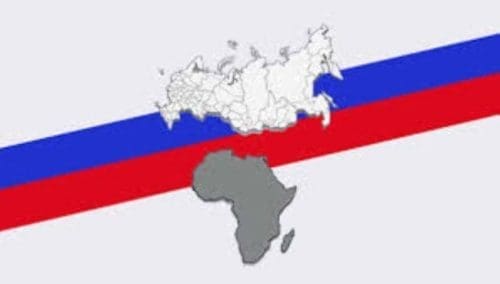
When African leaders gather in Moscow on 28 and 29 October 2026 for the third Russia-Africa Summit, the question they should carry with them is simple: what does Africa get back?

Russia’s renewed courtship of the continent cannot be separated from its war in Ukraine, which has become a test of Moscow’s economic, military and political endurance. Western sanctions have restricted Russian trade and finance and squeezed the revenues that sustain the war. In that setting, Africa matters to Moscow for more than diplomacy. It offers political partners, alternative markets, military cooperation and, critically, natural resources and revenue streams that can help Russia withstand pressure.

From Sochi to Moscow

The summits themselves trace that shift. The first, in Sochi in 2019, was pitched as an effort to rebuild and formalise Russia’s ties with Africa around trade, investment and security. By the second, in St Petersburg in 2023, Russia was deep into the war and under heavy sanctions. That meeting served as much to show that Moscow still had friends outside the Western bloc as to deepen any particular partnership.

This year’s summit comes at a more consequential moment still. Moscow wants to prove its African relationships have survived a long war and still deliver strategic benefits. African governments should be asking whether they deliver comparable benefits to them. Declarations, defence pacts and summit photographs are not the test. The balance of what each side gains is.

Gold and the logic of sanctions

Natural resources are the place to start. Gold matters because it can move through opaque networks and be turned into money outside conventional financial channels. The US Treasury has previously linked gold operations associated with the Wagner Group in Africa to financing the group’s activities, including in Ukraine.

That does not mean every Russian deal with an African mining state is designed to fund the war. It does show why African resources have strategic value for a Russia trying to stay strong under sanctions. The same logic reaches beyond gold to energy and critical minerals. In countries such as Mali and the Central African Republic, Russian security partnerships have created relationships in which military, political and commercial interests overlap. The model deserves scrutiny: Russia provides security assistance and political backing, and gains influence, business openings and potentially privileged access to resources.

Mali as a case study

Mali shows the pattern most clearly. Wagner personnel arrived in 2021, and the deployment later passed to Russia’s state-run Africa Corps. Moscow presents the arrangement as an alternative to Western security partners and proof of its commitment to African sovereignty. But it raises an unavoidable question: what does Russia receive in return?

Seen against the war in Ukraine, the answer matters. Access to gold and other strategic resources, closer ties with resource-rich governments and new economic channels all help Moscow blunt sanctions and sustain its wider strategic capacity. The Mali relationship is not only about counterterrorism. It is part of a broader contest over resources, influence and economic staying power.

The numbers behind the rhetoric

The economic record reinforces the point. At the 2019 Sochi summit, President Vladimir Putin set a goal of doubling Russia-Africa trade to US$40 billion within four to five years. Russian Foreign Minister Sergei Lavrov said in June 2026 that trade in 2025 had exceeded US$27 billion. By comparison, Russian estimates put China’s trade with Africa at about US$150 billion a year and Europe’s at about US$300 billion.

Those figures do not prove Russia’s Africa strategy has failed, and they do not capture every kind of value Moscow draws from the continent. They do raise a question. If Russia’s conventional economic footprint remains modest, why invest so heavily in African relationships? Part of the answer is that Africa’s value to Moscow cannot be measured by trade alone. Political influence, military access, votes at the United Nations, alternative markets and resources all count. For a country fighting a long war under sanctions, they can matter as much as trade statistics.

Travelling to a capital at war

The setting of this summit exposes the tension in Moscow’s pitch. African delegations are being asked to travel to a capital where Ukrainian drone attacks have repeatedly closed airspace. In early September, an Air Tanzania flight bound for Moscow’s Vnukovo airport was diverted to St Petersburg, and the airline briefly suspended its new Moscow route after a risk assessment before reversing the decision within a day.

The irony is hard to miss. Russia presents itself as Africa’s security partner, yet African officials must weigh their own safety before flying to its capital. More importantly, governments must judge whether the benefits of the relationship justify its risks and costs.

Why Ghana should pay attention

For Ghana, the calculation is sharper than for most. The security consequences of Russia’s growing role in the Sahel are tied to Ghana’s own national and regional interests. The deteriorating situation in the Sahel, and the risk of violence spilling towards Ghana’s northern borders, should make Accra ask hard questions. Is Russian engagement mainly delivering security and development to African states, or is Africa becoming a source of the influence, resources and economic resilience Moscow needs for its own ambitions?

The answer will not be simple. Russia’s Africa policy serves several purposes, and resources are only one of them. But the war has changed the calculation. What Moscow once presented as a drive for trade, investment and diplomatic ties must now also be read through its need to preserve strategic autonomy, resist sanctions and keep fighting.

The Moscow summit is therefore a test not of whether African leaders will keep talking to Russia, but of whether Russia can persuade them the relationship is genuinely reciprocal. Russia clearly wants a deeper partnership with Africa. The question that matters is what Moscow needs from the continent, what Africa receives in return, and whether that balance is tilting further against Africa.

Joseph McCarthy is an analyst and researcher specialising in governance, security and political transitions in the Sahel.

What Could Help Strengthen Power Supply in Ghana’s Coastal Cities?

0

A major fault on Ghana’s national grid triggered widespread outages in July 2026, affecting Accra, Kumasi and parts of northern Ghana and forcing several power plants to shut down. The episode brought dumsor — intermittent power supply — back into public attention. Its effects extended beyond electricity: Ghana Water Limited reported disruptions at treatment plants and pumping stations, temporarily affecting the production and distribution of potable water in several areas.

In such a situation, households face inconvenience, while the cost for businesses is even higher. A World Bank analysis of Ghana’s previous energy crisis found that each additional day of blackout was associated with an average 11% decline in weekly profits. The same study found that almost nine in ten firms experienced power outages, while electricity interruptions represented significant losses in annual sales. The lesson is straightforward: a more resilient power system needs enough dependable generation capacity to meet demand when the system comes under pressure.

For Ghana’s coastal cities, the location of electricity supply is particularly relevant. Accra and Tema concentrate population, commerce, industry and logistics, while coastal ports and industrial facilities depend on reliable power. This makes the coast a relevant setting for examining generation options that could serve major centres of demand.

Ghana already has experience with floating electricity generation. Gas-fired power vessels have operated in the country since the mid-2010s. In 2017, a 470 MW Karpowership replaced an earlier 235 MW vessel and began operating in September. It was subsequently relocated from Tema to the Western Region to use Ghanaian natural gas. This provides a local reference point for the floating-generation model, although a nuclear facility would require a different technical and regulatory framework.

In a floating power facility, generating equipment is installed on a vessel or platform and connected to the local electricity grid. The arrangement can reduce the land required for the generating plant and allow capacity to be located near coastal industrial and population centres. Depending on the design and supporting infrastructure, it may also offer flexibility in where the facility is deployed.

Floating generation is not limited to gas- or oil-fired plants. The model has also been applied to nuclear power, with Rosatom’s Akademik Lomonosov providing an operating example. Equipped with two KLT-40S reactors with a combined electrical capacity of 70 MW, the plant supplies electricity and heat to Pevek and surrounding areas in Russia’s isolated Chukotka power system. By January 2025, it had generated its first billion kilowatt-hours of electricity, according to World Nuclear News.

The plant has also attracted interest from nuclear specialists in Africa. Group Executive: Power and Industry in South African Nuclear Energy Corporation (NECSA) Sengiphile Simelane, who visited the plant, shared: “The introduction of the FNPP has been a welcome relief to the residents and businesses of Pevek, offering benefits such as carbon-free and cheaper electricity, a revival of the mining sector, and a reduction in regional unemployment”.

The experience is being extended. Four additional floating power units are under construction in Russia to provide electricity for the Baimsky mining project in Chukotka. The new units are designed around RITM-200 reactors, with each unit equipped with two reactors. The concept is entering the global market. For example, in June 2024, Russia and Guinea signed a memorandum to consider the possibility of developing such units, while Indonesia explored potential regulatory approaches for their use.

For Ghana, floating nuclear generation would need to be considered within the country’s wider electricity strategy. Renewable energy and storage can contribute to a diversified system, while nuclear power can provide dependable generation. A floating facility would combine that role with a coastal deployment model, making it relevant to discussions about electricity supply for industrial and urban demand centres.

Ghana’s experience with floating gas-fired generation provides a useful starting point for examining what a nuclear version could offer. The operating record of Akademik Lomonosov gives that discussion a practical reference beyond the concept stage. For Ghana’s coastal cities and industrial centres, the next question is how such a facility could fit local demand, grid connections and the country’s developing nuclear framework. Economic, environmental and regulatory assessment would be essential to establishing that fit.


Ghana urged to regulate social work after new protection laws

0

Social worker Alhassan Mbalba has urged Ghana to regulate social work by law, arguing that new social protection laws launched on 7 October cannot succeed without trained professionals.

Mbalba, a social protection expert who attended the launch at the Marriott Hotel in Accra, made the case in an article published on 8 October. He said Parliament should create a statutory regulator for the profession and make “social worker” a legally protected title.

The call puts pressure on a Bill that professional bodies have chased for years. Social work has been practised in Ghana since the 1940s, yet no law sets who may practise it, how they are licensed or who disciplines them.

Vice-President Professor Naana Jane Opoku-Agyemang launched three instruments at the event: the Social Protection Act, 2025 (Act 1148), the Social Protection Regulations, 2026 (L.I. 2521) and the Affirmative Action (Gender Equity) Regulations, 2026 (L.I. 2522). The Act creates a coordinated national system covering social assistance, social insurance and emergency support, and provides for a Social Protection Fund. L.I. 2522 puts into effect the Affirmative Action (Gender Equity) Act, 2024.

The Vice-President said the laws must reach the most vulnerable, widen opportunities for women and ensure social protection money reaches intended beneficiaries. She told the audience the framework had to deliver change beyond paperwork, pointing to existing programmes such as the Livelihood Empowerment Against Poverty (LEAP) cash transfer, school feeding, the National Health Insurance Scheme and Free Senior High School. The World Bank and UNICEF commended the government and pledged further support.

Mbalba said the government’s commitment to resetting social protection was clear, but warned that implementing the laws depends on social workers who serve children, older people, persons with disabilities and families in hardship. “A stronger social protection system requires a stronger professional social work workforce,” he wrote.

He noted that Ghana trains social workers at the School of Social Work in Osu, founded in 1945, and at universities including the University of Ghana, Kwame Nkrumah University of Science and Technology, the University for Development Studies and Methodist University, from first degree to doctorate.

He pointed to the United Kingdom, where each of the four nations has its own social work regulator, as a model. In the United States, licensing is handled state by state. Regulation, he argued, would also help Ghanaian social workers seeking jobs abroad have their qualifications recognised, which ties in with the government’s Work Abroad Programme run through the Youth Employment Agency.

A Bill to set up a regulator was introduced in the Eighth Parliament but did not pass. Mbalba said stakeholders are consulting on a similar Bill for the Ninth Parliament.

Practitioners have pressed for the law repeatedly. The Social Workers Association of Ghana called for its passage in March 2023 and again in March 2025, saying licensing would weed out unqualified practitioners. At a World Social Work Day event in March 2024, UNICEF said it and the US Agency for International Development were supporting Ghana to build the missing regulatory framework.

In May 2026, the Ghana Association of Social Workers told Minister for Gender, Children and Social Protection Dr Agnes Naa Momo Lartey that the proposed Social Work Council Bill had reached an advanced stage. The Minister said her ministry was ready to work with stakeholders on the framework.

Stablecoin gift funds borehole for Ashanti farming village

0

A US family’s US$8,792 stablecoin donation has paid for a borehole in Mantukwa, Ashanti Region, WellsForAll Africa’s first privately funded water project, the non-profit said on 8 October.

The project tests whether a model built inside a cryptocurrency community can draw ordinary donors who want proof their money reached the ground. WellsForAll’s first 25 boreholes were paid for through the Decentralized Hive Fund, a pool on the Hive blockchain where token holders propose, vote on and fund projects. This one came from the Pflaum family, who sent the money in USDT, a stablecoin pegged to the US dollar, in two transfers: US$500 in April and the balance in September.

The donors took no part in Hive’s governance. WellsForAll kept its existing practice of logging the project on the Hive blockchain, posting budgets, construction progress, GPS data, photographs and water test results as a public record.

Founder Samuel Owusu-Boadi said the private gift added a funding stream rather than replacing the old one. “Borehole #26 is not a move away from Hive or the DHF,” he said.

For Mantukwa, the change is practical. The farming community has relied on unprotected streams, rivers and rainwater, with residents, mostly women and children, spending about 30 minutes fetching water, according to WellsForAll. The new system puts a tap within a few minutes’ walk for an estimated 800 to 950 people.

Drillers went down 120 metres and struck the main aquifer at about 35 metres. An electric submersible pump set at 80 metres feeds a 3,000-litre overhead tank that gives the system pressure. WellsForAll said independent tests found no E. coli or coliform bacteria and that other parameters fell within World Health Organization limits. It did not name the laboratory.

Construction cost US$7,850, with US$942 going to programme coordination. The organisation describes that as a 12 per cent coordination cost, which holds against construction; it comes to about 11 per cent of the total. Spread across the people expected to use it, the borehole cost roughly US$9 to US$11 a head.

The village’s chief and elders took part in the project, and a Water Management Committee will run and maintain the system after handover. Broken rural water points are a long-running problem in Ghana, and local committees are the usual answer for keeping pumps working.

Rural Ghanaians remain the worst served. Minister for Works and Housing Kenneth Gilbert Adjei said in January that about 74 per cent of rural residents have basic water services, against 96 per cent in towns and cities, and that only 44 per cent of the national population has safely managed water. He put the number of Ghanaians still relying on unimproved, limited or surface sources at about four million.

The Pflaum family funded the borehole in honour of their daughter, who started a charitable initiative, A Touch of Grace, at the age of 11. The family said being able to follow the project from funding to construction, and check it on the blockchain, gave them confidence their money was used as intended.

WellsForAll says it raised and spent about US$191,000 on water infrastructure between 2022 and 2025, and that its 26 water points now serve more than 20,000 people. It earlier put Hive funding for its first 25 boreholes at about US$150,000.

Borehole 27 is planned for Buoyem in the Bono East Region. The organisation says more than 50 communities are on its waiting list.

MTN Ghana backs SME award winners with Asia trade mission

0

Winners of the 2026 SME Ghana Awards will receive business insurance, mini-MBA training, investor introductions and an Asia trade mission under a package MTN Ghana announced on 10 October.

The package is meant to turn a night of trophies into practical help for growth. MTN and the awards organiser, SME GrowAfrica, presented it at the ceremony in Accra as an answer to four problems that hold small firms back: exposure to operational risk, thin management skills, limited access to finance and few routes into foreign markets.

Star Assurance Group is providing the insurance cover. MTN did not say which Asian country the trade mission will visit, which investors are involved or when the trip will take place.

Queen GAF Enterprise, an agro-processing and cosmetics business, was named SME of the Year and also won the Agri-Business Value Addition and Market Award and the Women Entrepreneur Award. Category winners included Ahodwo Farms Limited for agri-business production, Artivity Limited for creative arts, crafts and design, DemiPearl Company Limited for food, beverage and agro-processing, Binas Prime Enterprise for retail and consumer products, Bubune Africa Limited for product innovation and Excelsa Forestry Renewables Ghana Ltd. for sustainable enterprise and environmental, social and governance practice.

The awards close MTN’s year-long SME Accelerate Programme, which ran business clinics, pitching sessions and mini-MBA classes for participating firms. MTN said at the programme’s launch earlier this year that it had reached more than 400 entrepreneurs through its training clinics and planned to take it nationwide.

The scheme has had an uneven history. SME GrowAfrica has run the awards since 2013, but they returned in 2025 after a five-year break, this time with MTN as sponsor. Last year’s top prize went to Yesli Ice.

Angela Mensah-Poku, MTN Ghana’s Chief Enterprise Business Officer, said supporting small firms was central to the company’s inclusive growth agenda as it marks 30 years in Ghana. She said MTN would keep offering digital infrastructure, fintech products and enterprise support to help businesses work more efficiently.

Margaret Ansei, Chief Executive Officer of the Ghana Enterprises Agency, said small and medium-sized enterprises make up about 90 per cent of businesses in Ghana and called for sustained public and private support. She told the winners their prizes carried obligations. “Trophies need to be celebrated, but they come with their responsibilities as well,” she said.

Kwesi Ofori Jr., Executive Director of SME GrowAfrica, said the organisation would keep working with the winners to secure partners and investment. He urged them to build environmental, social and governance standards into their operations so their businesses could outlast their founders.

Ghana reaches top tier in US human trafficking report

0

The US State Department has lifted Ghana to Tier 1 in its 2026 Trafficking in Persons Report, published on 8 October, after sharp rises in prosecutions and rescued victims.

Tier 1 is the highest of the report’s four rankings. It means a government fully meets the minimum standards for eliminating trafficking set by US law. Ghana had sat on Tier 2 every year since 2018, when it climbed off the Tier 2 Watch List.

The upgrade puts Ghana among the few African countries with top-tier status and gives Accra a stronger hand with donors and partners on labour migration. The same report dropped Hong Kong and the Republic of the Congo to Tier 3, the bottom ranking, and kept China there.

What changed in Ghana

The report credits Ghana with prosecuting and convicting more traffickers and identifying and referring more victims to care. In 2025, the government investigated 222 trafficking cases, prosecuted 212 suspects and convicted 28 traffickers, the report said.

Officials identified 2,331 victims during the year: 492 of sex trafficking, 1,302 of forced labour and 537 of unspecified forms. That is almost three times the 794 victims identified in 2024. The government also identified and paid to repatriate 567 Ghanaians exploited abroad.

The State Department pointed to more money for anti-trafficking work, extensive training for front-line officers, labour agreements with foreign governments to protect migrant workers and joint operations with INTERPOL against online scam networks.

The ranking marks a goal the government set openly. In July 2025, when Minister for Gender, Children and Social Protection Agnes Naa Momo Lartey inaugurated a new Human Trafficking Management Board, she urged its members to push the country to Tier 1.

Gaps the report flags

The upgrade does not mean the problem has gone. The report said officials lacked the specialised training and equipment to investigate trafficking linked to cybercrime. Shelter space for adult victims remained short, and some officers used their own money to give victims temporary help.

It also noted that Ghanaian law does not bar employers or agents from charging workers recruitment fees, which leaves migrants open to debt and exploitation. Traffickers continued to lure Ghanaians abroad with fake offers of well-paid jobs in security and agriculture.

International Justice Mission (IJM) Ghana, which works on child trafficking on Lake Volta, welcomed the ranking on 9 October but warned that children still face forced labour in fishing, domestic work, street hawking, farming and mining. IJM said Tier 1 status should push the country to strengthen its programmes rather than ease off.

Winners and losers elsewhere

Israel also rose to Tier 1, while Papua New Guinea moved up from Tier 3 to the Tier 2 Watch List. Seychelles fell from Tier 1 to Tier 2.

Hong Kong’s drop to Tier 3 drew an immediate rebuttal. On 9 October, the city’s government rejected the rating as unfounded and said trafficking had never been a prevalent problem there. A spokesman said authorities carried out about 12,100 initial screenings in 2025 and identified 15 victims, all Hong Kong residents deceived by job scams in Southeast Asia. He also accused Washington of double standards.

Hong Kong had already slipped to the Tier 2 Watch List in 2024. The State Department has repeatedly criticised the city’s lack of a stand-alone trafficking law and the rule requiring foreign domestic workers to leave within two weeks of a contract ending.

The other Tier 3 governments named in the report include North Korea, Iran, Russia, Burma, Belarus, Cambodia, Cuba, Laos, Nicaragua, Sudan, South Sudan and Venezuela. Under US law, Tier 3 governments can face restrictions on some American non-humanitarian and non-trade assistance.

Congressional reaction

Representative Chris Smith, the New Jersey Republican who wrote the Trafficking Victims Protection Act of 2000 that created the annual report, said China’s continued Tier 3 ranking reflected Beijing’s use and enabling of forced labour, including against Uyghurs and other minorities. He also cited the report’s finding that a gender imbalance of tens of millions more males than females, a legacy of the one-child policy, fuels demand for sex trafficking and forced marriage in China.

Smith said the downgrades of Hong Kong, the Republic of the Congo and Seychelles should warn those governments, and he singled out Ghana and Israel as proof that stronger enforcement and victim protection produce results. Tier 3, he said, “should serve as a dire warning and a call to action.”

The 2026 report assesses government efforts between 1 April 2025 and 31 March 2026.

Shelter Afrique opens FCFA 60 billion West African housing bond

Shelter Afrique Development Bank (ShafDB) has opened a FCFA 60 billion sustainable bond to West African investors, with subscriptions closing on 30 October 2026, to fund affordable housing.

The Nairobi-based lender wants to finance housing developers in the same currency they earn, which removes the exchange-rate risk that comes with dollar loans. The offer, worth about US$100 million, is the bank’s first bond with a sustainability label.

It comes in two parts: a five-year tranche paying 6.10 per cent and a seven-year tranche paying 6.30 per cent. Subscriptions opened on 7 October. Each tranche carries a two-year grace period on principal repayment, with notes priced at FCFA 10,000 each, according to details the arranger presented to investors at a roadshow in Abidjan in September.

The need is large. ShafDB cites World Bank Group estimates that put the housing shortfall in the West African Economic and Monetary Union (WAEMU) at about 3.5 million units, with roughly 250,000 more homes needed each year as populations grow and cities expand. WAEMU’s eight members, Benin, Burkina Faso, Côte d’Ivoire, Guinea-Bissau, Mali, Niger, Senegal and Togo, share the CFA franc, which is pegged to the euro at FCFA 655.957.

Dakar-based CGF Bourse is lead arranger. The International Finance Corporation (IFC), the World Bank Group’s private-sector arm, and Ecobank Group, through Ecobank Senegal, have signed on as anchor investors. The regional financial markets regulator has approved the issue.

Nabil Mahfoudh, ShafDB’s Director of Treasury, said the bank was “connecting local savings with urgent development needs” by expanding in West African capital markets.

ShafDB is no newcomer to the region. It has tapped the WAEMU market five times before, starting in 2014, when CGF Bourse also served as arranger. Across all markets it has completed 11 bond issues, the most recent a NGN 46 billion (about US$110 million) raise in Nigeria in April 2022.

The bank built its Sustainable Financing Framework with the Global Green Growth Institute. S&P Global Ratings confirmed the framework aligns with the International Capital Market Association’s green and social bond principles and sustainability bond guidelines.

The issue sits within ShafDB’s push to become a full pan-African multilateral development bank. Founded in Lusaka, Zambia, in 1981, it is owned by 44 African countries, and some are increasing their commitment. On 22 July 2026, Côte d’Ivoire’s cabinet approved a US$17 million loan from the Arab Bank for Economic Development in Africa that will lift the country’s stake in ShafDB from 4 per cent to 10 per cent and secure it a permanent board seat.

The bond is large against the bank’s recent lending. ShafDB more than doubled loan disbursements to US$63 million in 2025, while profit rose 20 per cent to US$2.14 million and its net loan portfolio grew 29 per cent to US$174 million. At full subscription, the West African raise alone would equal about 1.6 times what the bank disbursed in the whole of last year.

Managing Director and Chief Executive Officer Thierno-Habib Hann said aligning loan currencies with project revenues would cut borrowers’ exposure to foreign-exchange risk.

East Africa is next. ShafDB plans a US$500 million multi-currency bond in Kenya, Uganda, Tanzania and Rwanda in the first quarter of 2027.

Black Canadians demand enforceable reparatory justice in UN rights declaration

0

Black community groups in Canada want a planned United Nations declaration on the rights of people of African descent to include binding commitments on reparatory justice, not just symbolic recognition.

Amnesty International Canada and the Black Canadians Civil Society Coalition (BCCSC) released their findings at a press conference in Ottawa on 8 October 2026. The report draws on consultations held in Toronto, Wolfville in Nova Scotia, and Ottawa from 17 to 20 February. Those sessions fed community recommendations to the UN Permanent Forum on People of African Descent, which is drafting the declaration.

“Black communities have been clear: recognition without enforcement is not enough,” said Ketty Nivyabandi, Secretary General of Amnesty International Canada’s English-speaking section.

Seven demands for Ottawa

The groups urged the Canadian government to:

  • appoint an independent Black Equity Commissioner with enforcement powers and protection from political interference
  • collect race-based data under community-controlled governance
  • recognise the collective rights of historic Black communities, including African Nova Scotians’ claims to ancestral lands
  • fund Black-led institutions and legal defence over several years
  • regulate artificial intelligence (AI) and surveillance technology to remove anti-Black bias, including through independent audits
  • teach Black Canadian history in schools
  • remove barriers facing Black newcomers in immigration, housing and the recognition of qualifications

Participants said they were tired of government pledges with no timelines or consequences. They want the final declaration to be binding, specific and drafted together with people of African descent.

Lerato Chondoma, a director of the BCCSC, said communities had taken part knowing that past consultations often ended without action. The coalition called on Canada to set out publicly, with timelines and benchmarks, how it will act on the recommendations.

The report’s release coincides with the final days of a visit to Canada by Ashwini K.P., the UN Special Rapporteur on contemporary forms of racism. Her visit runs from 28 September to 9 October.

Momentum led from Africa

The push for reparations has gathered pace at the UN this year. On 25 March 2026, the General Assembly adopted a Ghana-led resolution, backed by the African Union and the Caribbean Community, recognising the trafficking and chattel enslavement of Africans as the “gravest crime against humanity”. It also described reparatory justice as a concrete step towards remedying historical wrongs. The resolution passed with 123 votes in favour and three against, from the United States, Israel and Argentina. Fifty-two countries abstained, including the United Kingdom and all 27 European Union members.

The draft declaration being prepared by the Permanent Forum is meant to guide states in tackling racial discrimination and the lasting harms of colonialism and slavery.

Angola, Nigeria, Kenya most attacked in EMEA, Check Point says

0

Organisations in Angola, Nigeria and Kenya faced more cyber attacks in September 2026 than those in any other country in Europe, the Middle East and Africa (EMEA), according to the Israeli-American security firm Check Point Software Technologies.

Its research arm, Check Point Research, said in its monthly threat report released on 9 October that the average organisation in Angola faced 5,967 attacks a week, up 96 per cent on a year earlier. Nigerian organisations recorded 5,740 attacks a week, more than double the previous year’s level, and Kenyan organisations 4,303, a 43 per cent rise. In South Africa, the figure was 2,499, up 22 per cent.

Across Africa, organisations averaged 3,701 attacks a week, second only to Latin America. That is up from 3,335 in August. Government, financial services, and energy and utilities were the most targeted sectors on the continent.

Worldwide, the average organisation faced 2,803 attacks a week in September, up 16 per cent from August and 48 per cent from a year earlier. Education was the most attacked sector globally, at 6,656 attacks per organisation a week, as the new academic year began.

Ransomware eases from August peak

Check Point counted 824 publicly reported ransomware attacks in September, 53 per cent more than a year earlier. That is down from 1,042 in August.

The most active group was The Gentlemen, which accounted for 13 per cent of published attacks. The group is behind a breach at MIP Holdings, a South African software supplier to insurers, that exposed customers of about 45 insurance companies. MIP’s Chief Executive Richard Firth confirmed the company paid a ransom after the June attack in return for a promise that the stolen data would be destroyed, TechCentral reported. The attackers instead began extorting insurers directly and published policyholder records, including names and identity numbers, on a dark web leak site.

Lorna Hardie, Check Point’s Regional Director for Africa, said the figures showed “cyber risk increasing in both volume and breadth”. She urged organisations to adopt security that blocks threats before they cause disruption, rather than relying on separate, disconnected tools.

The report also flagged a rise in phishing and growing exposure of sensitive data through staff use of generative artificial intelligence (AI) tools. In August, Check Point found that one in every 43 enterprise prompts to generative AI tools posed a data-exposure risk.

B2B trade could drive Africa’s stablecoin boom, says GSN chief

0

Business payments, not remittances, could become the main use of stablecoins in Africa, according to Ryan Kirkley, Chief Executive of the digital settlement firm Global Settlement Network (GSN). He warned, however, that faster transfers will not cut costs unless banks and liquidity providers can reliably convert the money at either end.

Stablecoins are digital tokens pegged to a currency, usually the United States (US) dollar. Their use by businesses is growing fast. Consultancy McKinsey estimated in February that business-to-business stablecoin payments reached about US$226 billion a year, based on December 2025 activity. That is roughly 60 per cent of genuine stablecoin payment volume, though still a tiny share of global business payments.

“I think B2B trade has the potential to become one of the largest sources of stablecoin payment volume in Africa,” Kirkley said in written responses to NewsGhana.

A dollar problem, not a technology problem

For African firms, Kirkley said, demand comes down to access to foreign currency. He gave the example of a Nigerian electronics importer buying stock from Shenzhen. The importer may have customers waiting and enough naira in the bank, but still face weeks of delay obtaining the dollars to pay the supplier.

He expects the biggest disruption in the chain of correspondent banks that sits between a bank in Accra and a supplier’s bank in Guangzhou. Each extra account in that chain, he said, adds liquidity costs, reconciliation work and another possible delay. The Bank for International Settlements (BIS) has documented a long decline in correspondent banking relationships, which has left some smaller economies with limited access to international payments.

Other parts of the system will stay. “What remains essential is trade credit, FX liquidity, sanctions screening and local-currency access,” Kirkley said. A letter of credit still protects a supplier against non-payment, and a bank still has to check the customer and the underlying trade.

Savings depend on the exchange rate

Kirkley said the real cost of cross-border payments often lies in currency conversion, not in the transfer itself. He used a Ghanaian importer paying US$300,000 to a supplier in Dubai as an example. A 1 per cent spread on that payment costs US$3,000, however cheaply the stablecoin transfer settles.

“A provider with limited liquidity can easily absorb the savings through its conversion spread,” he said. For businesses, he said, three things matter: the final amount the supplier receives, a guaranteed exchange rate, and the time the payment takes to complete.

Scale also matters. A provider quoting a good rate on US$1,000 may not have the depth to move US$500,000 without the price slipping, he said. That is why he argues banks and liquidity providers must commit funds in advance against defined settlement obligations.

Risks for small firms

Kirkley cautioned smaller businesses against assuming a stablecoin payment is safe simply because the token holds its dollar value. He listed several risks: the receiving provider may lack the liquidity to convert the funds; the issuer may have weak reserves or limited redemption rights; and a payment sent to a compromised wallet usually cannot be reversed. Different countries also regulate payment providers in different ways.

He added that a firm earning in cedis but holding dollar stablecoins remains exposed to movements in the cedi-dollar exchange rate. Before moving large sums, he said, he would want verified counterparties, clear redemption rights, institutional custody and a compliant banking route in place.

A role for banks and regulators

Kirkley said African banks could become infrastructure providers in their own right, not just intermediaries. They could supply local-currency liquidity, issue tokenised deposits backed by their balance sheets and settle directly with banks in markets such as the United Arab Emirates. He pointed to the BIS’s Project Agorá, which is testing how tokenised bank deposits and central bank money can support cross-border payments.

He said central banks must be involved from the start. If importers move a large share of their working capital into dollar stablecoins, he warned, it could reduce demand for local-currency deposits and limit central banks’ view of capital flows.

Ghana has started to set rules. Its Virtual Asset Service Providers Act, 2025 (Act 1154) requires firms promoting virtual assets to register with both the Bank of Ghana and the Securities and Exchange Commission. In February 2026, the central bank barred providers from mass advertising of virtual asset and stablecoin products without express permission, and ordered billboards in Accra taken down.

Kirkley expects adoption to concentrate first in established trade corridors with China, India, the UAE and Europe, where importers struggle to obtain dollars. By 2031, he said, a meaningful share of business payments in Africa’s main trade corridors could settle through stablecoins and tokenised bank money.

GSN, which builds settlement infrastructure for digital assets, raised US$11 million in pre-seed funding in May 2026 and says it has secured more than US$125 million in committed settlement liquidity.

Infantino urges more chances for African players at CAF summit

0

FIFA President Gianni Infantino said on Thursday, 8 October 2026, that young African footballers should not have their careers limited by where they were born. He was speaking at the opening of the Confederation of African Football’s (CAF) strategy conference on Cabo Verde’s Sal Island.

“African talent has shaped and is increasingly shaping the world,” Infantino told delegates in Santa Maria, the Cabo Verdean news agency Inforpress reported. He said FIFA had invested about US$1 billion in African football through its Forward development programme over the past decade.

His appeal came on the same day CAF President Patrice Motsepe pledged the backing of Africa’s 54 football associations for Infantino’s bid for a fourth term. The vote takes place in Rabat, Morocco, in March 2027. Africa is the largest voting bloc in FIFA’s 211-member Congress, and its support matters more now that UEFA, the Asian Football Confederation and CONCACAF have withdrawn theirs. Those three confederations turned against Infantino after his abandoned plan to sell up to 20 per cent of FIFA tournament rights to private investors.

The three-day conference, which ends on Friday, brings together CAF member association presidents, national team coaches and experts. They are reviewing African teams’ performances at the 2026 World Cup and planning for 2030.

Motsepe said the meeting gave each association more time to raise concerns than CAF’s general assemblies allow, and to identify where African football must improve. He called for closer cooperation between football associations, governments and sports ministries.

Infantino praised the hosts’ national team. On their World Cup debut, Cabo Verde’s Blue Sharks went unbeaten in a group that included Spain and Uruguay and reached the knockout stage.

Cabo Verde Football Federation President Mario Semedo said hosting the conference reflected international recognition of the islands’ football development and would promote Cabo Verde as a destination for tourism and international events.

Ghana declares yellow fever outbreak after three deaths in Upper West

0

Ghana’s Ministry of Health has declared a yellow fever outbreak in the Upper West Region after three laboratory-confirmed cases, all of which ended in death.

Health Minister Kwabena Mintah Akandoh announced the outbreak in a statement on Thursday, 8 October 2026. The confirmed cases are in the Wa West and Sissala West districts. Health facilities in the two districts began reporting suspected cases, with fever, jaundice and bleeding, from 9 September. Samples were first tested in Ghana and then confirmed by a World Health Organization (WHO)-accredited laboratory in Dakar, Senegal.

The patients died “despite aggressive management by our health staff,” the ministry said.

Vaccination campaign next week

The ministry has activated the national and regional public health emergency operations centres. It has sent rapid response teams into affected communities to find cases, step up surveillance and inform residents.

An emergency vaccination campaign is planned for this month in Wa West, Sissala West and Sissala East. Dr Franklin Asiedu-Bekoe, Director of Public Health at the Ghana Health Service, told JoyNews on Friday that the vaccine had been approved and the campaign would begin next week. He said suspected cases had been reported from seven districts in the region.

The official count may rise. JoyNews reported on 6 October that at least seven people had died in Sissala East Municipality during the outbreak. The ministry has so far confirmed three deaths.

What residents should do

The ministry urged anyone with sudden fever, headache, muscle pain, yellowing of the eyes or skin, or unusual bleeding to go to the nearest health facility immediately and not to self-medicate. It also advised residents to clear stagnant water around their homes and to use insecticide-treated nets and repellents, including during the day.

Yellow fever is a viral disease spread by mosquitoes that bite mainly in daytime. A single dose of vaccine gives lifelong protection, according to the WHO. Ghana includes the vaccine in its routine childhood immunisation programme and requires proof of vaccination from travellers arriving in the country.

The Upper West has faced the disease before. In November 2021, yellow fever killed at least six people in the region.

Ivorian cocoa seized en route to Ghana as prices slip

0

Ivorian authorities seized 42 tonnes of cocoa bound for Ghana on 4 October 2026, a sign that smuggling across the border is rising as unofficial buyers outbid Côte d’Ivoire’s state-set farm price.

The seizure, of 492 bags valued at about CFA50 million, took place at Ebilassokro in the Abengourou area, according to the Ivorian state news agency AIP. The trucks were heading for the Kati border crossing. One vehicle crossed into Ghana before it could be stopped, and AIP said talks are under way for its return.

Cooperatives around Abengourou have reported unofficial buyers offering CFA1,500 to CFA1,600 a kilogram, against an official Ivorian farmgate price of CFA1,200, according to a market briefing from CocoaRadar, a cocoa intelligence service. Ghana opened its 2026/27 season on 25 September with a producer price of GH¢42,400 a tonne, up 2.4 per cent on last season. The Ghana Cocoa Board (COCOBOD) said the price is 71.18 per cent of the realised gross export value.

Harder to read the world’s top crop

The cross-border flow muddies the figures from Côte d’Ivoire, the world’s largest producer. Exporters’ estimates put arrivals at the ports of Abidjan and San Pedro at about 54,500 tonnes from the start of the season on 1 September to 4 October, CocoaRadar said. That includes 18,000 tonnes in the latest week.

The briefing noted that beans leaving through unofficial routes would make Ivorian arrivals understate the harvest, but would not remove that cocoa from world supply.

Prices have eased as rain returned to western Côte d’Ivoire. ICE New York December cocoa settled at US$5,582 a tonne on 7 October, down 1.6 per cent from 2 October, after briefly rallying to US$5,867 on 5 October. London December fell 1.5 per cent to £4,174 a tonne.

Inventories are also weighing on the market. Cocoa held in ICE-monitored US warehouses reached about 3.55 million bags, the highest in more than two years, although only about 424,000 bags were certified for delivery against futures.

Processors under pressure

Cargill, one of the world’s biggest cocoa processors, booked mark-to-market losses on cocoa in its fiscal first quarter to 31 August, Bloomberg reported from the company’s accounts. The losses came after New York futures rose more than 70 per cent between early June and the end of August. Cargill’s net income fell 52 per cent to US$927 million, although the previous year’s figure was boosted by a one-off US$455 million tax gain.

Demand signals remain mixed. European grindings, a measure of how much cocoa is processed, fell 4.6 per cent year on year in the second quarter, while North American and Asian processing rose. Swiss chocolate maker Lindt & Sprüngli has cut its 2026 organic sales growth forecast to 0 to 2 per cent, from 4 to 6 per cent. Third-quarter grinding figures are due around 15 October.

CAF pledges Africa’s 54 votes to Infantino’s FIFA re-election

0

Confederation of African Football (CAF) President Patrice Motsepe has said Africa’s 54 football associations will back Gianni Infantino’s bid for a fourth term as FIFA President. Three other confederations have withdrawn their support.

Motsepe gave the pledge at CAF’s two-day strategy conference in Cape Verde, which ended on Thursday, 8 October 2026, according to reports from the meeting. He credited Infantino with funding the development of football across the continent.

Africa holds the largest bloc in FIFA’s Congress. Its 54 votes make up just over a quarter of the 211 member associations, and a candidate needs a simple majority of 106 to win. The election is scheduled for March 2027 in Rabat, Morocco. Candidates must declare by 18 November.

Support elsewhere has fallen away

The endorsement comes as Infantino faces the strongest opposition of his decade in charge. Europe’s governing body UEFA led resistance to the FIFA Forward Enterprise, a proposed US$20 billion scheme to sell up to 20 per cent of the commercial rights to FIFA tournaments, including the World Cup, to private investors. UEFA threatened to boycott FIFA competitions, and the plan was scrapped in August.

The Asian Football Confederation and CONCACAF, which governs the game in North and Central America and the Caribbean, have since withdrawn their backing for Infantino, as have some national associations, including the Netherlands. Prince Ali bin Al Hussein, president of the Jordan Football Association, has accused FIFA of holding back Arab Cup prize money owed to Jordan while asking for its endorsement. Jordan has said it will not back Infantino.

CAF stood by Infantino after the investment plan collapsed. Its Executive Committee reaffirmed its support on 6 August. In July, Motsepe called Infantino “a faithful friend, loyal to Africa”.

Infantino has kept close ties with African football since he was first elected in 2016. FIFA’s development programmes have funded stadiums, training centres and other projects on the continent.

New World Medical Association president calls burnout a system failure

0

Dr Jung Yul Park took office as President of the World Medical Association (WMA) on 9 October 2026. He pledged to protect doctors from burnout and violence and to set ethical rules for the use of artificial intelligence (AI) in medicine.

The South Korean neurosurgeon was installed at the association’s 77th General Assembly in Rotterdam, the Netherlands. He had been elected President-Elect at last year’s assembly in Porto, Portugal. He succeeds Dr Jacqueline Kitulu of Kenya.

In his inaugural address, Park named four pressures on the profession: widening health inequities and failing health systems, the effects of climate change on health, physician burnout and workplace safety, and the ethical questions raised by AI and digital healthcare.

He was blunt about doctors’ wellbeing. “Burnout is not a personal weakness, but a system failure,” he said. He added that poor working conditions and heavy legal risks are pushing physicians out of medicine. He also condemned continuing attacks on hospitals and health workers in conflict zones as violations of international law.

Six commitments

Park set out six priorities for his year in office. He promised to strengthen primary healthcare and to encourage national medical associations to work together to close gaps in health infrastructure. He pledged to defend doctors’ professional autonomy and to expand mentorship and improve working conditions for young physicians.

On technology, he committed to drawing up ethical guidelines that put people first, so that AI supports doctors rather than replacing them. He also pledged to help member associations prepare health systems for disasters and climate shocks, to defend international humanitarian law and medical neutrality, and to give junior doctors, women and physicians from the smallest associations a greater voice in the WMA.

Park has taught neurosurgery at Korea University since 1995. He chairs international affairs at the Korean Medical Association and is President of the Korean Academy of Neurological Sciences.

Outgoing president’s African focus

In her farewell address, Kitulu, the first Kenyan to hold the post, highlighted the association’s first African Leadership Conference, held in Livingstone, Zambia. She said it strengthened the Coalition of African National Medical Associations. She also pointed to a mentorship programme built with the Kenya Medical Association.

Kitulu said only six of the WMA’s previous presidents have been women, and called for deliberate efforts to give women the chance to lead.

The WMA represents national medical associations around the world and sets ethical standards for the profession, including the Declaration of Helsinki on medical research.