

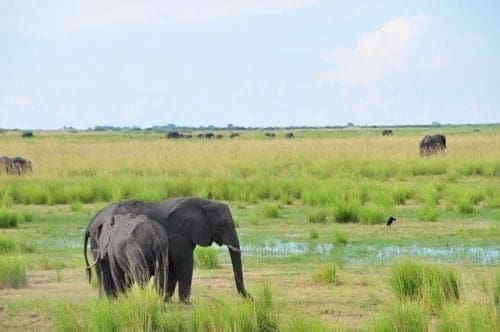
Namibia’s Ministry of Environment, Forestry and Tourism Executive Director Teofilus Nghitila on Wednesday said human wildlife conflict is a serious challenge and if not managed carefully, has the potential to reverse the country’s conservation gains.
“Most of our critics fail to recognize that Namibia’s conservation has been a success because people have accepted to co-exist with animals. However, this co-existence is truly threatened by cases of human wildlife conflict and we would not want to imagine what could happen when people in their frustration no longer accept sharing their living spaces with wild animals. Both human and animal lives matter and we will continue to take difficult decisions to ensure our continued co-existence,” he said.
Namibia has been criticized by animal rights activists for its decision to auction 170 elephants for auction in what the ministry says is an effort to relieve the pressure from human-elephant conflict on communities in the four hotspot areas.
Those who trivialize this issue ought to be more sensitive to the plight of our communities and farmers and recognize as we do that human-wildlife conflict is a serious challenge, Nghitila said, adding that Namibia’s prolonged drought is causing elephants to wander into farmland and destroying crop fields and killing humans as well as destroying infrastructure such as fences, gates and water installations.
Eight Namibians lost their lives to human-wildlife conflict (HWC) in 2021 compared to two cases recorded in 2020 and six in 2019, while close to 6 million Namibian dollars(about 400 thousand USD) was paid out for loss of livestock, crop damage, injuryduring the year’s under review.
Namibia was the first African country to incorporate protection of the environment into its constitution, and the government gave people living in communal areas the opportunity to manage their natural resources through the creation of communal conservancies. Enditem

