

As the impacts of climate change become increasingly evident, countries worldwide are striving to meet their climate commitments under the Paris Agreement.
Ghana has set its sights on achieving its Nationally Determined Contributions (NDCs) to combat climate change.
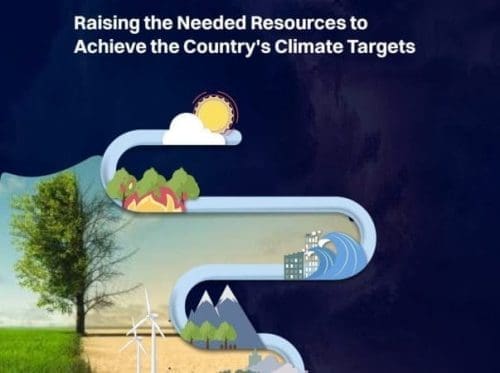
However, a new report, “Financing Ghana’s Climate Action: Raising the Needed Resources to Achieve Country’s Climate Targets,” highlights the challenges faced by the country in financing its climate initiatives amidst current economic constraints.
Funded by the Africa Centre for Energy Policy (ACEP) under the Extractive Industry and Climate Change Governance Programme, the report employs a Problem-Driven Political Economy Analysis approach to identify avenues for scaling up domestic private sector climate finance in Ghana.
The report sets out to assess the size and scope of domestic climate financing tools and products available in Ghana. Understanding the existing mechanisms for funding climate-related projects is crucial for identifying gaps and potential avenues for expansion.
By analyzing financial instruments, incentives, and policies tailored to climate financing, the report lays the groundwork for strategic planning to mobilize resources effectively.
The report is published under the Creative Commons protocol, it encourages the sharing of information and knowledge, ultimately fostering a collective effort to combat climate change across the globe.

