

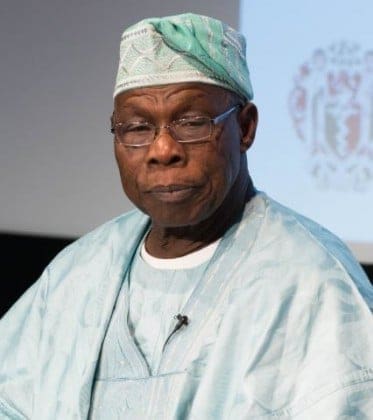
Former Nigerian President Olusegun Obasanjo highlighted Africa’s dramatic trade transformation during his opening address at the Intra-African Trade Fair 2025, declaring that continental commerce has evolved from aspiration to measurable economic reality.
Speaking at the fair’s inauguration in Algiers on September 4, 2025, Obasanjo told an audience of policymakers, entrepreneurs, and trade experts that the event has facilitated over $100 billion in trade and investment deals since its 2018 launch. As chairman of the IATF Advisory Council, he positioned the fair as central to implementing the African Continental Free Trade Area agreement.
The week-long event, running from September 4-10, 2025, has attracted over 1,600 exhibitors and is expected to draw more than 35,000 visitors from across Africa and beyond. This year’s edition features participation from 48 African countries, representing the largest participation since the fair’s founding.
“Intra-African trade is no longer a dream deferred,” Obasanjo declared in his keynote address. “It is a living reality driven by African ingenuity, resilience, and a shared commitment to economic sovereignty.”
The former president cited specific success stories, including the $2.9 billion Julius Nyerere Hydropower Project in Tanzania. The dam project, executed through a joint venture between Egyptian companies Elsewedy Electric and Arab Contractors, demonstrates growing capacity for large-scale intra-African infrastructure partnerships.
The hydropower project is designed to deliver 2,115 MW of clean energy and generate over 6,000 GWh annually, providing reliable electricity for more than 60 million Tanzanians. Obasanjo highlighted the project as evidence that African companies can successfully execute continental-scale infrastructure developments.
The 2025 fair takes place against the backdrop of Africa’s $3.5 trillion integrated market created under the African Continental Free Trade Area, which became operational in 2021. The agreement aims to boost intra-African trade by eliminating tariffs on 90% of goods and harmonizing trade regulations across member states.
Obasanjo particularly emphasized the increasing participation of youth-led startups and women-owned businesses, describing them as the “heartbeat of Africa’s economic renaissance.” He called for sustained investment in digital infrastructure, logistics, and harmonized trade policies to maintain the fair’s momentum.
This year’s edition features specialized pavilions including the Creative Africa Nexus (CANEX), showcasing the continent’s expanding creative economy, and an automotive exhibition highlighting Africa’s emerging vehicle manufacturing capabilities. These sectors represent diversification beyond traditional commodity exports.
The fair’s growth reflects broader trends in intra-African trade, which has historically lagged behind other regional blocs. African countries traditionally conduct more trade with external partners than with each other, though recent data shows gradual improvement in continental commerce.
Previous editions have generated significant business outcomes, with the 2021 Durban fair facilitating $44 billion in trade and investment commitments. The 2023 Cairo edition similarly demonstrated the event’s capacity to connect African businesses across traditional economic boundaries.
Algeria’s hosting of the fair reinforces North African engagement with continental trade initiatives. The North African nation has been working to strengthen economic ties with sub-Saharan partners while leveraging its energy resources and manufacturing capabilities.
The timing coincides with renewed focus on economic integration as African governments seek to reduce dependency on external markets and build resilience against global economic shocks. The COVID-19 pandemic and recent global supply chain disruptions have highlighted the importance of regional trade networks.
Obasanjo concluded his address with a call for deeper continental cooperation: “Let us trade more with each other, invest more in each other, and believe more in each other. The future of Africa is not just bright—it is borderless.”
The former president’s remarks set an optimistic tone for discussions throughout the week-long event, which includes policy forums, business matchmaking sessions, and sector-specific exhibitions designed to facilitate concrete trade relationships.
For participating businesses, the fair represents an opportunity to access integrated African markets while building partnerships that transcend traditional colonial-era trade patterns. The emphasis on African solutions to African challenges reflects growing confidence in continental economic capabilities.
The success of projects like the Tanzania hydropower development provides tangible evidence that African companies possess technical and financial capacity to execute major infrastructure investments, potentially reducing reliance on external contractors and financing.

