

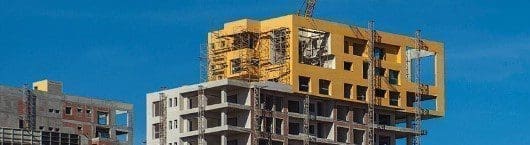
A slowdown in property prices last year in Morocco had little impact on transaction volumes, with the overall number of sales across the country increasing.
 According to data from Bank Al Maghrib, the overall real estate index fell by 0.8% in 2014, compared with a 1.3% rise in 2013. The residential price index for apartments, villas and homes eased 0.6% in 2014, setting the overall tone for the market. The sharpest declines were seen in home and villa prices, which dropped 0.9% and 1.7%, respectively, though apartment prices also dipped slightly.
Despite falling prices, overall transaction volumes increased 12% year-on-year (y-o-y) in 2014, against a 5% decrease in 2013, with the residential segment representing almost three-quarters of all transactions; and apartment sales alone contributed to more than two-thirds of total transactions. The biggest uptick in transactions was seen in Casablanca, which has a population of 3m people and where demand for residential as well as commercial space remains strong.
Residential performance
Activity in the real estate sector has stabilised, following a rise in 2007 and subsequent dip in the years that followed. The sector has been buoyed by the rollout of a government-sponsored financial incentive package that includes tax exemptions for developments of more than 500 units. Lower-income buyers, meanwhile, have been encouraged to become homeowners through a value-added tax exemption on a new acquisition.
The government also seeks to channel real estate developers and builders to the mid-range market segment, where houses are in short supply, and also to the low-income segment, where the housing deficit stands at some 650,000. The government is aiming to build 17,000 units per year.
By contrast, the luxury segment has witnessed a sharp fall in demand due to a sluggish international economic environment, particularly in Europe, as well as the impact of the Arab Spring, which shook foreign investors? confidence.
While operators? margins were squeezed in 2014, the lower prices pushed up demand in a buyers? market. Apartment sales jumped almost 17% and commercial property sales increased 13.5%. Sales of single-family homes dropped nearly 10% y-o-y, partly a reflection of social housing being the main driver of construction and real estate activity over the past few years.
Prices of apartments in Casablanca and Rabat, the two principal residential markets, rose 0.1% and 0.5%, respectively, in 2014. The price stagnation in Casablanca helped to push apartment sales up 33.4% y-o-y, the single largest increase across all categories last year. Rabat was the only city to see an increase in both apartment prices and sales in 2014, underlining continued strong demand in the nation?s capital.
Lower prices also pushed apartment sales up 24.2% in Marrakech but only by 1% in Tangiers, as the northern market cooled somewhat after strong growth driven by the city?s expanding industrial activity in recent years.
Mixed results for developers
Steady demand for affordable housing has helped diversify revenues for some of the country?s developers. House builder Residences Dar Saada raised Dh1.13bn (?105m) via an initial public offering on the Casablanca Bourse in early December, on the back of strong results in 2014. The firm, which focuses on low- and middle-income housing, announced a 73% y-o-y increase in sales for the first half of 2014. In total, 5.24m shares were offered at Dh215 (?20) per share, valuing the company at Dh5.3bn (?494.4m). The issue was heavily oversubscribed, reportedly receiving demands for nearly Dh4bn (?373m).
The listing was a bright spot in an otherwise difficult year for major Moroccan developers on the stock market, with share prices for some of the country?s larger developers, such as Groupe Addoha and Alliances, declining in 2014 and through the first quarter of 2015. A corruption investigation into Morocco?s major state-run developer, the Caisse G?n?rale Immobili?re (CGI) in October 2014, has also impacted investor confidence.
However, the fundamentals of the market remain fairly strong, with medium- and long-term prospects buttressed by strong demand for housing units on the lower end of the price spectrum, in the face of persistent affordable housing deficits in urban areas, as well as the scope for increased high-end sales on the back of a European recovery.

